What's inside
As an Amazon Associate I earn from qualifying purchases. This post may contain affiliate links at no extra cost to you.
What “high-output” means in practice
On a cordless grinder or saw, a battery has to supply high current without sagging in voltage or overheating. That matters more than the biggest amp-hour number on the label. A compact 5.0Ah pack may run cooler and keep a saw cutting faster than an older, larger pack built with lower-current cells. Conversely, a high-output 8.0Ah battery is heavy, and that extra weight can make a grinder tiring to control.
Look for a battery marketed for high-power or high-output use, with a pack design intended for demanding tools. Cell quality, internal connections, cooling, and the tool’s electronics all affect performance. A battery cannot make an underpowered saw equal a larger one, and it will not solve a dull blade, a binding cut, or a grinder wheel that is wrong for the material.
As an Amazon Associate we earn from qualifying purchases at no extra cost to you.


Choose capacity for the job, not the largest number
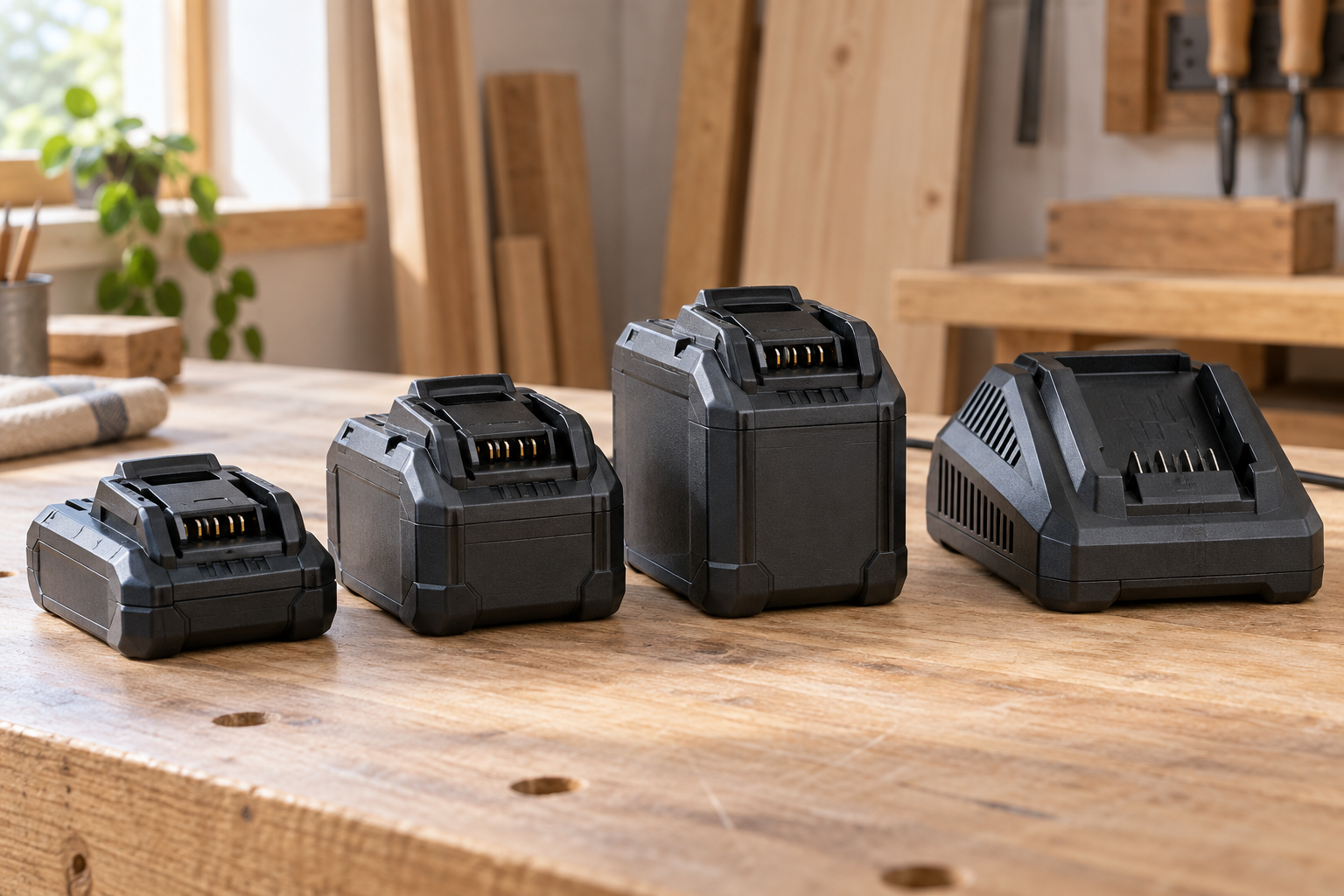
Amp-hours (Ah) describe stored charge, not how forcefully the pack can deliver it. In general, a 5.0Ah pack has less runtime than an 8.0Ah pack of the same voltage and design, but the larger pack usually weighs more and costs more. If your work involves short cuts or brief grinding passes, a good 5.0Ah high-output pack is often the sensible balance. For repeated cutting in thick stock, large-diameter saw work, or long grinding sessions, a 6.0–8.0Ah high-output pack can reduce battery swaps and may sustain power better.
Check the battery weight before buying. In a handheld grinder, a heavier pack shifts balance and can increase fatigue, especially when working overhead or in awkward positions. A circular saw resting on the work surface tolerates extra battery weight better. If possible, test the pack on your tool rather than choosing by capacity alone.
For occasional homeowner use, the platform’s ordinary mid-capacity battery may be enough. Paying extra for high-output cells is hard to justify if the tool is used for a few short cuts at a time and the battery does not get hot or bog down. Buy into the higher-output category when you have a repeatable problem: slow cuts under load, frequent thermal shutdowns, or poor runtime on demanding work. Compare options in your own platform, such as high-output tool batteries, rather than mixing in an incompatible pack.
Battery size and use case
| Pack class | Best fit | Main trade-off |
|---|---|---|
| Compact, roughly 2.0–3.0Ah | Light grinder work, quick cuts, overhead tasks | Less runtime; may heat up or sag sooner under sustained load |
| Mid-size, roughly 4.0–5.0Ah | General saw and grinder use; a practical starting point | Runtime and output depend heavily on pack design |
| Large high-output, roughly 6.0–8.0Ah | Repeated heavy cuts and longer grinding sessions | Higher price and weight; unnecessary for many short jobs |
These ranges are a buying guide, not a guarantee of performance. Packs with the same voltage and Ah rating can differ in cell configuration and current delivery. Check your tool maker’s compatibility list: some tools accept every pack in the platform, while others may not deliver their full output with older or compact batteries.
Stay inside the platform, and check compatibility
Battery voltage is not a universal fit standard. A pack must match the tool’s brand and battery platform, and adapters can cause problems with fit, communication, protection circuits, or warranty coverage. Use the manufacturer’s approved battery for a grinder or saw, particularly where the tool draws high current.
Also check whether the tool is brushless. Brushless tools can manage power more efficiently, but they still need a suitable battery for sustained heavy work. A high-output pack can help a compatible tool maintain performance; it cannot remove the tool’s thermal limits. If a grinder shuts down after several minutes of continuous grinding, stop and let it cool rather than immediately fitting a bigger battery and continuing. The motor, electronics, and wheel all generate heat.
Before choosing a pack, compare the batteries your brand offers by capacity, stated high-output features, weight, and price. Search by your exact platform name and battery type; generic terms can return incompatible products. For example, browse 5.0Ah high-output batteries only after confirming the platform and fit.
Charging, heat, and common failure modes
Heavy cutting drains batteries quickly, but repeatedly running a pack until the tool stops is not a good routine. When the pack is hot, let it cool before charging; many chargers pause or refuse to charge a hot battery. That pause is protection, not a fault. Charging a warm pack immediately can add stress and extend downtime. A second battery is often more useful than one oversized pack if you need to keep working while the first cools or charges.
Keep battery vents clear of metal dust, sawdust, and grinding debris. Fine conductive particles can interfere with contacts or cause electrical problems. Remove the pack before cleaning the tool, and wipe contacts with a clean, dry cloth. Do not open the battery case or try to repair damaged cells. If a pack is cracked, swollen, unusually hot at rest, or has a damaged terminal, stop using it and follow the maker’s disposal guidance.
Loss of power is not always a battery problem. A dull saw blade, an overloaded cut, a pinched blade, an undersized or worn grinding wheel, or forcing the tool can all increase current draw and trigger protection. Let the tool do the work, use the blade or wheel specified for the material, and avoid binding. If a known-good battery also cuts out under modest load, inspect the tool and accessory before buying another pack.
A practical buying decision
For a grinder used in short bursts, choose a mid-size pack that keeps the tool controllable; buy a larger high-output option only if runtime or power sag is a real issue. For a saw used through repeated thick cuts, prioritize a compatible high-output pack in the 6.0–8.0Ah range if the added weight is acceptable. If you work all day, two mid- or large-size packs plus a suitable fast charger may be more useful than one very large battery.
Compare the cost of a replacement battery with the value of staying on your existing platform. A cheap no-name pack may list a large Ah figure but provide less usable capacity, weaker current delivery, or poor protection. For demanding tools, buy a genuine compatible pack from a reputable seller. If your current battery already delivers steady cuts and finishes the job, keep using it; high-output batteries are an upgrade for sustained load, not a requirement for every cordless grinder or saw.
Related guides
- Longest Lasting Lawn Mower Battery: AGM vs Lithium vs Flooded Lifespan and Cost per Season
- Duralast Gold Lawn Mower Battery Review: U1 Fit, CCA and When to Pay for AGM
- Greenworks Pro 80V 21-Inch Mower Review: Runtime Math, Push vs Self-Propelled and Yard Fit
- Bosch High Pressure Washer Gun Replacement: Fittings, Adapters and What Fits Your Model