What's inside
As an Amazon Associate I earn from qualifying purchases. This post may contain affiliate links at no extra cost to you.
For a small general contractor, the best cordless platform is rarely the one with the single best drill or impact driver. It is the system that keeps your crews working across framing, finish work, service calls, and punch lists without forcing you to buy duplicate batteries, chargers, and tools.
A battery platform includes the battery voltage and connector, chargers, tools, and the manufacturer’s compatibility rules. Once you own several batteries, switching brands becomes expensive. Choose based on the work you actually do, not on a tool sale that saves $40 today.
Start With Your Work
List the cordless tools you use in a normal month and separate them into three groups:
- Daily tools: drill, impact driver, circular saw, reciprocating saw, oscillating multi-tool, and work light.
- High-draw tools: grinder, large circular saw, rotary hammer, cut-off tool, and vacuum.
- Occasional tools: nailers, caulk guns, planers, routers, shears, and specialty plumbing or electrical tools.
The daily tools should determine your platform. A platform with an excellent drill but no suitable framing nailer may be a poor choice for a contractor who frames regularly. Conversely, paying a premium for the largest high-output batteries makes little sense if most of your work is cabinet installation and repair.
Check the manufacturer’s current lineup before buying. Tools are not interchangeable merely because their batteries have similar voltage. Even within one brand, some tools use a different battery family or require a particular battery size for full performance.
Compare the Major Platform Types
| Platform type | Best fit | Strengths | Trade-offs |
|---|---|---|---|
| Professional 18V/20V system | Daily contractor use and mixed trades | Broad tool selection, strong service support, high-performance batteries | Higher tool and battery prices |
| Value-oriented 18V system | Light construction, maintenance, and occasional use | Low entry cost and many homeowner-oriented tools | Fewer heavy-duty options and less suitable for constant abuse |
| High-output 36V/40V system | Large saws, outdoor equipment, and heavy cutting | More power for demanding tools | Heavier batteries, higher cost, and often a second ecosystem |
| Compact 12V system | Cabinetry, trim, electrical, and service work | Small, light tools that fit tight spaces | Limited runtime and power for framing or demolition |
For a general contractor who wants one primary system, a professional 18V or 20V platform is usually the safest starting point. The nominal voltage difference between “18V” and “20V Max” is not a useful power comparison by itself; manufacturers measure and label battery voltage differently. Tool design, motor efficiency, battery capacity, and thermal management matter more.
Understand Battery Size and Runtime
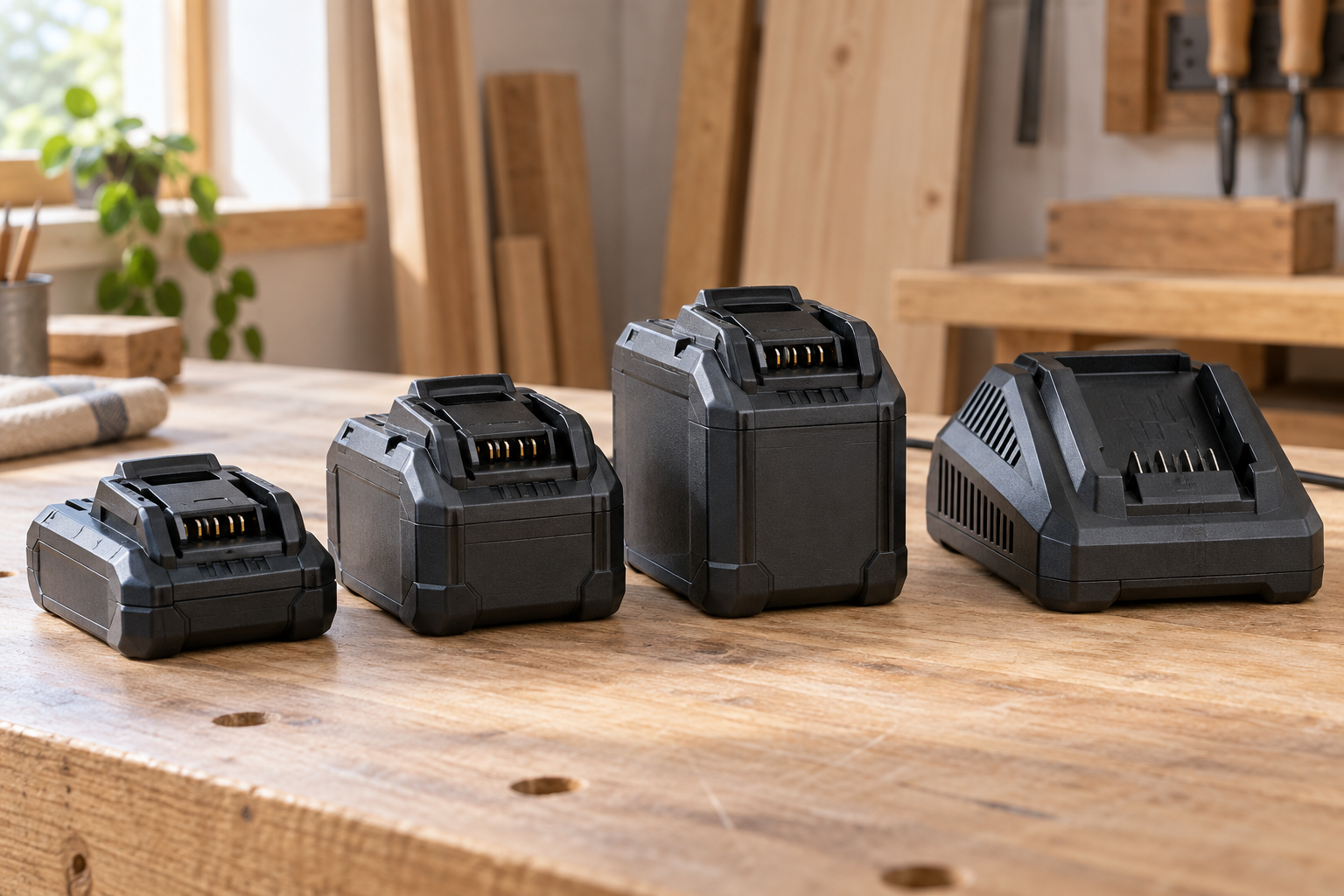
Battery capacity is normally listed in amp-hours, or Ah. A 5.0Ah battery stores roughly twice the energy of a 2.5Ah battery at the same voltage, although actual runtime varies with the tool and load. A compact 2.0Ah or 3.0Ah pack is easier to carry for drilling overhead. A 5.0Ah pack is a practical general-purpose size. Larger high-output packs can keep a saw or grinder running longer, but they add weight and cost.
For a small crew, a useful starting inventory is four to six batteries per active user: two compact packs for drills and lights, two 5.0Ah-class packs for saws and general work, and one or two larger packs if you use high-draw tools. That is not a rule. A trim-heavy contractor may need more compact batteries, while a framing crew may need mostly large packs.
Do not judge runtime only by the number printed on the battery. A battery that overheats, trips its protection circuit, or takes an hour to cool can cause more downtime than a smaller pack that accepts a quick recharge. Keep batteries out of direct sun and do not leave them in a freezing truck overnight. Extreme temperatures reduce output and can shorten service life.
Treat Chargers as Production Equipment
A basic charger is adequate for one person working from a garage. A contractor with several users should consider a fast cordless tool battery charger or multiple standard chargers. Fast charging only helps if the crew has access to power and enough batteries to rotate. It may also create more heat, so do not charge hot packs immediately after heavy cutting.
Count your outlets and vehicle charging options. On a remodel with one usable circuit, several chargers running alongside vacuums and compressors can trip a breaker. A charging station with labeled slots prevents a common failure: a worker assumes a battery is full, grabs it for a saw, and finds it nearly empty halfway through a cut.
Store batteries in a dry case or protected tool chest. Keep contacts clean, and do not carry loose packs with metal fasteners or keys. Replace a battery that is cracked, swollen, leaking, or unusually hot. Do not attempt to repair lithium-ion packs unless you have the proper equipment and training.
Check Tools, Service, and Availability
Look beyond the starter kit. Search the platform for the next ten tools you are likely to need, including a cordless oscillating multi-tool, grinder, vacuum, nailer, and rotary hammer. If two or three important tools are missing, you will either compromise on the job or create a second battery system.
Availability matters when a tool fails on Tuesday morning. Professional brands generally offer better parts access, repair networks, and replacement options, but local dealers vary. Check whether batteries and bare tools are stocked nearby rather than assuming online shipping will be fast.
Warranty terms also differ between tools and batteries. Save receipts, register equipment when required, and record purchase dates. A battery used every day may be worn out before the tool warranty period ends, and batteries often have separate coverage.
When a Cheaper Platform Is Fine
A value-oriented platform can be the right choice for a landlord, light-duty handyman, or contractor who uses cordless tools a few hours per week. If the work is mainly drilling pilot holes, driving screws, installing hardware, and cutting occasional trim, a lower-cost cordless drill and impact driver kit may deliver all the needed performance.
The calculation changes when downtime costs more than the tool. Daily framing, repeated concrete drilling, production fastening, or heavy grinding justifies stronger tools, more durable batteries, and better service support. Do not buy a premium ecosystem for status, but do not outfit a working crew with homeowner-grade tools simply because the starter kit is cheap.
Build the Platform in Stages
Buy the first kit around your most-used tools, then add batteries before specialty tools. Avoid buying six different bare tools at once; use the first month to identify bottlenecks. If two workers regularly wait for the same charged battery, buy another pack. If a saw drains batteries quickly, upgrade that tool’s battery size rather than replacing the whole platform.
Finally, keep one platform for the main cordless fleet whenever practical. A small second system can make sense for compact trim tools or a tool unavailable in the primary lineup, but it adds chargers, inventory, and another battery type to maintain. The cheapest platform is the one that meets the workload without creating those hidden operating costs.
Related guides
- Longest Lasting Lawn Mower Battery: AGM vs Lithium vs Flooded Lifespan and Cost per Season
- Duralast Gold Lawn Mower Battery Review: U1 Fit, CCA and When to Pay for AGM
- Greenworks Pro 80V 21-Inch Mower Review: Runtime Math, Push vs Self-Propelled and Yard Fit
- Bosch High Pressure Washer Gun Replacement: Fittings, Adapters and What Fits Your Model