What's inside
As an Amazon Associate I earn from qualifying purchases. This post may contain affiliate links at no extra cost to you.
Deck and framing screws put different demands on an impact driver. A short trim screw is easy work; a long structural screw driven through wet lumber can run a compact tool hot or stall it outright. Choose around the fasteners you will actually use, the batteries you already own, and how much control the job needs—not the largest torque number on a box.
Match the driver to the screws
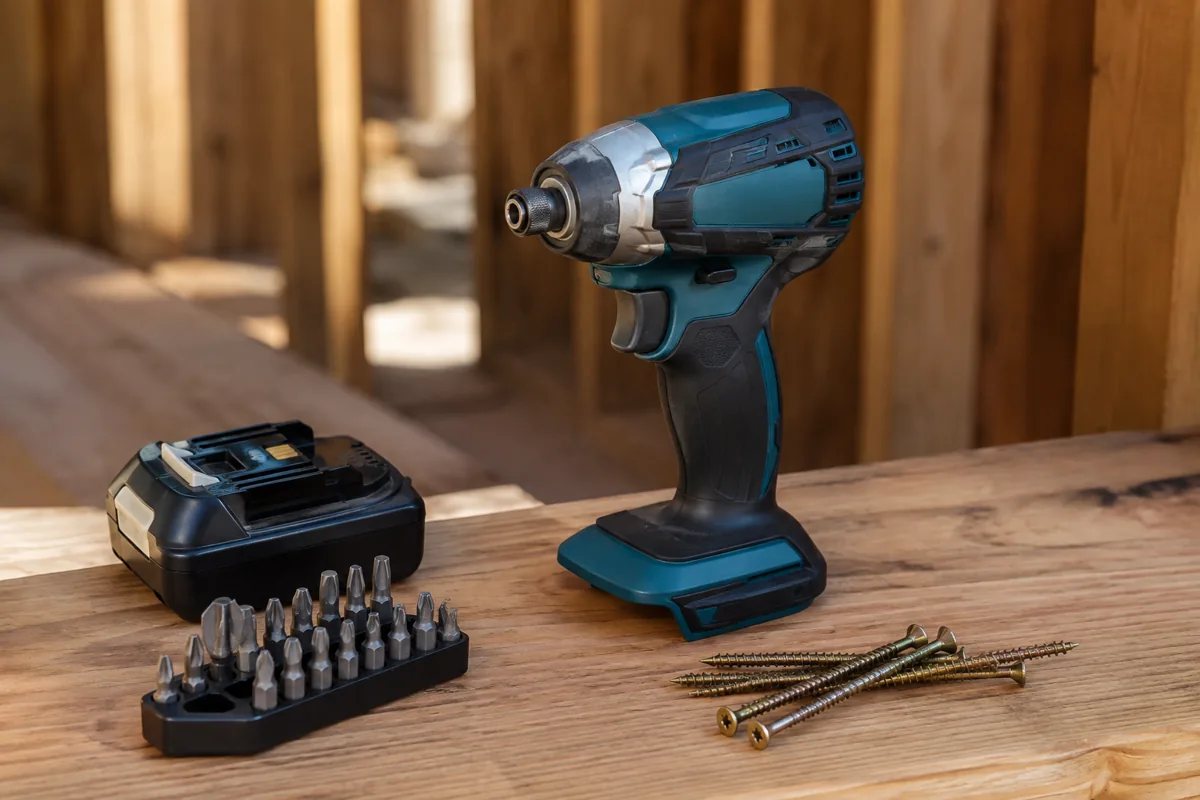
For typical deck boards, a 12V or compact 18V/20V impact driver is often enough. It is lighter for overhead or repetitive work and can drive common 2½- to 3-inch deck screws without the bulk of a high-output tool. If you routinely drive 4- to 6-inch structural screws into framing, work with dense or wet lumber, or need to drive many fasteners quickly, a full-size 18V/20V model is a better fit.
Impact drivers deliver short rotational blows that help turn resistant fasteners. They are not a replacement for a drill when you need clean, accurately sized holes, and they are not automatically gentler on screws. A powerful driver can snap a screw, strip its head, or bury it too deep if you keep pulling the trigger after it seats.
Look for variable-speed control and a trigger that is easy to feather. Multiple speed or assist modes can help limit overdriving, but they do not replace watching the screw head and stopping at the right moment. If you are choosing a first driver for regular deck work, compare 18V/20V impact driver kits with the batteries and charger included in the price.
Compare the size classes
| Driver class | Good fit | Trade-off |
|---|---|---|
| 12V compact | Occasional deck repairs, short screws, tight spaces | Less reserve for long structural screws or sustained heavy driving |
| Compact 18V/20V | Deck boards, general repairs, mixed household framing work | Can heat up or slow down during repeated long-screw runs |
| Full-size 18V/20V | Frequent framing, long structural screws, higher-volume work | More weight and cost; easy to overdrive smaller fasteners |
Voltage labels alone do not tell you how a tool performs. Battery design, motor, controls, and the driver’s overall build all matter. A compact 18V tool may be a better everyday choice than a bulky high-output model if most of your work is deck screws and household repairs.
Check the battery platform before buying
If you already own cordless tools, staying on that brand’s battery platform can save more than buying the cheapest bare tool. Check that the driver uses the same battery family as your existing tools; batteries are not generally interchangeable across brands, and similar voltage labels do not make them compatible.
A 2.0Ah battery keeps the setup lighter and is reasonable for intermittent work. A 4.0Ah pack is a useful middle ground for longer sessions, while larger packs can add runtime but also weight at the handle. For repeated long-screw driving, a healthy, higher-capacity battery may help the tool maintain performance better than a small, aging pack. Runtime varies with fastener size, wood, battery condition, and technique, so advertised runtime is not a reliable count of screws per charge.
Compare the cost of a bare tool against a kit that includes a battery and charger. If you have no batteries, a kit is usually the practical starting point; if you have compatible packs, a bare tool may be cheaper. Browse driver kits with battery and charger and check the included battery capacity rather than judging by the word “kit” alone.
Use the right bit and technique
Most deck and framing screws use a star-drive recess, but the bit size varies. Match the driver bit to the screw manufacturer’s specification; a loose or undersized bit cams out, chews up the recess, and can leave the fastener stuck halfway in. Keep a fresh bit nearby. A worn tip is a common cause of stripped screw heads, especially after several hundred fasteners.
Hold the driver in line with the screw and press firmly enough to keep the bit seated. Start slowly, then increase speed once the screw has a secure bite. Stop as the head reaches the surface or the specified depth. If the screw stalls, do not keep holding the trigger: back it out, clear the hole if needed, and check for a knot, hidden obstruction, dull bit, or a fastener that is too large for the tool and material.
For large structural screws, follow the screw maker’s instructions on pilot holes and spacing. Some fasteners are designed to drive without a pilot hole in common lumber, but dense hardwood, material near an edge, or a large screw may split without one. A drill can make a controlled pilot hole more cleanly than an impact driver. Do not substitute ordinary deck screws for structural fasteners where a connection requires rated hardware.
Features worth paying for
For deck work, useful features include a short head for access between joists, a belt hook, a visible work light, and a trigger that gives predictable low-speed control. A selectable low-speed mode is helpful when setting smaller screws, but do not pay extra for a long list of modes if you will use only one. Brushless motors can offer better efficiency and longer tool life, especially under frequent heavy use; for occasional repairs, a lower-priced brushed driver can still be a sensible buy.
Impact drivers are loud, and the repeated impacts can be tiring over a full day. Wear hearing protection, eye protection, and gloves that do not compromise your grip. If you expect to drive hundreds of long screws regularly, try the tool in hand before buying if possible: balance, grip size, trigger feel, and battery weight matter more over a long session than a small difference in advertised speed.
Make the final choice
For occasional repairs with short screws, buy an inexpensive compact driver—ideally one that fits a battery platform you already use. For a new cordless setup and regular deck construction, a compact 18V/20V kit with a 2.0Ah or 4.0Ah battery is a balanced starting point. Choose a full-size, higher-output driver if long structural screws and sustained framing work are routine, not just because its maximum torque figure is higher.
If you regularly install large structural fasteners, compare higher-output 18V/20V impact drivers in your existing battery platform. Before paying the premium, confirm that the tool’s size and weight suit your work and that the fasteners you use are approved for impact driving. A driver that handles the usual screw cleanly, with a battery you can share, is more useful than one chosen for a peak number you rarely need.
Related guides
- Longest Lasting Lawn Mower Battery: AGM vs Lithium vs Flooded Lifespan and Cost per Season
- Duralast Gold Lawn Mower Battery Review: U1 Fit, CCA and When to Pay for AGM
- Greenworks Pro 80V 21-Inch Mower Review: Runtime Math, Push vs Self-Propelled and Yard Fit
- Bosch High Pressure Washer Gun Replacement: Fittings, Adapters and What Fits Your Model