What's inside
As an Amazon Associate I earn from qualifying purchases. This post may contain affiliate links at no extra cost to you.
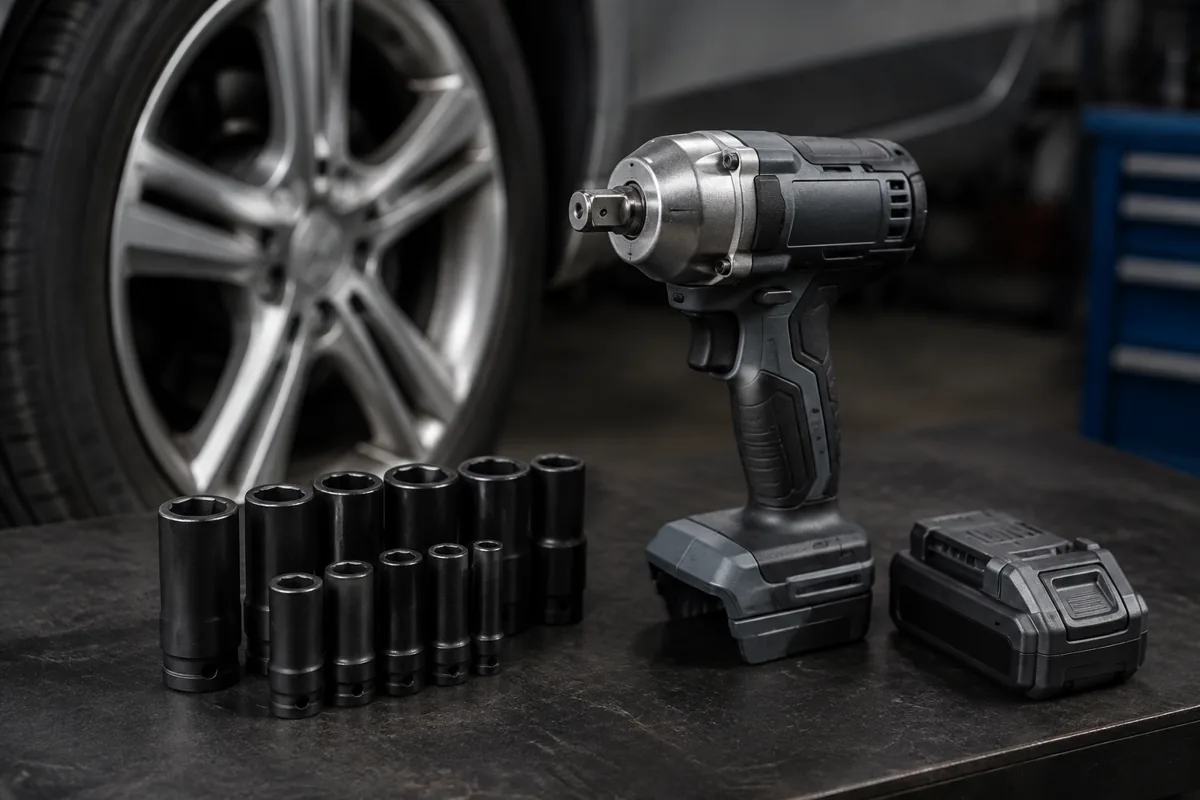
Rusted automotive fasteners punish weak tools. A compact impact wrench may remove wheel nuts and ordinary suspension bolts, but severely corroded exhaust, subframe, and brake hardware often needs a full-size 1/2-inch model, a large battery, and a careful removal process.
The best cordless impact wrench is not simply the one with the highest advertised torque. You need enough breakaway force, a battery that can deliver it without shutting down, a socket that will not split, and a tool size that fits around the vehicle. Your existing battery platform also matters: buying into a new ecosystem can cost as much as the wrench.
As an Amazon Associate we earn from qualifying purchases at no extra cost to you.


What to look for in a cordless impact wrench
For serious automotive work, start with a 1/2-inch drive. It accepts common impact sockets and handles the larger fasteners found on trucks, suspension components, axle nuts, and subframes. A 3/8-inch impact wrench is easier to fit into tight spaces, but it is better suited to smaller bolts and routine service.
Pay attention to breakaway torque rather than only fastening torque. Manufacturers often quote impressive numbers measured under specific test conditions. Real-world results vary with battery size, socket fit, rust, thread damage, and the age of the tool. A useful buying target is roughly 600 to 1,000 lb-ft of claimed fastening torque for general automotive work, with substantially more claimed breakaway torque for heavily rusted hardware.
A high-torque 1/2-inch wrench is the right category if you regularly work on trucks, older vehicles, farm equipment, or suspension parts. A mid-torque 1/2-inch wrench is usually the better everyday choice for passenger cars because it weighs less and fits into more spaces. Look for a brushless motor, a variable-speed trigger, at least three speed modes, and an automatic stop or reduced-power mode for reassembly.
If you are starting from scratch, compare high-torque 1/2-inch cordless impact wrench kits by included battery capacity, not just tool price. A bare tool may look inexpensive, but a 4.0Ah or larger battery and charger can add considerably to the total.
Choose the size and battery platform
| Tool category | Best use | Main advantage | Main limitation |
|---|---|---|---|
| 3/8-inch compact | Engine bays, brackets, light suspension work | Small and easy to control | Often lacks power for seized fasteners |
| 1/2-inch mid-torque | Most passenger-car repairs | Good balance of power, size, and price | May stall on large rusted bolts |
| 1/2-inch high-torque | Truck, suspension, axle, and subframe work | Highest removal capability | Heavy, bulky, and easier to overtighten with |
| 3/4-inch heavy-duty | Commercial vehicles and very large hardware | Extreme torque | Expensive and excessive for most cars |
Battery voltage labels are not a reliable performance ranking. A modern brushless 18V or 20V-max tool can outperform an older design with a larger-looking voltage number. Battery capacity affects runtime and sustained output: a larger pack generally performs better under heavy load, but it adds weight and may make the wrench awkward in a wheel well.
Staying within your current ecosystem is usually the economical choice. The battery platform determines your future options for drills, ratchets, grinders, lights, and saws. If you already own several batteries and a charger, the bare tool is often the sensible purchase. If you have no compatible batteries, a kit with two packs can be better value than buying accessories separately.
A mid-torque 1/2-inch impact wrench kit is the cheaper option that makes sense for many home mechanics. It is generally enough for wheel lugs, brake work, control-arm hardware, and ordinary bolts that are rusty but not completely seized. Do not buy a high-torque model just for its specification sheet if you mainly service a newer compact car.
How to remove a rusted fastener without destroying it
Preparation often matters more than another 100 lb-ft of impact rating. Clean packed dirt and scale from the exposed threads with a wire brush. Apply penetrating oil and allow time for it to work; several applications over a few hours are more useful than one quick spray. Heat can help on suitable steel components, but keep flames and high heat away from fuel, brake, rubber, plastic, and sealed components.
Use a six-point impact socket that fits tightly. Twelve-point sockets are more likely to round a rusty hex. Avoid chrome hand-tool sockets with an impact wrench; they can crack or shatter. Keep the socket square to the fastener and use a short impact extension only when necessary, since extra length can reduce practical hammering effectiveness.
Start in the lowest useful speed mode and use short bursts. This gives the penetrant a chance to work and reduces the chance of instantly rounding the head. If the nut moves, do not simply hold the trigger continuously. Work it back and forth while adding penetrant. A fastener that turns a quarter turn and then tightens again may be carrying rust through its threads.
When the impact wrench only hammers without turning the fastener, stop. Continued hammering can heat the tool, drain the battery, damage the socket, or shear the bolt. Switch to a breaker bar for controlled leverage, apply more heat where safe, or use a manual impact technique. A tool with an automatic shutoff mode is useful during installation, but it is not a substitute for a torque wrench.
Reassembly and safety details
Never use the impact wrench as the final tightening tool on wheel nuts, suspension fasteners, or other torque-critical hardware. Run the fastener down gently, then finish with a calibrated torque wrench to the vehicle manufacturer��s specification. High-torque impacts can stretch studs, damage wheel bearings, and make later removal harder.
Keep a spare charged battery available. A compact pack may remove several stubborn bolts, then trigger its thermal or low-voltage protection under repeated high load. If you need a replacement, choose high-capacity batteries for your cordless tool platform rather than mixing incompatible packs or relying on questionable adapters.
For most home garages, the strongest buying decision is a brushless 1/2-inch mid-torque wrench on a battery platform you already use. Choose a high-torque version when seized fasteners are routine, the vehicles are large, or you would otherwise reach for a breaker bar every week. Spend the rest of the budget on quality impact sockets, penetrating oil, a torque wrench, and replacement hardware—items that determine whether the job finishes cleanly.
Related guides
- Longest Lasting Lawn Mower Battery: AGM vs Lithium vs Flooded Lifespan and Cost per Season
- Duralast Gold Lawn Mower Battery Review: U1 Fit, CCA and When to Pay for AGM
- Greenworks Pro 80V 21-Inch Mower Review: Runtime Math, Push vs Self-Propelled and Yard Fit
- Bosch High Pressure Washer Gun Replacement: Fittings, Adapters and What Fits Your Model