What's inside
As an Amazon Associate I earn from qualifying purchases. This post may contain affiliate links at no extra cost to you.
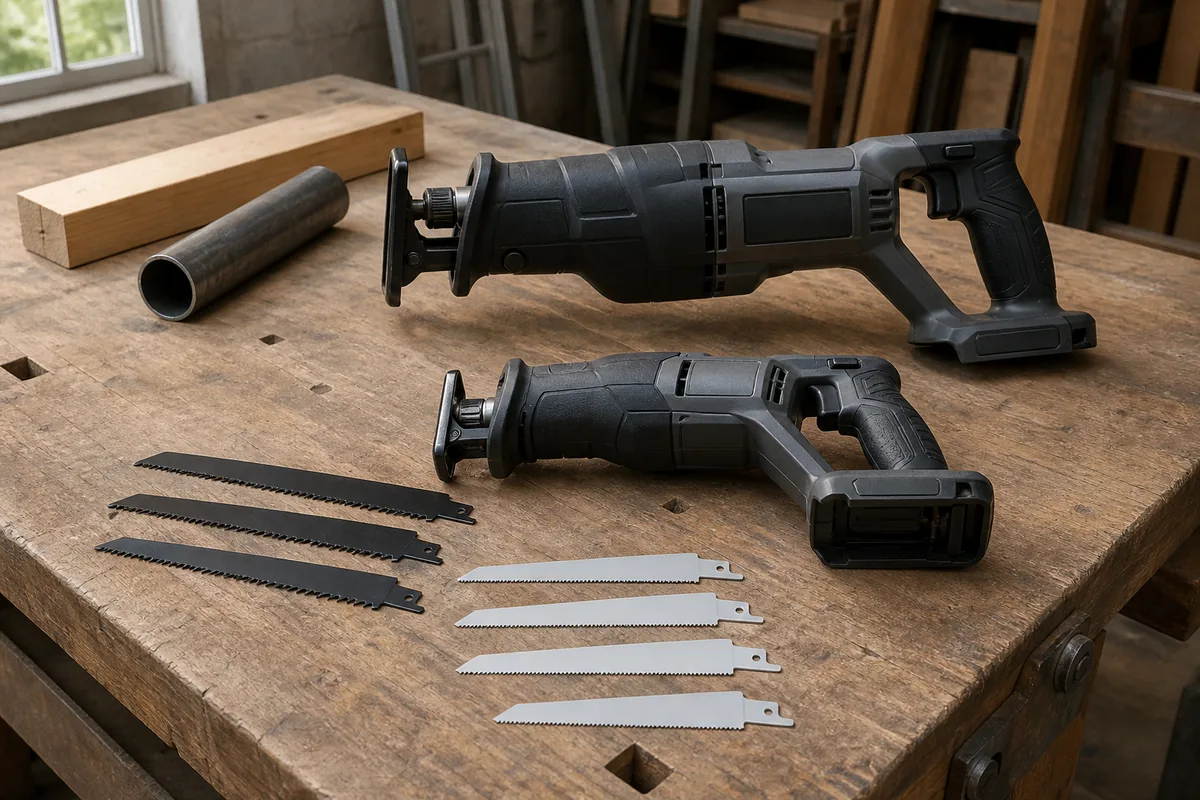
The right reciprocating saw blade depends less on whether the saw is cordless than on what you are cutting, how much access you have, and whether you need speed or a clean, controlled cut. For demolition, a long, thick demolition blade is often the practical choice—but using the wrong tooth pitch can make it snag, overheat, or wear out quickly. Match the blade to the material, keep the work supported, and let the saw do the cutting rather than forcing it.
Start with the material
Demolition rarely involves one material. A wall may contain drywall, wood studs, nails, and a pipe or cable you cannot see. Choose a blade for the toughest material you expect to cut, not just the visible surface. If the cut includes metal fasteners, a wood-only blade can lose teeth or become dull before it gets through the stud.
For mixed wood and nails, look for a bi-metal blade marked for demolition or wood with nails. For clean wood without fasteners, a coarser wood blade is usually faster. For pipe, angle iron, or sheet metal, use a metal-cutting blade with finer teeth. If the material is uncertain, stop and inspect before cutting; a reciprocating saw can damage hidden plumbing or wiring in seconds.
Tooth pitch and blade length
Tooth pitch is commonly given as teeth per inch (TPI). Coarse blades around 5–8 TPI clear chips quickly from wood. Fine blades around 14–24 TPI are better suited to thin metal. For wood with nails, a range around 8–14 TPI is a useful starting point, but the blade’s packaging may specify a suitable range of material thicknesses. As a rule, keep at least three teeth engaged in the material at once. Too few teeth can snag or strip; too many can cut slowly and heat up.
Blade lengths commonly run from about 6 to 12 inches. A 6-inch blade is easier to control in tight spaces, while a 9- or 12-inch blade can reach behind framing or through thicker assemblies. Longer blades flex more and can bend if you lever against them. Pick the shortest blade that reaches through the work, and check the manufacturer’s maximum cutting depth. A long blade is not automatically a better demolition blade.
Blade types at a glance
| Blade category | Best for | Trade-off |
|---|---|---|
| Coarse wood | Clean lumber, branches, and quick rough cuts | Teeth can be damaged by nails or thin metal |
| Bi-metal demolition | Wood containing nails and mixed renovation cuts | Usually slower in clean wood than a coarse wood blade |
| Metal-cutting | Pipe, metal studs, and sheet metal | Fine teeth clog or wear quickly in thick wood |
| Carbide-tooth demolition | Abrasive, hard, or heavily fastened material | Higher upfront cost; unnecessary for many ordinary cuts |
What to buy for demolition
For general interior tear-out, a small pack of bi-metal demolition blades in two lengths is more useful than a large assortment of specialty blades. A 6-inch blade suits controlled cuts around framing; a 9-inch blade reaches deeper into an assembly. Look for a thick, rigid blade with a demolition or nail-embedded-wood rating. If your work often includes hardened fasteners, abrasive board, or repeated cuts through mixed materials, carbide-tooth blades can last longer. They cost more, so they are a poor value for occasional, clean lumber cuts.
Browse bi-metal demolition blades for wood with nails for general tear-out, or compare carbide-tooth demolition blades if you regularly cut tough, abrasive material. For clean wood, the cheaper coarse blade is fine; paying for carbide will not make it cut meaningfully better.
Check the shank before buying. Most current reciprocating saws use a standard universal shank, but confirm your saw’s manual, especially with older or unusual tools. Blade packaging may also list intended materials, thickness, and recommended saw type. Avoid buying by tooth count alone: tooth shape, blade thickness, and construction affect durability and control too.
Account for the cordless saw and battery
A good blade cannot compensate for a tired battery or a saw that is underpowered for the cut. Dense, nail-filled lumber can drain a compact battery quickly. A larger-capacity pack may let you work longer between changes, but adds weight, which matters when cutting overhead. Keep a charged spare if the job involves many cuts; do not press harder to make a slow saw cut faster, since that can bend the blade, stall the tool, or shorten battery life.
Use the battery platform you already own where possible. A new saw may make sense if you are choosing a cordless system, but for occasional demolition, borrowing or renting a suitable saw can be cheaper than buying into another battery ecosystem. Check that replacement batteries and chargers are readily available before investing in a platform for one tool.
Cut with less wear and better control
Support the material so it cannot pinch the blade as the cut closes. Set the saw shoe firmly against the work, start at a controlled speed, and increase pressure only enough to keep the blade cutting. Let the teeth work; heavy force produces heat, makes the blade wander, and can break teeth. If you hear the saw bog down or see smoke, stop and check for a pinched blade, dull teeth, or an unsuitable tooth pitch.
Use eye protection, hearing protection, and gloves that fit securely. Keep both hands on the saw where the cut allows it, and remove or isolate power, water, and gas before opening a wall. A blade that suddenly emerges from the far side can hit hidden services or nearby surfaces, so plan its path and keep bystanders clear. Replace a blade that is bent, cracked, missing teeth, or so dull that it requires force. Those are signs to change blades—not to push harder.
Related guides
- Longest Lasting Lawn Mower Battery: AGM vs Lithium vs Flooded Lifespan and Cost per Season
- Duralast Gold Lawn Mower Battery Review: U1 Fit, CCA and When to Pay for AGM
- Greenworks Pro 80V 21-Inch Mower Review: Runtime Math, Push vs Self-Propelled and Yard Fit
- Bosch High Pressure Washer Gun Replacement: Fittings, Adapters and What Fits Your Model