What's inside
As an Amazon Associate I earn from qualifying purchases. This post may contain affiliate links at no extra cost to you.
What “left blade” and “right blade” mean
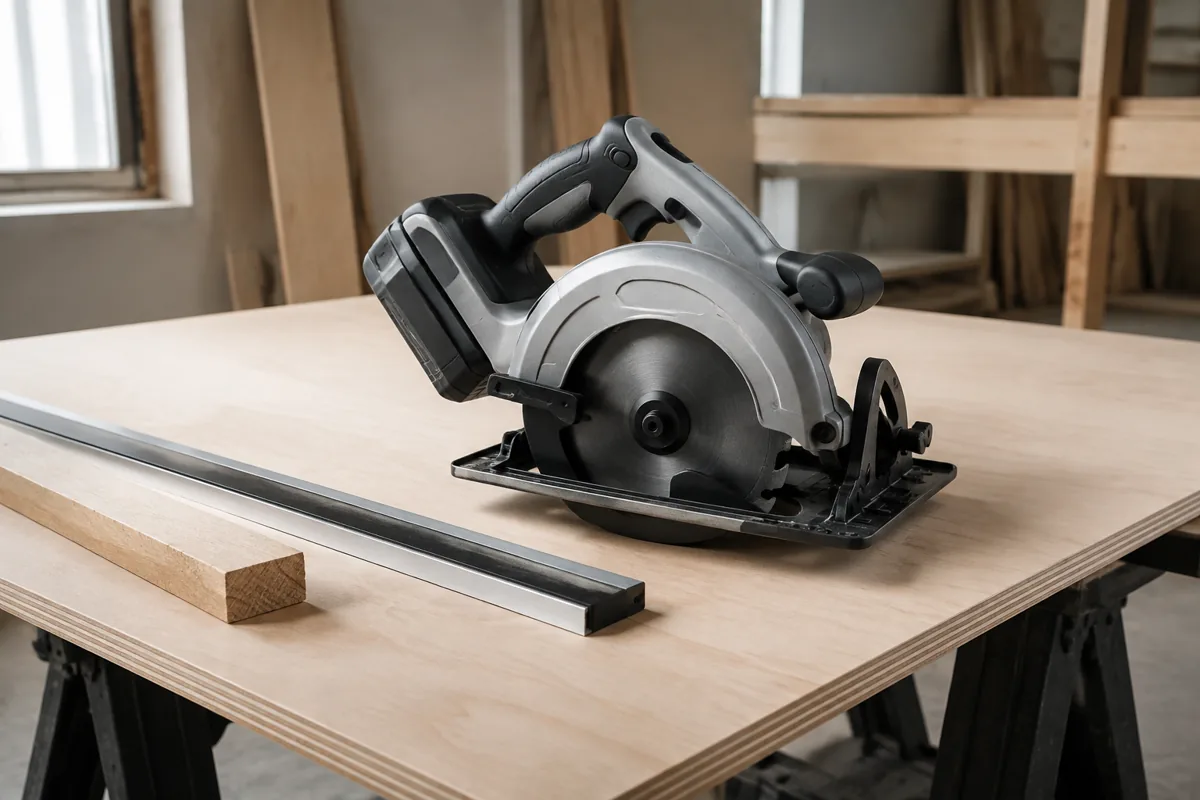
On a circular saw, blade-side preference describes which side of the shoe the blade sits on when you look in the direction of the cut. It does not describe the direction the blade spins. A right-blade saw places the blade to your right as you hold the main handle; a left-blade saw places it to your left. Manufacturers do not use these terms consistently in every product listing, so check photos and the manual before buying.
The difference matters most for sightlines and handling. With the blade on the side you naturally watch, it may be easier to follow a pencil line. But the motor, battery, and handle can obstruct that view, and a blade on the other side may suit your stance better. Blade position alone does not make a saw safer or more accurate.
Choose by how you make cuts
Stand as you normally would for a long rip cut, keep your hands clear of the blade path, and imagine where the shoe, guard, and battery will sit. If you are right-handed, do not assume a right-blade saw will automatically give you the best view. Some right-handed users prefer left-blade saws because they can see the blade and line without leaning over the tool; others find the motor housing gets in the way. Try to handle both layouts in a store if possible.
Also account for the material. On a narrow offcut, your body position and the support beneath the piece may determine the useful viewing angle more than blade side. When cutting a sheet, support it so the offcut cannot pinch the blade. A pinched blade can stall the saw or kick it back regardless of its layout.
Compare the two layouts
| Factor | Left-blade layout | Right-blade layout |
|---|---|---|
| Typical appeal | Often gives right-handed users a direct view of the blade and cut line. | May feel familiar to users accustomed to traditional sidewinder saws. |
| Potential drawback | Motor or battery can block the view, depending on the saw. | Some right-handed users may have to look across the shoe or lean to see the line. |
| What to check | Whether the guard clears your view and the battery stays out of the way. | Whether your hand and body position leave a clear sightline. |
| Best deciding test | Hold the saw in your usual cutting stance and sight along the shoe’s cut indicator with the tool switched off. | |
Neither layout is inherently more precise. A clear, stable stance, a sharp blade, and a properly supported workpiece matter more than the label.
Check battery platform and cutting capacity
If you already own cordless tools, start with the battery system. A bare tool is usually the economical choice when you have compatible batteries and a charger; buying into a second platform for one saw can cost more than the saw itself. Confirm compatibility by checking the exact battery family and voltage in the tool manual. Similar-looking batteries from the same brand are not always interchangeable.
For occasional plywood and trim work, a compact saw using a 5.0Ah battery may be adequate, though runtime and power depend on the material, blade, and cut depth. For repeated cuts through framing lumber, a higher-output battery can reduce slowdowns, but it adds weight. A larger battery can also change balance and make a saw tiring overhead. Consider a cordless circular saw bare tool if your existing platform fits the job.
Check blade diameter and maximum cut depth at 90 and 45 degrees, not just motor power. A common 7-1/4-inch saw generally offers more depth than a compact 6-1/2-inch saw, but it is larger and often heavier. Verify that the saw can cut the thickness you need: a nominal 2-by-4 is 1-1/2 inches thick, while thicker stock may require multiple passes or a larger saw. A bevel capacity of 0 to 50 or 56 degrees is useful for angled work, but most basic projects need only 45 degrees.
Features worth checking before purchase
Look at the shoe and cut indicators. A rigid shoe that stays square is more useful than an impressive feature list. Check the bevel scale, depth adjustment, and whether the saw sits flat without rocking. If possible, make a short test cut on scrap: a saw that tracks well and feels balanced in your hands is a better choice than one selected only for blade side.
Check the weight with the battery installed, the location of the safety switch, and whether the lower guard retracts smoothly. A stiff guard can catch on an edge; do not tie it open or force it. For dustier indoor work, a dust port or compatible vacuum adapter helps, but it will not capture everything. Wear eye and hearing protection, and follow the manual’s instructions for blade changes and kickback prevention.
Blade choice affects cut quality and effort. A general-purpose framing blade may cut quickly but leave rough edges in plywood. For cleaner plywood cuts, a fine-tooth finish blade is often a better match. Make sure the blade diameter, arbor, and rotation direction match the saw. A dull or unsuitable blade can make a capable cordless saw bog down, burn the cut, or drain batteries quickly.
A practical buying shortlist
If you are unsure about blade side, prioritize a saw you can handle comfortably and return if the sightline does not suit you. Compare the actual tool layout, not just the product title; listings can use “left blade” and “right blade” inconsistently. A left-blade cordless circular saw is worth considering if you want the blade in view from a right-handed stance, while a right-blade cordless circular saw may suit your grip and habits better. Treat those as starting points for comparison, not guarantees of fit.
For occasional DIY cuts, a lower-cost saw on a battery platform you already own is often enough. Pay more when you need frequent cutting, greater depth, better balance, or features that matter for your work—not simply because one blade side sounds more professional. Before checkout, confirm bare-tool versus kit contents, included blade, battery compatibility, warranty, and the return policy. Those details can make a bigger difference to the real cost than blade placement.
Related guides
- Longest Lasting Lawn Mower Battery: AGM vs Lithium vs Flooded Lifespan and Cost per Season
- Duralast Gold Lawn Mower Battery Review: U1 Fit, CCA and When to Pay for AGM
- Greenworks Pro 80V 21-Inch Mower Review: Runtime Math, Push vs Self-Propelled and Yard Fit
- Bosch High Pressure Washer Gun Replacement: Fittings, Adapters and What Fits Your Model