What's inside
As an Amazon Associate I earn from qualifying purchases. This post may contain affiliate links at no extra cost to you.
Metal pipe is one of the jobs where the blade matters more than the saw. A cordless reciprocating saw can cut steel, cast iron, stainless, and copper effectively, but the wrong blade will dull quickly, overheat, wander, or snap. Choose the blade based on the pipe’s material and wall thickness, then match the saw’s speed and handling to the cut.
Start With the Pipe Material
Most pipe-cutting jobs involve mild steel, stainless steel, cast iron, copper, or galvanized steel. They do not all respond well to the same blade. Mild steel is the easiest general-purpose target. Stainless steel is tougher and generates more heat. Cast iron is abrasive and brittle, while copper is soft enough to grab a coarse blade and deform at the cut.
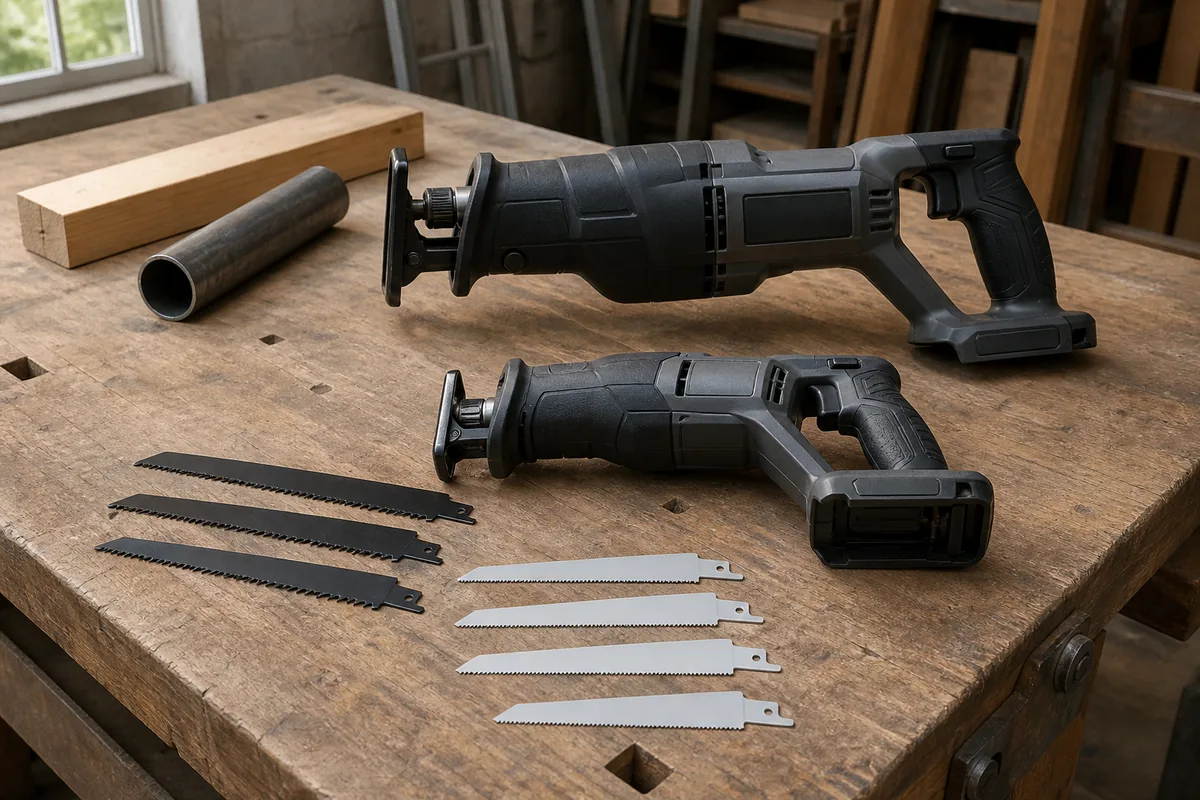
For ordinary steel pipe, a bi-metal reciprocating saw blade for metal pipe is the sensible starting point. Its flexible spring-steel body resists breaking, while the high-speed-steel teeth hold an edge longer than an all-carbon blade.
| Pipe material | Useful blade type | Practical tooth range | Main concern |
|---|---|---|---|
| Mild steel | Bi-metal | 14–24 TPI | Too much pressure can strip teeth |
| Stainless steel | Premium bi-metal or carbide-grit | 18–24 TPI | Heat and work-hardening |
| Cast iron | Carbide-grit or carbide-tooth | Varies by blade design | Abrasive dust and brittle pipe |
| Copper or thin-wall tubing | Fine bi-metal | 18–32 TPI | Teeth can catch and deform the tube |
| Galvanized steel | Bi-metal | 18–24 TPI | Coating fumes and accelerated dulling |
Choose TPI for Wall Thickness
TPI means teeth per inch. The blade should keep at least three teeth, and preferably more, engaged with the wall at all times. If the teeth are too coarse, they can hook the pipe, vibrate, and break. If they are too fine, the cut is slow and the gullets fill with chips.
For thin tubing or pipe walls under about 1/8 inch, use an 18–32 TPI blade. A 24 TPI blade is a useful middle ground for many small steel pipes. For walls around 1/8 to 1/4 inch, 14–18 TPI usually cuts faster without becoming excessively aggressive. Thick-wall steel may accept a 10–14 TPI blade, but only if enough teeth remain engaged in the material.
Pipe diameter does not determine TPI by itself. A large-diameter pipe with a thin wall still needs a fine blade. Conversely, a small, thick-wall pipe may need fewer teeth. Check the blade package’s stated material and thickness range rather than choosing solely by length or tooth count.
Bi-Metal Versus Carbide Blades
Bi-metal blades are the best value for most homeowners and maintenance work. They cost less, tolerate flexing, and are available in multipacks. A cheaper bi-metal blade is entirely reasonable when you have only a few cuts in mild steel pipe, especially if access is awkward and the blade may be sacrificed against dirt, paint, or an embedded fastener.
Carbide-tooth blades cost more but can cut thick stainless, cast iron, and hardened or heavily abrasive materials faster. Carbide-grit blades have a continuous abrasive edge rather than conventional teeth. They are useful for cast iron and some difficult alloys, but they cut with more dust and can be slower in ordinary mild steel.
Do not assume the most expensive blade is always better. Carbide teeth can chip if the saw is twisted, and a premium blade is wasted if the pipe is thin enough for a basic bi-metal blade. For occasional steel pipe repairs, a metal-cutting reciprocating saw blade assortment lets you test tooth counts without buying several full packs.
Check Length, Shank, and Clearance
Most modern cordless reciprocating saws use a standard one-inch universal shank, but confirm this if you own an unusual compact saw or an older tool. Blade length is more important in use. A 6-inch blade is easier to control in cramped spaces, while a 9- or 12-inch blade reaches around large pipe and makes long cuts. Extra length also flexes more and can slap against nearby surfaces.
For pipe, choose a blade that extends at least 1 inch beyond the material during the stroke, but avoid excessive overhang. If the pipe is 1/4 inch thick, that does not mean a short blade is automatically best; the saw needs room to approach the pipe and maintain a stable shoe position. A 6-inch metal-cutting reciprocating saw blade is often the easiest size for exposed small-diameter pipe.
Use the Cordless Saw Correctly
Set the saw to a low or medium speed at first. Many cordless saws have variable-speed triggers, and some offer orbital action. Turn orbital action off for metal. Orbit helps wood cutting but makes a metal blade lift and hammer against the work, increasing vibration and tooth damage.
Keep the shoe firmly against the pipe and let the blade do the work. Hard pressure does not compensate for a dull or unsuitable blade; it increases heat and can stall the motor. Use cutting oil on mild steel and stainless when practical. A few drops every several seconds can substantially reduce friction. Do not use oil around energized electrical equipment, and keep it away from the saw’s battery and vents.
With a cordless tool, an overloaded cut can drain a battery quickly. A high-capacity pack, such as a 4.0Ah or larger battery, is useful for repeated thick-wall cuts, but it does not make a poor blade cut better. If the saw slows sharply, back off pressure and let the blade cool. Repeated overload can trigger thermal protection or shorten battery life.
Avoid Common Cutting Failures
Blade binding is usually caused by pipe movement, excessive pressure, or cutting with too few teeth engaged. Clamp or support loose pipe, especially near the end of a long run. When cutting installed pipe, support both sides so the kerf does not close on the blade.
Blade breakage often comes from twisting the saw while the teeth are engaged. Keep the shoe flat and make the cut from a stable stance. If the blade starts squealing, smoking, or producing blue discoloration, stop. The teeth are overheating or the blade is dull.
Galvanized coatings and old painted pipe can produce hazardous dust and fumes. Wear eye protection, hearing protection, gloves that do not interfere with the trigger, and a suitable respirator when ventilation is poor. After the cut, deburr the pipe with a file or metal pipe deburring tool. A sharp edge can damage seals, cables, and hands.
A Practical Buying Choice
For general household pipe work, buy a pack of 6-inch or 9-inch bi-metal blades in the 14/18 TPI and 24 TPI ranges. Use the finer blade for thin-wall tubing and the coarser blade for thicker mild steel. Add a carbide-grit or carbide-tooth blade only when you regularly cut cast iron, stainless, or other materials that quickly defeat standard bi-metal blades. That combination covers most cordless saw jobs without paying carbide prices for every cut.
Related guides
- Longest Lasting Lawn Mower Battery: AGM vs Lithium vs Flooded Lifespan and Cost per Season
- Duralast Gold Lawn Mower Battery Review: U1 Fit, CCA and When to Pay for AGM
- Greenworks Pro 80V 21-Inch Mower Review: Runtime Math, Push vs Self-Propelled and Yard Fit
- Bosch High Pressure Washer Gun Replacement: Fittings, Adapters and What Fits Your Model