What's inside
As an Amazon Associate I earn from qualifying purchases. This post may contain affiliate links at no extra cost to you.
Owning several cordless tool batteries changes the buying decision. The cheapest bare tool is not necessarily the cheapest tool, and a powerful new drill is not useful if it requires a battery platform you do not plan to support. Start by treating your existing batteries as an investment, not as a reason to buy every tool from the same brand.
Inventory your batteries before shopping
Write down the brand, voltage, amp-hour rating, battery age, and quantity. Also note whether each battery is a compact pack, a full-size pack, or a high-output pack. Two batteries marked with the same voltage may perform very differently under load.
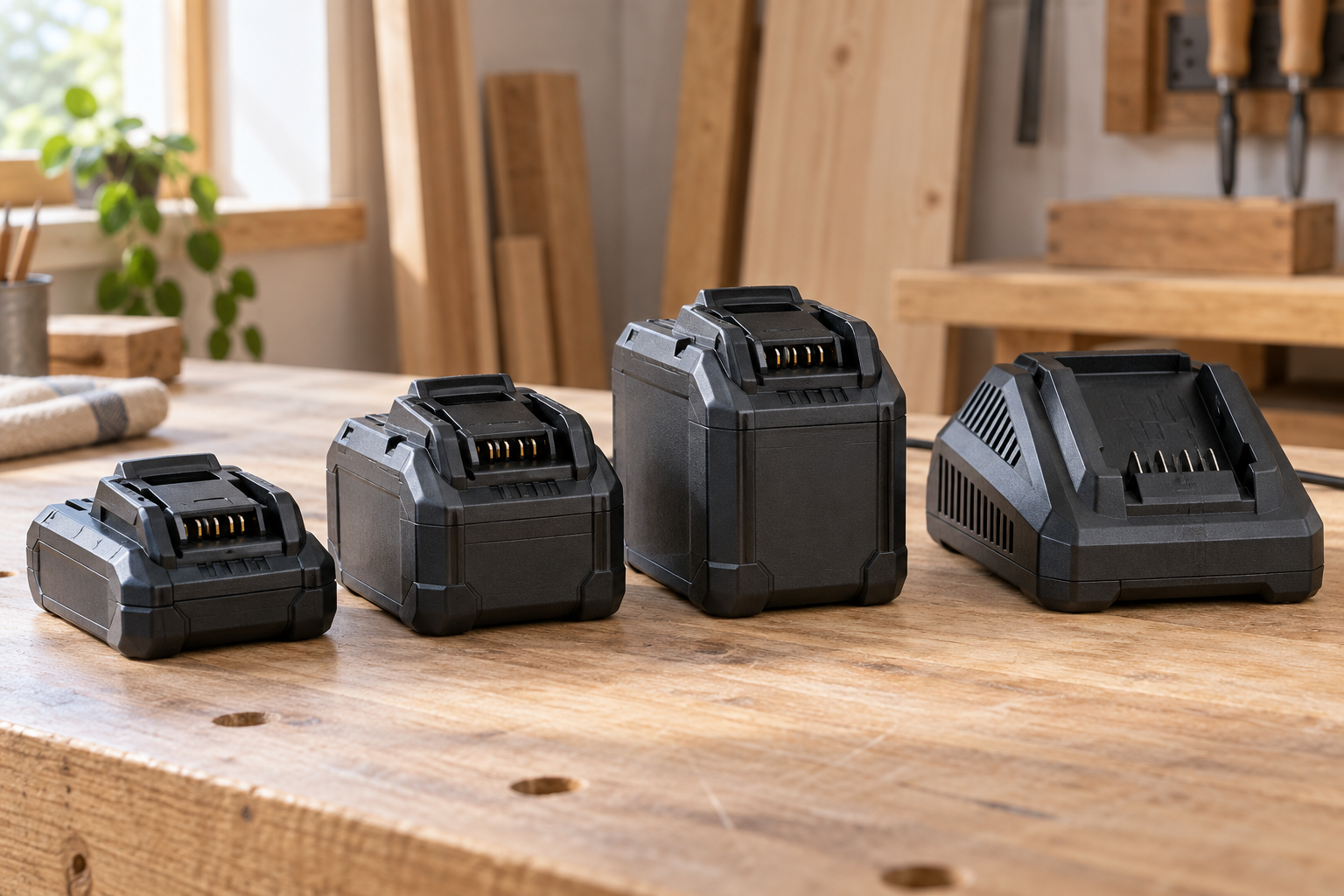
A 2.0Ah battery is light and convenient for an impact driver or inspection light. A 5.0Ah pack usually runs a circular saw longer, but it also adds noticeable weight. A high-output battery may improve performance in a saw or grinder, but it does not automatically give every tool more runtime.
Check the battery contacts and casing for damage. Swollen plastic, cracked housings, melted terminals, or a pack that becomes unusually hot during charging are reasons to retire it. Do not try to revive a damaged lithium-ion battery with a homemade charger or by opening the case.
Decide whether to stay on one platform
Staying with your current battery system is usually sensible when you already own three or more good batteries, have a reliable charger, and can buy the tools you need in that system. Bare tools commonly cost much less than kits, and you avoid charging several incompatible battery types.
Starting a second platform can still be the right move. Some brands have stronger selections for compact tools, outdoor equipment, high-power saws, or specialty tools. A second system also makes sense if your existing batteries are old, scarce, or tied to tools you rarely use.
Do not assume an adapter solves the problem. Battery adapters can interfere with low-voltage protection, leave terminals exposed, or prevent the tool and battery from communicating correctly. They may also void warranties. For expensive saws, grinders, and outdoor tools, use batteries designed for that platform.
| Situation | Usually the better choice | Why |
|---|---|---|
| You own several healthy batteries and need common tools | Buy a bare tool on the same platform | Lower cost and no extra charger |
| Your batteries are more than five to seven years old | Compare a new kit with starting over | New batteries may have better output and warranty coverage |
| Your platform lacks a tool you use often | Consider a second platform | The right tool matters more than avoiding one extra charger |
| You need occasional light-duty work | Use the existing system or buy corded | A new battery ecosystem may never pay for itself |
Match battery size to the job
Choose the battery based on balance, current demand, and expected runtime. A compact pack is often best on a drill used overhead or inside cabinets. A larger pack is more appropriate for long cuts, repeated fastening, or grinding.
For example, a circular saw can drain a small battery quickly in thick lumber. It may still work for a few short cuts, but the pack can heat up and trigger thermal protection. You may finish faster with a larger battery, even though the tool weighs more. For a drill driving a few dozen screws, the lighter pack is often the better choice.
Keep at least two batteries if the tool is central to your work. One can charge while the other is in use. A second charger is useful only when you regularly run several tools continuously; otherwise, spend that money on another battery or a better-quality charger.
When comparing 5Ah cordless tool batteries, compare more than the amp-hour number. Look at weight, warranty, charge time, and whether the pack is intended for high-current tools. Aftermarket batteries may be cheaper, but inconsistent capacity, poor fit, and weak thermal protection make them a risky choice for demanding tools.
Check the bare-tool price, not just the sticker price
A bare tool is a bargain only if you already have compatible batteries and a charger. If you need both, compare the complete kit price against the bare tool plus replacement batteries. A tool kit with two batteries may cost only slightly more than buying those batteries separately.
Watch for “tool only” listings that omit a side handle, blade, belt hook, dust bag, or charger. These omissions are not always a problem, but replacing several small accessories can erase the apparent savings. Read the included-items list rather than relying on product photos.
For a frequently used tool, the cordless tool combo kit with batteries and charger can be the cheaper way to expand. For a one-off tool, a bare version is usually fine if your current batteries are compatible and healthy.
Compare real performance claims
Voltage labels are not enough. Look for no-load speed, torque information, cutting capacity, impact rate, and tool weight with a battery installed. Runtime claims are often based on light-duty testing, so expect less in hardwood, masonry, thick metal, or continuous sanding.
Brushless tools generally offer better efficiency and longer service life, but they cost more. A brushed drill can be perfectly adequate for occasional shelf installation or household repairs. Pay extra for brushless when you use the tool frequently, need maximum runtime, or expect heavy loads.
For drills and impact drivers, clutch settings and control can matter more than maximum torque. For saws, a rigid base, clear sightline, effective brake, and comfortable trigger are worth more than a headline speed figure. For grinders, prioritize a proper guard, side handle, and easy-to-control switch.
Plan charging and storage
Use the manufacturer’s charger whenever possible. Charge batteries on a nonflammable surface, away from direct sunlight and freezing temperatures. Let a hot pack cool before charging; forcing a hot battery onto a charger can shorten its life or trigger a fault.
Do not store every battery permanently on the charger. For storage lasting several months, a partial charge is generally better than leaving the pack empty or fully charged. Keep packs dry and protect the terminals from loose metal objects in a toolbox.
If you need a second charging station, a dual-port cordless tool battery charger can reduce downtime, but it may not charge two packs simultaneously. Check the charger’s specifications: some rotate between batteries, while others charge both at reduced speed.
Know when the cheaper option is enough
Buy the less expensive tool when the job is occasional, the load is light, and the safety features are still adequate. A basic drill, light, inflator, or compact driver does not need the biggest battery or the highest-output motor. Spending more is justified when downtime, fatigue, or repeated overheating costs more than the upgrade.
Before ordering, verify the exact battery series, not just the brand name. Some manufacturers sell multiple voltage families that are not interchangeable. If the listing does not clearly state compatibility, contact the seller or manufacturer first. A five-minute check can prevent buying a tool that requires a completely new set of batteries.
Related guides
- Longest Lasting Lawn Mower Battery: AGM vs Lithium vs Flooded Lifespan and Cost per Season
- Duralast Gold Lawn Mower Battery Review: U1 Fit, CCA and When to Pay for AGM
- Greenworks Pro 80V 21-Inch Mower Review: Runtime Math, Push vs Self-Propelled and Yard Fit
- Bosch High Pressure Washer Gun Replacement: Fittings, Adapters and What Fits Your Model