What's inside
As an Amazon Associate I earn from qualifying purchases. This post may contain affiliate links at no extra cost to you.
Makita LXT vs Milwaukee M18: Tool Range, Batteries, and Charging Options
Makita LXT and Milwaukee M18 are two of the most established cordless tool platforms. Both cover drills, impact drivers, saws, grinders, outdoor equipment, lighting, and jobsite accessories. The important difference is not simply which brand makes the better tool. It is whether the platform’s battery sizes, tool selection, charging setup, and service network fit the work you actually do.
For general DIY, either system is capable. For frequent construction, remodeling, or trade work, the choice becomes more expensive because batteries and chargers are often shared across dozens of tools. Pick the platform first, then buy individual tools around it.
As an Amazon Associate we earn from qualifying purchases at no extra cost to you.


Platform overview
| Feature | Makita LXT | Milwaukee M18 |
|---|---|---|
| Nominal battery voltage | 18V | 18V |
| Battery range | Compact packs through high-capacity packs, including newer high-output options | Compact packs through high-output and high-capacity packs |
| Tool coverage | Very broad, especially in woodworking, construction, and outdoor equipment | Very broad, with particularly strong trade, plumbing, electrical, and jobsite coverage |
| Battery compatibility | LXT batteries fit LXT tools, not Makita 12V or newer XGT tools | M18 batteries fit M18 tools, not M12 or MX FUEL tools |
| Typical charging approach | Single chargers, rapid chargers, and multi-battery charging options | Single chargers, rapid chargers, and multi-battery charging options |
A battery from one platform cannot be safely used on the other. Adapters are a poor workaround: they can defeat protection electronics, create loose connections, and cause overheating or tool damage. The voltage may look similar, but the physical terminals, battery management, and communication systems are different.
Tool range and specialty coverage
Makita LXT has long been strong in saws, drills, sanders, planers, routers, grinders, and outdoor tools. Its range is useful for a homeowner who wants one battery family for building projects and yard maintenance. Makita also offers many compact tools that keep weight down, which matters when drilling overhead or using a reciprocating saw for long periods.
Milwaukee M18 has an equally broad core range and is especially deep in professional trade tools. Its lineup includes multiple versions of common tools, allowing buyers to choose compact, standard, high-torque, or specialty designs. Plumbing, electrical, HVAC, concrete, fastening, and inspection tools are areas where Milwaukee often gives contractors more highly specialized choices.
That does not mean every Milwaukee tool is stronger, or every Makita tool is lighter. Tool-to-tool comparisons matter more than the logo. A compact impact driver from either platform may be preferable for cabinet work, while a high-torque impact wrench needs a large battery regardless of brand.
Before buying, search the range for the tools you may need in the next five years. If you expect to add a track saw, cordless router, hedge trimmer, or specialty inspection tool, availability may matter more than a small difference in drill performance. For a broad selection of general-purpose tools, compare Makita LXT cordless tools and Milwaukee M18 cordless tools before committing.
Battery capacity, runtime, and weight
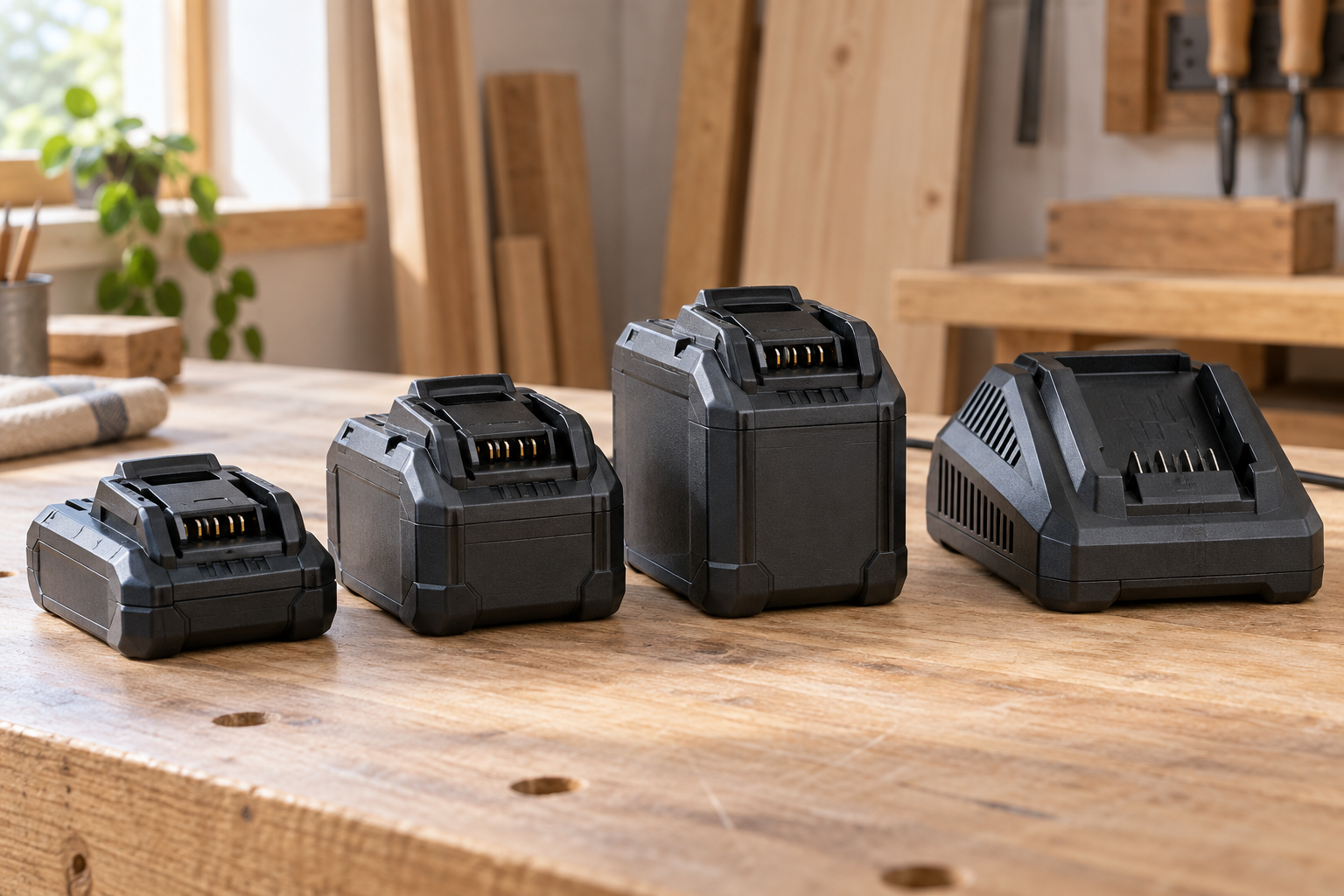
Most LXT and M18 batteries are sold in amp-hour ratings such as 2.0Ah, 3.0Ah, 4.0Ah, 5.0Ah, 6.0Ah, and larger capacities. Amp-hours indicate stored energy, not direct tool power. A rough energy calculation is voltage multiplied by amp-hours: an 18V, 5.0Ah pack stores about 90 watt-hours before losses.
Runtime varies sharply by tool. A 5.0Ah battery may run a drill for many holes, but a grinder cutting steel or a chainsaw under load can drain it quickly. High-output packs use improved cells and internal construction to reduce voltage drop under heavy load. They can make a saw or grinder run more strongly, but they usually cost more and weigh more.
Compact 2.0Ah or 3.0Ah batteries are useful for drills, impact drivers, lights, and overhead work. Five-amp-hour packs are a practical general-purpose choice. Larger packs make more sense for circular saws, vacuums, blowers, grinders, and high-torque impact wrenches. The failure mode is predictable: a large pack may provide longer runtime but make a small drill tiring and less balanced.
Do not judge a kit by the number of batteries alone. Two small packs may be less useful than one 5.0Ah pack if you run a saw. Conversely, buying only large packs can leave you with unnecessary weight for routine fastening.
Chargers and charging strategy
Both platforms offer standard single-battery chargers and faster chargers. Standard charging is gentler and adequate for occasional home use. Rapid chargers reduce downtime, but they can produce more heat and are most valuable when a crew uses tools continuously throughout the day.
Multi-battery chargers are convenient in a workshop or van, but check whether the unit charges packs simultaneously or sequentially. Many compact multi-port chargers rotate between batteries rather than charging every pack at full speed at once. A charger with a cooling fan may sound loud; that is normal during rapid charging.
A practical setup for a homeowner is one standard or rapid charger plus two or three batteries. For daily trade work, two chargers can be more useful than one expensive charger: one stays in the workshop while another travels to the job. Keep batteries out of a hot vehicle when possible. Excess heat accelerates aging, and charging a pack that is hot from use may make the charger pause until it cools.
For charging equipment, compare a Makita LXT battery charger or Milwaukee M18 battery charger with the battery capacity you plan to use. A fast charger is wasted money if a battery is already available between jobs.
Which platform should you buy?
Choose Makita LXT if you value a broad woodworking and outdoor-tool selection, compact ergonomics, or already own several LXT batteries. Choose Milwaukee M18 if your work centers on professional trade tools, specialty equipment, or multiple versions of the same tool for different jobs.
The cheaper option is fine when the tool is used occasionally and the job is light. A basic drill, impact driver, or compact saw from either platform will handle household repairs, shelves, furniture assembly, and modest remodeling. Spend more on batteries when runtime, cold weather, or heavy cutting is the real limitation—not simply because a premium tool has a higher price.
Finally, account for battery replacement. Lithium-ion packs commonly lose noticeable capacity after several years of regular use, sooner if repeatedly overheated, deeply discharged, or stored empty. A platform with cheaper batteries or better local availability can reduce long-term ownership cost, even when the initial tool kit costs more.
FAQ
Which platform should you buy?
Related guides
- Longest Lasting Lawn Mower Battery: AGM vs Lithium vs Flooded Lifespan and Cost per Season
- Duralast Gold Lawn Mower Battery Review: U1 Fit, CCA and When to Pay for AGM
- Greenworks Pro 80V 21-Inch Mower Review: Runtime Math, Push vs Self-Propelled and Yard Fit
- Bosch High Pressure Washer Gun Replacement: Fittings, Adapters and What Fits Your Model