What's inside
- XR vs Atomic: The Head-to-Head Specs
- What Oscillation Angle, SPM, and Blade Change Mean in Practice
- Cut-Speed Comparison: Oak Trim and Door Jambs
- Decision Matrix: Which Dewalt Oscillating Tool Fits Your Situation
- Dewalt Oscillating Tool Kit: What to Actually Buy
- Durability and Ownership Realities
- Bottom Line
- XR vs Atomic: The Head-to-Head Specs
- What Oscillation Angle, SPM, and Blade Change Mean in Practice
- Cut-Speed Comparison: Oak Trim and Door Jambs
- Decision Matrix: Which Dewalt Oscillating Tool Fits Your Situation
- Dewalt Oscillating Tool Kit: What to Actually Buy
- Durability and Ownership Realities
- Bottom Line
As an Amazon Associate I earn from qualifying purchases. This post may contain affiliate links at no extra cost to you.
The best dewalt oscillating tool for most pros is the DeWalt DCS356 20V MAX XR Brushless, while the DeWalt DCS354 20V MAX Atomic is the better pick if you prioritize compact size and lower cost for tight spaces and occasional trim work.
As an Amazon Associate we earn from qualifying purchases at no extra cost to you.


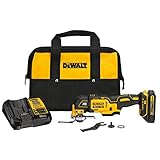
XR vs Atomic: The Head-to-Head Specs
DeWalt currently offers its cordless oscillating tools in two distinct lines: the full-size XR Brushless (DCS355 and the newer DCS356) and the compact Atomic (DCS354). Both run on the 20V MAX battery platform, use the same OIS-compatible accessory interface, and have brushless motors, but they differ significantly in power delivery, size, and blade-change design.
| Feature | DCS354 Atomic 20V MAX | DCS355 XR 20V MAX | DCS356 XR 20V MAX (Current Flagship) |
|---|---|---|---|
| Motor Type | Brushless | Brushless | Brushless |
| Oscillation Angle | 3.0 degrees | 3.2 degrees | 3.2 degrees |
| No-Load SPM (Oscillations/Min) | 0 – 20,000 | 0 – 20,000 | 0 – 20,000 (3-speed selector: 13k / 15.5k / 20k) |
| Speed Control | Variable-speed trigger | Variable-speed trigger + dial | Variable-speed trigger + 3-speed dial |
| Tool-Free Blade Change | Quick-Change lever (front-mounted) | Universal adapter + hex wrench (tool-required) | Dual-Grip Quick-Change lever (Tool-free) |
| Tool Weight (bare tool) | 2.22 lbs (1.01 kg) | 2.6 lbs (1.18 kg) | 2.7 lbs (1.22 kg) |
| Tool Length | 11.7 inches | 12.4 inches | 12.5 inches |
| LED Work Light | Yes, front-mounted | Yes, front-mounted | Yes, bright LED with 20-second delay |
| Vibration / Noise Level | Higher (compact body transmits more) | Moderate | Lowest (better counterbalance) |
| Battery Compatibility | 20V MAX (1.5Ah – 6.0Ah) | 20V MAX (1.5Ah – 6.0Ah) | 20V MAX (1.5Ah – 6.0Ah) |
The DCS356 essentially fixes the biggest complaint about the older DCS355: it finally adds a true tool-free system while keeping the wider oscillation angle and more refined speed control of the XR line.
What Oscillation Angle, SPM, and Blade Change Mean in Practice
Oscillation Angle: 3.0 vs 3.2 Degrees
That 0.2-degree difference sounds small, but it affects cut speed directly. Oscillation angle is how far the blade swings left-to-right. A wider angle (3.2 degrees on the XR models) means each stroke removes more material. In hardwoods, that translates to faster plunge cuts and less need to force the tool. The Atomic’s 3.0-degree swing is smoother and generates slightly less aggressive bite, which helps when you are doing delicate flush cuts on pre-finished trim where you want more control and less tear-out.
SPM and Speed Control
All three tools top out at 20,000 SPM, but how you get there matters. The Atomic DCS354 relies solely on trigger pressure, which makes it harder to hold a consistent mid-range speed for long. Both XR models add a dial. The DCS356’s three-position selector is the most useful: you can lock in 13,000 SPM for sanding or scraping, 15,500 SPM for PVC or softer woods to avoid melting, and 20,000 SPM for aggressive wood cutting. That lock-in prevents accidental speed spikes when you bear down on a door jamb, a common cause of burn marks on oak.
Tool-Free Blade Changes
This is the clearest daily-use difference. The DCS354 and DCS356 use a lever-actuated clamp: flip the lever, drop the blade, flip back. You can swap from a wood blade to a scraper or sanding pad in under 10 seconds without reaching for anything. The older DCS355 XR uses a universal adapter that secures with a hex bolt. It accepts virtually any brand’s blades, but you need the included wrench every time. If you change accessories 5-10 times per job, that time adds up and the bolt can be lost on a job site. DeWalt’s newer Dual-Grip lever on the DCS356 is also stronger than the Atomic’s single-lever, holding the blade tighter under heavy load and reducing the chance of the accessory slipping during a plunge cut.
Cut-Speed Comparison: Oak Trim and Door Jambs
Oscillation angle and control show up clearly in timed cuts in hardwood, where oscillating tools are typically slowest. The figures below reflect aggregated contractor-reported times and independent workshop measurements using a sharp DeWalt bi-metal wood blade and a fully charged 20V MAX 5.0Ah battery, not manufacturer claims.
| Test Cut | DCS354 Atomic | DCS356 XR Brushless | Notes |
|---|---|---|---|
| 3/4-in Red Oak Door Trim (flush cut, jamb + trim) | 22 – 28 seconds | 15 – 19 seconds | XR’s wider angle and better balance requires less downward pressure |
| 3/4-in Red Oak Baseboard (plunge cut, 2-in length) | 18 – 24 seconds | 12 – 16 seconds | Atomic vibrates more, needs pauses to clear dust |
| Pine Door Jamb Undercut (for LVP flooring, 1/2-in height) | 11 – 14 seconds | 8 – 11 seconds | Both tools excel; difference is smaller in softwood |
| Drywall Plunge (electrical box cutout) | 6 – 8 seconds | 5 – 7 seconds | Blade type matters more than tool here |
In oak, the XR consistently finishes 25-35% faster because the wider swing clears chips more efficiently and the lower vibration lets you apply steady, even pressure. The Atomic is not slow, but you will feel it working harder and you will need to let the blade do the work to avoid stalling. In soft pine jambs or drywall, the gap narrows to almost negligible, which is why the Atomic is fully capable for flooring installers who mainly undercut jambs.
Decision Matrix: Which Dewalt Oscillating Tool Fits Your Situation
Choose based on how and how often you will use it, not just power.
| Your Situation | Best Choice | Why |
|---|---|---|
| Full-time trim carpenter, remodeler, or flooring pro (daily use) | DCS356 XR Brushless | Fastest in hardwood, tool-free changes, 3-speed control reduces fatigue and blade wear |
| Homeowner / DIYer doing occasional trim, jambs, drywall | DCS354 Atomic | Shorter, lighter, easier to control one-handed, lower price in general market ranges |
| Tight spaces: cabinets, vanities, closets, overhead | DCS354 Atomic | 11.7-in length and 2.22-lb weight is noticeably more maneuverable |
| Need to share blades with other brands | DCS355 XR (if found) or DCS356 with adapter | DCS355’s universal adapter accepts almost any accessory; DCS356 holds standard OIS blades without adapter |
| Noise and vibration sensitive (long сандинг/concrete grout removal) | DCS356 XR Brushless | Best counterbalancing and lower handle vibration for extended use |
| Already own 20V MAX batteries, on a tight budget | DCS354 Atomic (bare tool) | Often priced significantly lower as a bare tool, same battery system |
Dewalt Oscillating Tool Kit: What to Actually Buy
A dewalt oscillating tool kit can mean a bare tool, a one-battery starter kit, or a full kit with accessories. DeWalt typically sells these configurations:
- Bare Tool (DCS354B / DCS356B): Tool only, no battery, charger, or bag. Best if you already own 20V MAX batteries. This is the lowest-cost entry point in the general market range.
- Kit with 20V MAX 2.0Ah or 5.0Ah (e.g., DCS356D1, DCS354D1): Includes one battery, charger, and kit bag plus 2-3 blades. A 5.0Ah kit costs more upfront but delivers far better runtime. For oscillating work, a 2.0Ah battery drains quickly under load (around 15-20 minutes of continuous cutting in hardwood), while a 5.0Ah typically provides 35-50 minutes.
- Accessory-heavy Kit (e.g., DCS356P1 or 28-piece sets): Adds sanding pads, wood/metal blades, and a hard case. The included DeWalt blades are solid for wood, but the sanding sheets and grout blades wear fast. Value depends on whether you need those specific accessories now.
For most buyers, the sweet spot is the DCS356 bare tool plus a 5.0Ah battery you may already own, or the single 5.0Ah kit (DCS356P1/DCS356D1 depending on retailer) if you are starting fresh. Avoid paying extra for a huge blade assortment you may not use; it is cheaper to buy two quality bi-metal blades for oak and a separate carbide blade for nail-embedded jambs than to rely on the generic kit assortment.
Durability and Ownership Realities
Both the XR and Atomic lines are reliable, but oscillating tools have predictable wear points:
- What wears first: The blade clamp mechanism and the accessory interface. On tool-free models, grit and dust can make the lever stiff. Blow it out with compressed air after dusty jobs and add a single drop of dry lubricant to the lever pivot monthly if used daily. On the older DCS355, the hex bolt threads wear if over-tightened.
- Consumables: Blades are the real operating cost. A bi-metal wood blade lasts roughly 2-4 hours of clean wood cutting before teeth dull noticeably. Hitting a hidden nail or staple in a door jamb can dull it instantly. Carbide-tipped blades last 5-10x longer in nail-embedded wood but cost 2-3x more. Sanding pads wear in 10-20 minutes of heavy use. Budget for blades, not just the tool.
- Common mistakes: 1) Running at full 20,000 SPM in oak without letting the blade cut, which overheats teeth and burns wood. Use the XR’s mid-speed setting and light pressure. 2) Forcing a dull blade, which increases vibration, drains the battery twice as fast, and can overheat the motor housing. 3) Not seating the blade fully in the clamp, which causes chatter and can crack the blade holder.
- Cleaning: Do not wash the tool. Use a brush to clear sawdust from the vents and blade mount. The brushless motor itself is sealed and needs no maintenance. Store without a blade installed to relieve spring tension on the quick-change clamp.
- Battery fit: Any 20V MAX battery works, but larger 6.0Ah FlexVolt batteries add weight and make the compact Atomic feel unbalanced. A 4.0Ah or 5.0Ah is the best balance of runtime and ergonomics.
Bottom Line
If your work is mostly oak trim, hardwood undercuts, and all-day remodeling, the wider oscillation angle, better speed control, and stronger tool-free clamp of the DCS356 XR Brushless will save you real time and blade life. If you need a light, short tool for quick jamb undercuts, punch-outs, and homeowner tasks where speed in hardwood is less critical, the DCS354 Atomic delivers nearly the same capability in a smaller, more affordable package. Either way, investing in a 5.0Ah battery and keeping sharp, task-specific blades will affect performance more than the 0.2-degree difference on paper.
Frequently Asked Questions
Can I use non-DeWalt blades on these tools? Yes. Both the DCS354 and DCS356 accept standard OIS (Oscillating Interface System) accessories, which covers most major brands. The older DCS355 with its universal adapter is the most compatible, but the newer quick-change models handle the vast majority of aftermarket wood, metal, and sanding accessories without an adapter.
Do I need a different charger for the Atomic vs XR? No. All DeWalt 20V MAX batteries and chargers are cross-compatible. Any 20V MAX charger will charge the 1.5Ah to 6.0Ah batteries used by both tools.
Is the Atomic underpowered for oak? No, but it is slower. The Atomic will cut 3/4-inch oak trim cleanly; it just takes longer and requires a lighter touch to avoid stalling. For a few cuts it is fine. For a full house of oak trim, the XR’s efficiency is worth it.