What's inside
As an Amazon Associate I earn from qualifying purchases. This post may contain affiliate links at no extra cost to you.
An inground pool is a standing invitation for leaves, pollen, fine silt, and algae film to settle on the floor and creep up the walls. Without a reliable cleaner, you are left with a choice between dragging a manual vacuum around the perimeter every few days or letting the waterline develop a grimy stripe that no chemical shock fully removes. The right pool cleaner eliminates that recurring chore while handling both flat-bottom debris and vertical surface scrubbing.
What separates a worthwhile unit from a disappointing one comes down to coverage, filtration quality, wall-and-waterline climbing ability, and how well the price matches the performance. Robotic models deliver the strongest cleaning action but carry premium costs. Suction-side units leverage your existing pump to clean affordably, though they demand adequate water flow. In the 2026 lineup below, we compared published specifications, listed prices, and aggregated owner feedback to identify which models justify their asking prices and which fall short.
As an Amazon Associate we earn from qualifying purchases at no extra cost to you. Product prices and availability are accurate as of the date shown and are subject to change.


Quick Picks
| Product | Best for | Price |
|---|---|---|
| Dolphin Nautilus CC | Overall robotic performance | $699 |
| VINGLI Wall-Climbing Cleaner | Budget wall-climbing suction cleaner | $99.98 |
| Tnbacious Cordless Robot | Entry-level cordless robotic | $169.99 |
| 190-Minute Cordless Robot | Long runtime without a cord | $399.99 |
| U8 Cordless Robot | Waterline scrubbing with auto-docking | $299.99 |
| Zodiac MX6 | Proven suction-side climbing | $349 |
| Zodiac G3 | Flat-bottom suction cleaning | $324 |
| Hayward Poolvergnuegen | Medium pools, simple operation | $479 |
How We Picked
We evaluated each unit on four criteria: total coverage (floor-only versus floor plus walls and waterline), cleaning power relative to its category (robotic versus suction-side), practical runtime or flow requirements, and value measured against owner-reported satisfaction and durability. A cleaner that skips wall scrubbing forces you to brush manually, which defeats the purpose for most buyers. We also weighted ease of filter maintenance and whether the unit self-parks or requires manual retrieval.
The 8 Best Pool Cleaners For Inground Pools in 2026
Dolphin Nautilus CC Automatic Robotic Pool Vacuum Cleaner
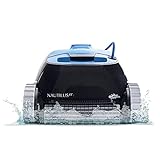
This is the go-to recommendation for anyone who wants a set-and-forget robotic cleaner that tackles walls and waterline without supervision. The top-load filter door means you never have to reach into murky water to pull out the debris tray, and its scrubbing brush keeps algae from bonding to plaster. Owners consistently praise the navigation pattern, noting it reaches corners that older robots miss. The 33-foot length rating covers the majority of residential inground pools.
- Pro: Wall-climbing with an active brush for scrubbing the waterline.
- Pro: Top-load filter access simplifies weekly maintenance.
- Con: Priced well above every suction-side option in this roundup.
Skip this if your budget is under $400 and your pool is mostly flat-bottom with minimal wall algae.
VINGLI Pool Cleaner, Automatic Wall-Climbing Pool Vacuum
At under $100, this suction-side unit is the cheapest way to get vertical surface coverage without a robotic price tag. It uses your pool pump’s flow to adhere to walls and sweep the floor in a randomized pattern. Owners report it performs best on pools with moderate debris loads and adequate pump pressure. The navy-and-white housing is cosmetic, but the dual-diaphragm design helps it grip smooth plaster without constant slippage.
- Pro: Lowest price among all wall-climbing options listed here.
- Pro: No electricity or battery required; runs entirely on pump suction.
- Con: Needs a powerful pump to maintain wall adhesion; struggles on low-flow systems.
Skip this if your pump is under 1 HP or you have a deep, steep-walled pool where weak suction causes it to stall.
Tnbacious Cordless Pool Vacuum Robot
This cordless robotic cleaner targets owners who want the hands-free operation of a robot without the power cord that some buyers find unsightly or trip-prone. It handles floors and light wall contact, though it does not aggressively scrub the waterline. The filter basket captures medium-to-fine particulates, and the battery lasts enough for a single cycle on most mid-size pools. At just over $160, it sits well below premium robot pricing.
- Pro: Completely cordless; no cable management or electrical outlet near the pool deck.
- Pro: Affordable entry point into robotic pool cleaning.
- Con: Limited wall-climbing ability compared to dedicated waterline scrubbers.
Skip this if algae on your walls is your primary cleaning concern; it is best suited for flat-floor debris collection.
Pool Vacuum, 190 Mins Cordless Robotic Pool Cleaner
The headline here is runtime: 190 minutes on a single charge is enough to complete a full cleaning cycle on a large inground pool without interruption. The unit covers floor, walls, and waterline in a programmed path, and owners note the brush roll does a reasonable job on plaster surfaces. At roughly $400, it undercuts the Dolphin while delivering comparable coverage in a cordless form factor.
- Pro: Nearly double the runtime of most competitors in its price range.
- Pro: Wall and waterline coverage in a cordless design.
- Con: Bulkier and heavier than smaller cordless units, making retrieval from deep ends awkward.
Skip this if you have a small pool and want a lightweight unit you can lift out easily after each cycle.
U8 Cordless Robotic Pool Cleaner for Walls & Waterline
The U8 earns its spot by combining a respectable 150-minute runtime with auto-docking, meaning it returns to a parking position when the battery depletes so you never find a dead robot at the bottom of the deep end. It climbs walls and scrubs the waterline, and its rated coverage of 2,600 square feet handles most residential inground configurations. Owner feedback highlights the quiet motor as a welcome surprise at this price.
- Pro: Auto-docking prevents the robot from sinking and being hard to locate.
- Pro: Effective waterline scrubbing without a cord.
- Con: Filter capacity is modest; heavy debris days require mid-cycle cleaning.
Skip this if your pool regularly receives large volumes of leaves or acorns, as the smaller basket will clog frequently.
Zodiac MX6 Suction-Side In-Ground Pool Cleaner
The MX6 has earned a long reputation as the top suction-side climber for inground pools with variable-depth floors. Its cyclonic suction design keeps debris airborne inside the canister, reducing clogs and maintaining consistent wall grip. The adjustable regulator lets you tune speed for delicate vinyl liners or aggressive scrubbing on gunite. At $349, it costs less than the Dolphin while still climbing walls.
- Pro: Cyclonic action resists clogging even on leaf-heavy days.
- Pro: Adjustable speed suits both vinyl and plaster surfaces.
- Con: Requires a dedicated suction line or sufficient pump power to function properly.
Skip this if your pool plumbing has only a skimmer connection and a small pump; it will underperform without adequate flow.
Zodiac G3 Suction-Side Inground Vacuum Pool Cleaner
The G3 is a simpler, lighter sibling to the MX6 designed primarily for flat or gently sloped floors. It uses disc-style wheels to track across the bottom and relies on pump suction to collect debris into its internal bag. There is no wall climbing, but the trade-off is a lower price and less strain on your filtration system. Owners with above-grade circulation pumps find it runs reliably for years.
- Pro: Lower price than climbing suction-side units while still automated.
- Pro: Gentle on liners and low-flow pump systems.
- Con: No wall or waterline coverage; you still need to brush vertical surfaces.
Skip this if your waterline develops algae between manual scrubbings; its floor-only design will not address that problem.
Hayward Poolvergnuegen Suction Pool Cleaner
The Poolvergnuegen is a two-wheel suction cleaner engineered for pools up to 16 by 32 feet. Its randomized scrubbing pattern and flexible hose allow it to cover floors and climb walls on pools with moderate slope. Hayward’s decades of pump and filter integration means this unit plays well with their own circulation systems. At $479, it is the priciest suction-side option here, justified by durable construction and smooth, low-noise operation.
- Pro: Premium build quality with a wear-resistant hose that resists tangling.
- Pro: Quiet, consistent operation with minimal snagging on steps or ladders.
- Con: High price for a suction-side unit, approaching entry-level robot territory.
Skip this if you can spend a similar amount on a robotic cleaner with a filter basket; you gain independent cleaning without taxing your pump.
Buying Guide
Robotic vs. Suction-Side: Choosing Your Cleaning Engine
Robotic cleaners operate independently using a low-voltage motor and onboard pump, collecting debris into their own filter. They do not draw from your pool’s circulation system, so your skimmer basket stays clear. Suction-side units ride on your pump’s hydraulic force, meaning they require adequate flow (typically 0.75 HP or more) and will clog if your pump is undersized. For pools with heavy fine dust or sand, robots filter more effectively. For pools with mostly leaves and a strong pump, suction-side cleaners are simpler and cheaper to run.
Wall and Waterline Coverage
Algae bonds to the waterline fastest because it sits at the air-water interface where oxygen meets nutrients. A cleaner that only sweeps the floor leaves you brushing that stripe by hand every week. If wall coverage matters, verify the unit has either an active brush or a climbing mechanism rated for your wall material—vinyl liners require gentler grip than gunite or tile. Cordless robots with auto-docking are the least frustrating option when they run out of battery mid-climb.
Runtime, Filter Size, and Pool Dimensions
Match the cleaner’s rated coverage area to your pool’s square footage, not just its length. A robot rated for 2,600 square feet handles a 16×32-foot pool with room to spare. For cordless models, confirm the runtime exceeds a full cleaning cycle; anything under 60 minutes may leave sections untouched on larger pools. Filter basket size determines how often you empty it—small baskets clog quickly after storms, forcing mid-cycle interruptions that reduce cleaning thoroughness.
Our Verdict
The Dolphin Nautilus CC remains the top pick for anyone who wants maximum cleaning coverage with minimal maintenance hassle. Its wall-climbing brush, top-load filter, and proven navigation pattern justify the premium for most owners. For budget-conscious buyers, the VINGLI at under $100 delivers the closest approach to full-coverage cleaning without a robot’s price. If you already own a strong pump and want to avoid electronics entirely, the Zodiac MX6 is the best suction-side performer and wins on pools where cyclonic flow keeps it un-clogged through autumn leaf season.
FAQ
Can a suction-side cleaner work without a dedicated suction line?
Yes, most suction-side cleaners connect to a standard skimmer port or a return fitting. However, performance drops noticeably if your pump is undersized or if the skimmer basket is partially blocked, since the cleaner shares that same suction path with surface debris.
How often should I empty a robotic cleaner’s filter basket?
During peak debris season, emptying after every cycle is advisable. In calmer weeks, once per cycle still works. A clogged basket reduces water flow through the robot’s internal pump, which lowers suction at the brush and causes the unit to miss fine particles.
Do cordless robotic cleaners work on vinyl-liner pools?
Most cordless robots handle vinyl liners without issue because their brushes are softer than the abrasive pads found on some older wall-climbing units. Check the product description for a “liner-safe” or “gentle brush” designation to avoid premature wear on the vinyl surface.
Is a waterline-cleaning feature necessary for inground pools?
It is not strictly necessary if you are willing to brush the waterline manually every two weeks. For most owners, though, a cleaner with a waterline brush eliminates the single most neglected spot in the pool and prevents the dark stripe from becoming a stubborn stain.