What's inside
As an Amazon Associate I earn from qualifying purchases. This post may contain affiliate links at no extra cost to you.
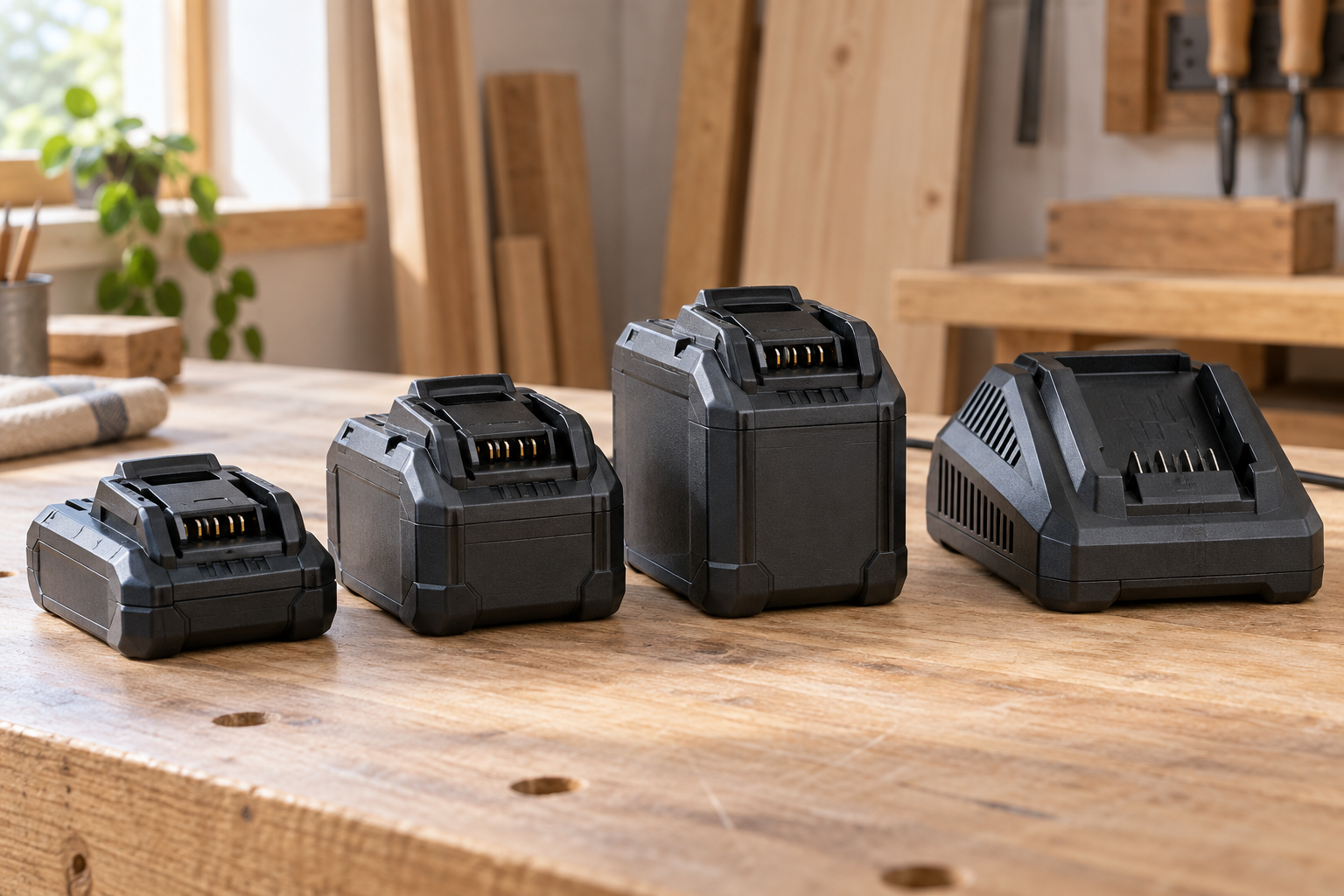
The Ryobi P118B and P135 both charge 18V ONE+ batteries, but they suit different charging habits. The P118B is a basic charger for topping up batteries between jobs. The P135 is a faster charger with a fan-cooled design, useful when you need a battery back in service sooner. Neither charger makes a battery more powerful, and neither turns an old or damaged pack into a reliable one.
At a glance
| Feature | Ryobi P118B | Ryobi P135 |
|---|---|---|
| Charger type | Basic ONE+ charger | Faster, fan-cooled ONE+ charger |
| Charging pace | Slower; best for overnight or between-job charging | Quicker; better for frequent battery changes |
| Battery compatibility | Ryobi 18V ONE+ lithium-ion packs | Ryobi 18V ONE+ lithium-ion packs |
| Best fit | Occasional DIY use, spare charger | Busy DIY use, multiple tools, shorter downtime |
| Key trade-off | Lower cost, longer waits | Higher cost, fan noise and a larger charger |
Charging speed and real-world downtime
The main reason to choose the P135 is reduced waiting, not a different charging standard. Ryobi’s stated times depend on battery capacity and condition, and the charger may slow or pause charging when a pack is too hot or cold. As a rough planning rule, small 1.5Ah packs take less time than 4Ah or 6Ah packs; a high-capacity battery can still occupy a basic charger for hours.
That difference matters if you have one battery and are working continuously. With the P118B, a depleted pack may not be ready by the time you finish using a second tool or take a short break. The P135’s fan helps manage heat during faster charging, but it does not make every battery charge instantly. A hot pack coming off a saw or mower may need to cool before either charger can proceed normally.
For occasional projects, a longer charge is often irrelevant: put the battery on the P118B after work and use it the next day. If you regularly run a drill, impact driver, or outdoor tool through several batteries in a day, faster turnaround has practical value. Adding a second battery can be a better fix than buying the faster charger if you only run out of power occasionally.
Compatibility and battery care
Both chargers are for Ryobi’s 18V ONE+ battery system. They are not chargers for Ryobi 40V packs, and they are not interchangeable with other brands’ batteries. Check the voltage and platform printed on the pack before plugging it in. Also confirm the exact charger model and condition if buying used: a damaged cord, cracked housing, or battery slot with bent contacts is not a bargain.
Charging behavior can be mistaken for a failed charger. Lithium-ion batteries may refuse to charge immediately if they are very hot or cold. Let a pack sit at room temperature, then try again. If the charger repeatedly reports an error with one battery but charges another, the battery is the more likely problem. If several known-good packs fail on the same charger, inspect the outlet and contacts, then consider replacing the charger.
Do not scrape the contacts with metal tools or force a battery into the slot. Keep the charger’s vents clear, especially on the fan-cooled P135. Dust buildup can restrict airflow and contribute to heat. A swollen, cracked, leaking, or unusually hot battery should be taken out of use rather than repeatedly tested.
Which one should you buy?
Choose the P118B if you use ONE+ tools occasionally, charge overnight, or want an inexpensive backup for a charger you already own. It covers the basic job: charge compatible batteries safely under normal conditions. Paying extra for a faster charger will not improve runtime, torque, or battery life by itself.
Choose the P135 if charge time regularly interrupts work, you own larger-capacity packs, or you rotate batteries between several tools. The fan adds some noise, and the charger takes up more room than a basic unit. Those are small costs if faster turnaround keeps a project moving, but they are unnecessary for a homeowner who charges one battery after weekend use.
If you are building out the system, compare the charger price with a second battery or a kit that includes both. For a basic replacement, look for a Ryobi 18V ONE+ charger. If downtime is the issue, consider a Ryobi 18V ONE+ fast charger. Check the listing’s exact model number and included accessories; photos and titles can cover multiple charger versions.
The practical choice
The P118B is enough when charging happens in the background. The P135 earns its place when batteries need to cycle back into use quickly and often. Before spending more, count how many batteries you have and how long each tool runs: if you own only one pack, a second compatible battery may reduce interruptions more than a faster charger. If you already have spares and still wait on charging, the P135 is the more useful upgrade.
FAQ
Which one should you buy?
Related guides
- Longest Lasting Lawn Mower Battery: AGM vs Lithium vs Flooded Lifespan and Cost per Season
- Duralast Gold Lawn Mower Battery Review: U1 Fit, CCA and When to Pay for AGM
- Greenworks Pro 80V 21-Inch Mower Review: Runtime Math, Push vs Self-Propelled and Yard Fit
- Bosch High Pressure Washer Gun Replacement: Fittings, Adapters and What Fits Your Model