What's inside
As an Amazon Associate I earn from qualifying purchases. This post may contain affiliate links at no extra cost to you.
Ryobi ONE+ and ONE+ HP are part of the same 18V battery platform, but they are not identical tool lines. The important point for buyers is simple: ONE+ batteries work with ONE+ HP tools, and newer HP batteries work with standard ONE+ tools. The battery connection is shared. The performance, motor design, controls, and price are not.
That compatibility makes Ryobi’s platform useful for building a mixed collection over time. You can buy a basic drill today, add a higher-performance saw later, and keep using the batteries you already own. The trade-off is that a standard battery may limit what an HP tool can deliver, especially under heavy load.
Battery compatibility and what “18V” means
Both product lines use Ryobi’s slide-on 18V ONE+ battery interface. A standard ONE+ lithium-ion battery physically fits an ONE+ HP tool, while an HP battery fits standard ONE+ tools. Chargers are also generally shared across the platform, so you do not need a separate charging system just because you buy an HP tool.
“18V” and “20V MAX” are marketing conventions based on the same nominal lithium-ion voltage range. Ryobi’s 18V batteries are built from five lithium-ion cells in series. Capacity is usually stated in amp-hours (Ah), such as 1.5Ah, 2Ah, 4Ah, or 6Ah. A 4Ah battery stores roughly twice the energy of a 2Ah battery, though actual runtime depends heavily on the tool and workload.
Battery fit does not guarantee equal performance. A compact battery can run an HP saw, but it may hit its thermal or current limits sooner. The tool may slow down, shut off, or trigger the battery’s protection circuit during a demanding cut. For light drilling, fastening, or occasional trimming, that may never matter. For long cuts or thick material, it matters quickly.
ONE+ versus ONE+ HP at a glance
| Feature | ONE+ | ONE+ HP |
|---|---|---|
| Battery connection | 18V ONE+ slide-on battery | 18V ONE+ slide-on battery |
| Battery compatibility | Works with standard and HP batteries | Works with standard and HP batteries |
| Typical motor design | Brushed or basic brushless, depending on tool | Brushless motor with upgraded electronics |
| Runtime under heavy load | Usually shorter | Usually longer, especially with a high-output battery |
| Price | Lower tool and kit prices | Higher upfront cost |
| Best fit | Household repairs and occasional projects | Frequent use, tougher materials, and higher-demand tools |
How HP tools perform differently
ONE+ HP tools typically use brushless motors and electronic controls designed to deliver more power efficiently. Brushless motors have no replaceable carbon brushes rubbing against a commutator, so they generally waste less energy as heat and require less maintenance. The exact improvement varies by tool; “HP” is not a universal performance rating.
In a drill or impact driver, the difference can show up as faster work in large fasteners, fewer stalls, and better sustained performance. In a circular saw, HP may maintain blade speed better when cutting plywood, framing lumber, or hardwood. In an angle grinder, blower, or string trimmer, the higher-output design can make the tool feel less strained, but it can also consume battery capacity faster.
That does not mean every HP tool is dramatically stronger. A standard ONE+ drill may already be more than adequate for assembling furniture, drilling pilot holes, and driving small screws. An HP version can be worthwhile if you regularly drill large holes, install long structural screws, or work through dense lumber, but it is unnecessary for a few household jobs each month.
For a first purchase, compare the complete kit rather than the tool label. A standard tool kit with a 4Ah battery and charger may be a better value than an HP bare tool if you have no batteries. Conversely, buying the cheaper tool and later adding several batteries can erase the initial savings.
Choosing the right battery for HP tools
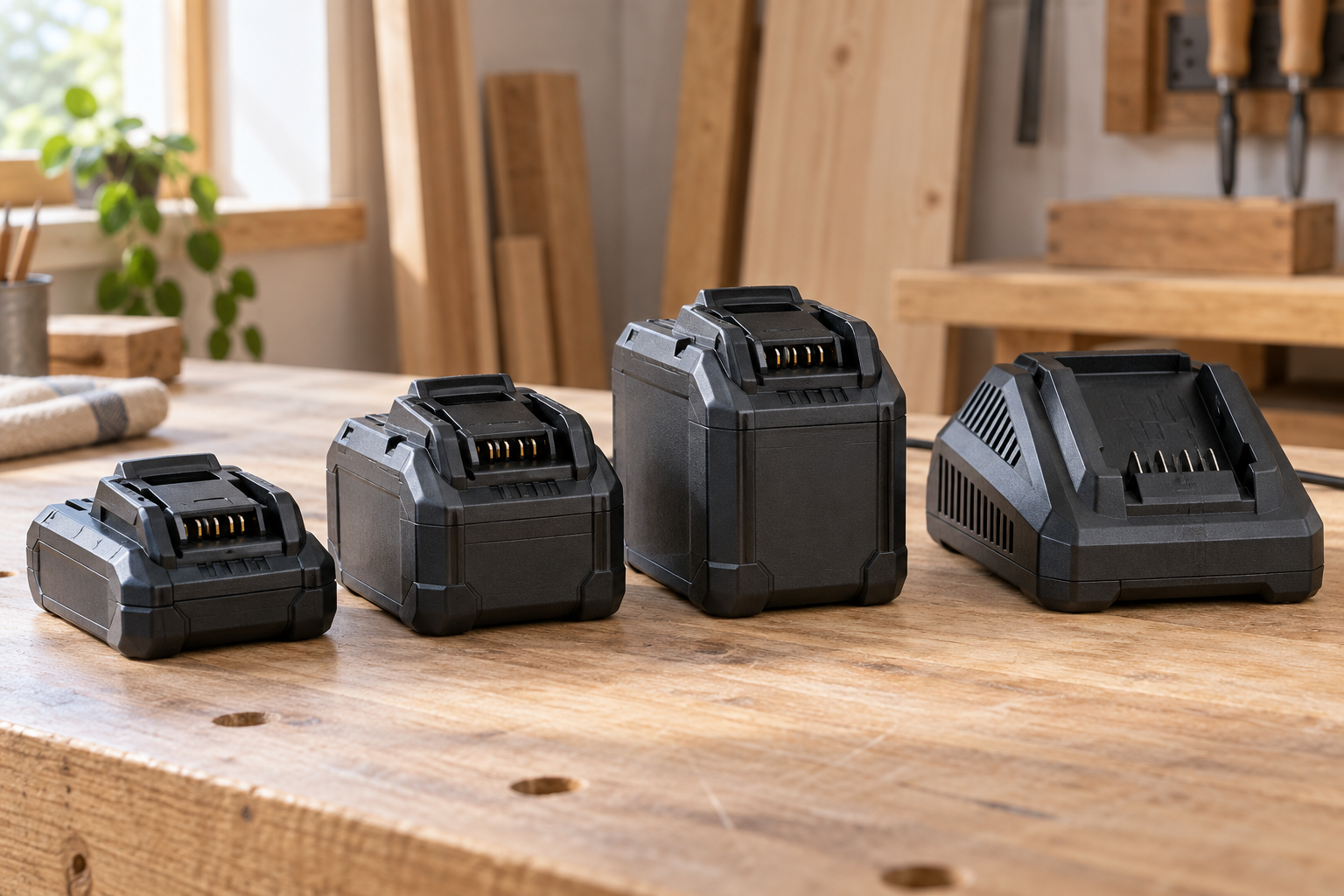
Battery size affects both runtime and handling. A 2Ah pack is lighter and less tiring on a drill or impact driver. A 4Ah pack is a practical middle ground for saws, blowers, and outdoor tools. A 6Ah pack can provide longer runtime and better current delivery, but it adds noticeable weight.
For example, a compact 2Ah battery might be suitable for driving dozens of screws or drilling light-duty holes. A circular saw cutting sheet goods can use that capacity quickly, particularly if the blade is dull or the material is thick. A high-output battery may keep the saw running more consistently, but it will not fix a binding blade, incorrect cut depth, or poor technique.
Expect protection shutdowns when a battery is cold, overheated, deeply discharged, or asked for more current than its cells can safely provide. Let a hot pack cool before charging. Do not keep forcing a stalled saw or grinder; repeated stalls generate heat in the motor, battery, and electronics.
If you need batteries for demanding work, compare Ryobi ONE+ high-output batteries by capacity and weight, not just the amp-hour number. A larger pack is not automatically the best choice for every tool.
Which line makes sense for your work?
Choose standard ONE+ when cost is the priority and your jobs are intermittent: hanging shelves, assembling cabinets, drilling small holes, trimming light vegetation, or making occasional repairs. Standard tools are also sensible when you need several tools but use each one for only a few minutes at a time. The cheaper line is not a bad choice simply because HP exists.
Choose ONE+ HP for tools that see repeated, high-load use. Circular saws, reciprocating saws, grinders, blowers, chainsaws, and high-torque impact tools benefit most. If you are cutting framing lumber every weekend or maintaining a large yard, the cooler running and better sustained output can justify the added cost.
A practical mixed setup often works best: use a standard ONE+ drill kit for general work, then buy HP versions of the tools that regularly bog down. This preserves compatibility while putting money where performance is visible.
Buying and maintenance checks
Buy from a reputable seller and check that batteries are genuine. Counterfeit or poorly stored lithium-ion packs can have incorrect capacity claims, weak protection circuits, or damaged cells. A battery that feels unusually light, rattles, swells, or becomes extremely hot should not be used or charged.
Keep contacts clean and dry, use the correct Ryobi charger, and store batteries indoors rather than in a freezing shed or hot vehicle. For a larger collection, an additional ONE+ charger reduces downtime more effectively than buying the largest battery for every tool.
The best choice is therefore not “HP for everything.” It is a platform decision followed by a workload decision. Standard ONE+ provides broad compatibility at a lower price; ONE+ HP earns its premium when the tool must sustain power, resist bogging, and survive frequent demanding use.
FAQ
Which line makes sense for your work?
Related guides
- Longest Lasting Lawn Mower Battery: AGM vs Lithium vs Flooded Lifespan and Cost per Season
- Duralast Gold Lawn Mower Battery Review: U1 Fit, CCA and When to Pay for AGM
- Greenworks Pro 80V 21-Inch Mower Review: Runtime Math, Push vs Self-Propelled and Yard Fit
- Bosch High Pressure Washer Gun Replacement: Fittings, Adapters and What Fits Your Model