Our Top Picks
 BLACK+DECKER 20V MAX* POWERCONNECT Cordless Drill Driver KitDrill Project Kit15.5 x 5.6 x 14.4 inches6.1 PoundsCheck on Amazon
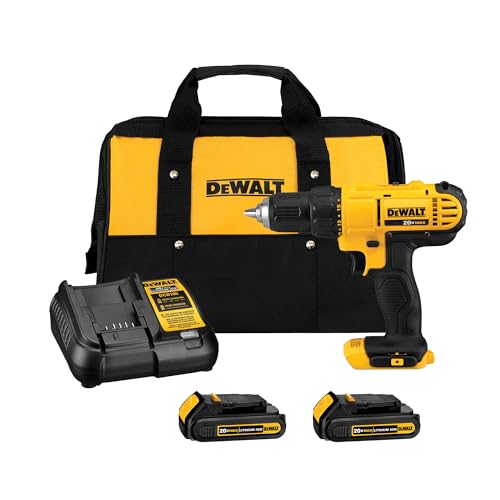
 DEWALT 20V MAX Cordless Drill and Impact DriverOne Size15.06 x 6.4 x 9.88 inches3.6 PoundsCheck on Amazon
 Power Drill Cordless: DEKOPRO Cordless Drill 20V Electric20v drill2 x 2 x 2 inches2.5 poundsCheck on Amazon


What's inside
As an Amazon Associate I earn from qualifying purchases. This post may contain affiliate links at no extra cost to you.
There are hundreds of cordless drills and most of them blur together. We cut through it and ranked the ones actually worth buying into three simple categories, so you can go straight to the pick that fits your budget.
The category is hard to shop because nearly every drill on the shelf can put a hole in pine, and the spec sheets are written to obscure that. Torque numbers get measured in ways you cannot replicate at home, 18V and 20V MAX describe the same pack with different math, and kit photos pad the box with a bag and a flashlight so the sticker looks generous. Strip all of that away and only a handful of things separate a drill you keep for a decade from one you resent by the second project.
As an Amazon Associate we earn from qualifying purchases at no extra cost to you.


So these three tiers are not good, better and best. They are three answers to one question: how hard are you actually going to use this? Buy for the work you do every month, not the work you picture yourself doing once. Somebody hanging two shelves a year and somebody framing a deck need different tools, and neither should be paying for the other’s.
How to weigh a cordless drill before you look at the price
Weigh these in order. When two drills disagree, the item higher on the list wins the argument.
- Battery platform. You are not buying a drill, you are joining a battery family. That choice sets what your next six tools cost, because from here on you buy bare tools instead of kits.
- Brushless motor. It matters less for peak power than for heat and runtime. Brushed motors run hot during long driving sessions and give back less work per charge.
- Chuck. A 1/2-inch all-metal ratcheting chuck holds round-shank bits and larger spade or auger bits without slipping. A small plastic-sleeve chuck is usually the first thing that annoys you.
- Two-speed gearbox. Low speed for torque and control when driving, high speed for clean holes. A single-speed drill forces you to pick one and live with it.
- Weight and head length. Overhead work and cabinet interiors are decided by the size of the tool, not its torque claim. A compact drill that fits between studs beats a heavier one you have to fight.
- Battery mix, not battery count. One compact pack for overhead and tight spaces plus one high-capacity pack for sustained work beats two identical mid-size batteries.
- Clutch and control. A usable clutch range and a trigger that starts slowly are what keep screw heads intact and pilot holes where you aimed them.
The common failure is weighing all of this correctly but in the wrong order: buying the drill with the loudest torque number on a platform you abandon within a year, or paying for a brushless motor and then discovering the chuck cannot grip a spade bit. Platform and chuck are structural. A belt hook, a work light and a fuel gauge are nice, and they should never break a tie.
One distinction to settle before you spend anything. A drill/driver bores holes and drives screws, a hammer drill adds a pulsing action for masonry, and an impact driver is a separate tool built for high-torque fastening. If your work is wood, the drill/driver is the tool. Pay for the hammer function only if brick, block or concrete is genuinely on your list, and treat the impact driver as your second purchase rather than a substitute for your first.
Best overall
Our top pick balances power, runtime, weight and ecosystem. It’s not the cheapest, but it’s the one most people should buy and never think about again.
What earns the top spot is behaviour under sustained load. Anything can drill one hole. The top tier keeps going through a run of deck screws or a full set of cabinet hardware without heat-soaking, and it stays balanced enough in the hand that your wrist is not the limiting factor. Just as important, the platform underneath it sells everything else you might want later, in both kit and bare-tool form, from more than one retailer.
Buy this if you reach for a drill weekly, if you are building rather than patching, or if you already own batteries in a major platform and want the best tool on that mount. Skip it if your honest use is a few holes a season, because you will be paying for headroom you never touch and that money does more good spent on sharp bits, clamps and a decent driver set.
Best Overall Cordless Drill
The all-rounder that wins on power, runtime and balance. If you just want the right answer without agonizing, buy this and move on. Backed by a huge tool ecosystem.
Best value
Nearly the performance of our top pick for meaningfully less money. The smart choice for most hobbyists.
The savings at this tier come out of things most people can live without: a smaller battery in the box, a shorter clutch range, a lighter-duty case, sometimes a slightly longer head. What you should still be getting is a brushless motor, two speeds, a metal chuck and the same battery family as the flagship. That last point is why this tier loses so little in real work and why it ages well.
It suits weekend woodworkers, homeowners doing their own upgrades, and anyone who wants one drill that covers the overwhelming majority of jobs around a house. Skip it if you drive fasteners all day for a living, or if stopping to charge mid-task would cost you more than the price gap to the top pick.
Best Value Cordless Drill
About 90% of the top pick’s performance for notably less cash. For weekend warriors and homeowners, this is the sweet spot of price and capability.
Best budget
If you just need a reliable drill for occasional jobs, the budget pick does the job without pretending to be a pro tool.
Cheap and bad are not the same thing, and the difference is easy to check on the box. A good budget drill comes from a brand whose replacement batteries you can still buy in a few years, has a chuck that grips without visible wobble, includes a working clutch, and is honest about being brushed. A bad one leans on an invented voltage number, ships one low-capacity pack, uses a battery nobody else supports, and lets bits walk out of the chuck under load.
This is the right buy for renters, first apartments, gift purchases, and the drawer where a drill lives between light jobs. Skip it if you intend to drill masonry, bore large-diameter holes, or add more cordless tools soon, because at that point the money you saved is exactly the reason you end up buying twice.
- ✔ Clear picks for every budget
- ✔ All proven performers
- ✔ Big ecosystems
- ✔ No bad choices here
- ✘ Top pick isn’t cheapest
- ✘ Budget pick has shorter runtime
Mistakes that send people back to the store
- Buying the biggest kit instead of the right platform. Multi-piece bundles are priced on box count. Two good tools and two useful batteries beat six tools you replace one by one.
- Chasing torque claims. Past a certain point, more torque only means you can strip screws and snap bits faster. Control, weight and chuck quality decide how a drill feels in use.
- Owning a single battery. One pack turns every project into charging breaks, and it is the cheapest problem on this list to avoid at purchase time.
- Using an impact driver as a drill. It takes hex shanks only, it is clumsy for accurate holes, and it will happily sink a hinge screw straight through a cabinet side.
- Spending everything on the tool and nothing on bits. A budget drill with sharp brad-point and twist bits beats a flagship spinning dull ones, every time.
FAQ
Do I need an impact driver as well?
Not to start. A drill/driver with a decent clutch handles normal screws, and the second tool only becomes necessary when you are driving long structural fasteners, lag screws or ledger boards. If you know that work is coming, buy the two-tool kit on your chosen platform instead of two separate tools later.
How many amp-hours should I be looking for?
Think in pairs rather than a single number. A compact pack keeps the tool light for overhead and cabinet work, and a high-capacity pack carries you through sustained driving without a break. Two identical mid-size batteries are the least useful combination you can own.
Is brushless worth the money at the bottom of the range?
For light, occasional use, no. Brushed is fine when the tool spends most of its life in a drawer. Brushless earns its price when sessions get long enough for heat and runtime to matter, which is exactly the line between the budget pick and the value pick.
Can I use another brand’s batteries with an adapter?
Technically often yes, practically no. Adapters add bulk, complicate warranty claims, and interrupt the communication between pack and tool that manages heat and current. Pick one platform and stay on it; that single decision saves more money than any individual tool discount.
The short answer
Most people should buy the value pick; buy the overall if you use it hard, the budget if it’s occasional. Next, grab the right sander to finish your projects.