Our Top Picks
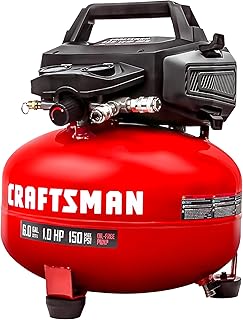
 CRAFTSMAN 6 Gallon 150 PSI Oil-Free Pancake AirMedium15.8 x 16.4 x 17 inches30.8 poundsCheck on Amazon

What's inside
- 1. The 6-Gallon Corded Pancake: The Best Pancake Air Compressor For Almost Everyone
- 2. Cordless Battery Pancake: Buy Second If You Work Away From Outlets
- 3. Quiet-Series Pancake: Buy This If You Work Indoors Or Share Walls
- 4. Twin-Stack And Hot Dog: Only If Two Guns Run At Once
- What To Skip
- Setup Details That Decide Whether You Like Your Compressor
- FAQ
- Related Guides
- 1. The 6-Gallon Corded Pancake: The Best Pancake Air Compressor For Almost Everyone
- 2. Cordless Battery Pancake: Buy Second If You Work Away From Outlets
- 3. Quiet-Series Pancake: Buy This If You Work Indoors Or Share Walls
- 4. Twin-Stack And Hot Dog: Only If Two Guns Run At Once
- What To Skip
- Setup Details That Decide Whether You Like Your Compressor
- FAQ
- Related Guides
As an Amazon Associate I earn from qualifying purchases. This post may contain affiliate links at no extra cost to you.
Most people buy a pancake compressor because they want to shoot brad nails without swinging a hammer, then discover six months later that the tank empties faster than it fills whenever they try to blow out a shop vac filter or seat a tire bead. That gap between what a pancake compressor is sold for and what people actually ask of it is where nearly every complaint comes from. The best pancake air compressor for you is not the one with the biggest number on the box, it is the one whose recovery rate matches the tool you plan to leave connected to it.
This ranking is ordered by what to buy first, not by price. The first pick is the one that covers the widest slice of home and jobsite work. Everything below it exists because it unlocks a specific job the pick above it does not. If you already know your only nailer is an 18-gauge brad gun, you can stop reading after the first two sections.
As an Amazon Associate we earn from qualifying purchases at no extra cost to you.




| Class | Typical tank | What it actually unlocks | Who should skip it |
|---|---|---|---|
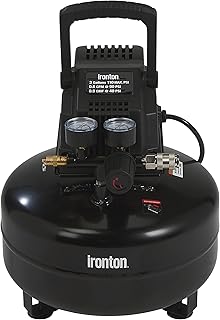
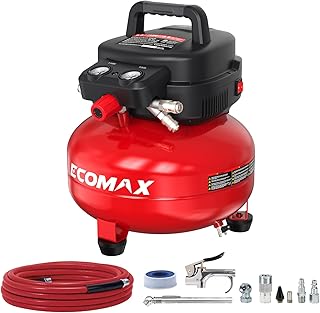
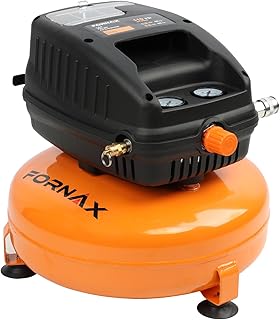
| 6-gallon corded pancake | 6 gal | Trim, brads, finish nails, framing in bursts, tire top-offs | Nobody, this is the default |
| Cordless battery pancake | 1 to 2.5 gal | Punch lists, roofing, remote work with no outlet | Anyone with reliable power nearby |
| Quiet-series pancake | 4.5 to 6 gal | Indoor trim, occupied homes, apartments, garages at night | Outdoor-only framing crews |
| Twin-stack / hot dog | 4 to 10 gal | Two nailers at once, longer runs of framing | One-nailer trim carpenters |
| Small 1 to 3 gallon | 1 to 3 gal | Inflation, airbrush, single brad gun | Anyone running a framing nailer |
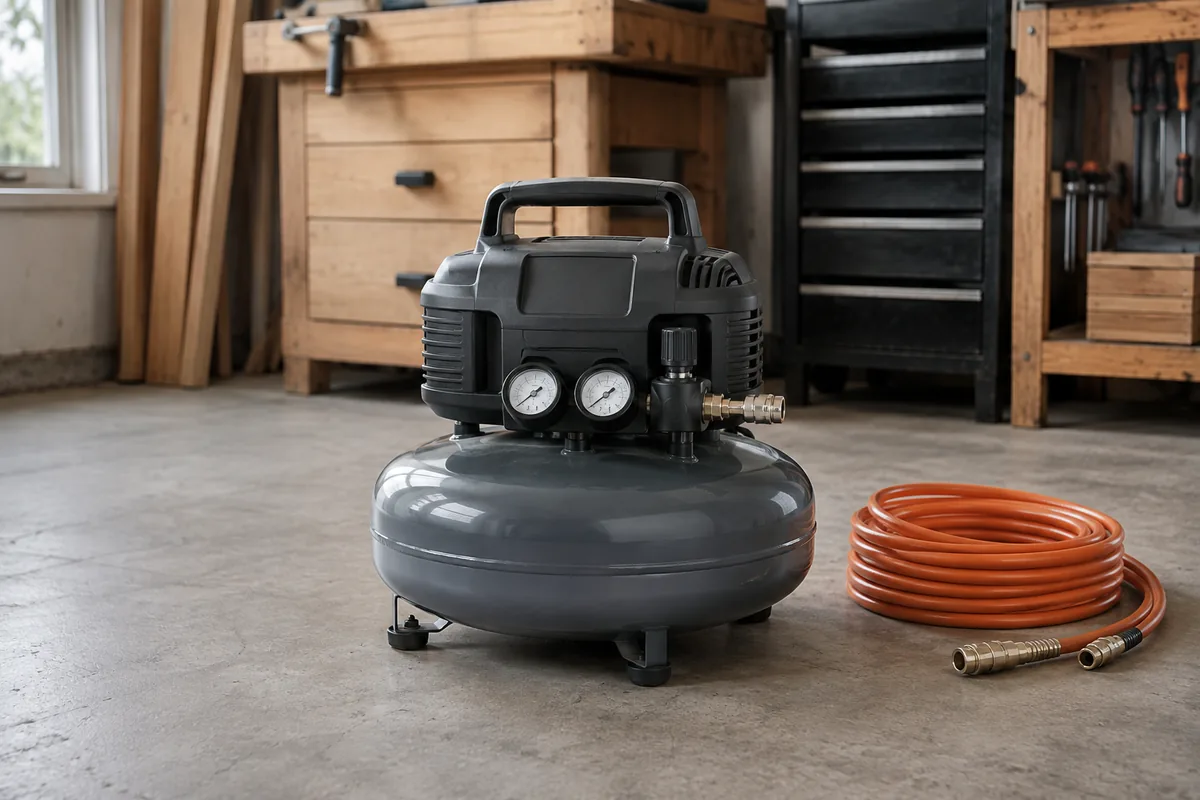
1. The 6-Gallon Corded Pancake: The Best Pancake Air Compressor For Almost Everyone
Start here and stop here unless you have a reason not to. The 6-gallon oil-free pancake is the default for a reason: the tank is large enough to buffer a finish nailer or framing nailer through a run of fasteners, the pump recovers fast enough to keep up on trim work, and the whole thing weighs little enough to carry up a ladder in one hand. Porter-Cable and Bostitch built the category, Craftsman and DeWalt sell the same basic geometry, and the differences between them are noise, cord quality, and how the regulator behaves at low pressure.
The spec that matters is CFM delivered at 90 PSI, not peak PSI and not horsepower. Anything in the 2.0 to 2.8 SCFM range at 90 PSI will drive nailers all day. Anything under 1.5 SCFM will make you wait, and waiting is what makes people hate their compressor. Max tank pressure in the 150 PSI range is worth having over 135 PSI, because a higher fill means more usable air stored in the same tank before the motor kicks on again.
Two features are worth paying for and are easy to check before you buy: a pair of couplers so two people or two tools can share the tank, and a drain valve you can reach without flipping the unit over. That drain is not a nicety. Condensate sitting in the bottom of a steel tank is how tanks rust from the inside, and the tank is the one part you cannot replace.
6-Gallon Oil-Free Pancake Compressor
This is the one to own if you only own one. Filter listings by CFM at 90 PSI rather than peak PSI, look for 150 PSI max tank pressure and two quick-connect couplers, and treat the marketing horsepower figure as noise. Prices in this class move around a lot between retailers and seasons, so check current listings rather than trusting any number you read in an article.
2. Cordless Battery Pancake: Buy Second If You Work Away From Outlets
The battery-powered pancake is the most genuinely new thing in this category, and it is the right second purchase for anyone doing punch lists, fence repairs, roofing, or work in unfinished construction where the panel is not energized yet. DeWalt runs these on FlexVolt and 20V MAX packs, Milwaukee builds them into the M18 line, and Makita has an 18V LXT version. Tanks are smaller, usually 1 to 2.5 gallons, and the trade is obvious: you get freedom from cords and lose sustained volume.
Judge these by fasteners per charge and by fill time, not by tank size. A cordless unit that fills a 2-gallon tank quickly on a single battery will outperform a larger tank that drains two packs to reach cut-out pressure. They are excellent for trim, brads, and finish work. They are poor choices for framing an entire wall or running any air tool with continuous demand, like a die grinder or a sander. If you are on a jobsite with power, a corded 6-gallon does more work for less money.
3. Quiet-Series Pancake: Buy This If You Work Indoors Or Share Walls
Standard pancake compressors are loud in a way that spec sheets undersell. The universal motor screams, and in an occupied house it ends conversations and wakes children. Quiet-series models from California Air Tools, Makita, and Metabo HPT use lower-RPM induction motors, and the difference between roughly 78 to 80 dBA and roughly 68 to 70 dBA is not a small improvement. Decibels are logarithmic, so that gap is dramatic in practice.
Two things to accept. Quiet models are heavier, sometimes substantially, because induction motors and cast pumps weigh more than universal motors and aluminum ones. And some are oil-lubricated, which means checking a sight glass and keeping the unit level, in exchange for a longer service life. If your work is baseboard, crown, casing, and cabinet installs inside finished homes, this is the model you will actually be glad you bought.
Quiet Pancake and Low-Noise Compressors
Worth the premium if you install trim in occupied homes or run a compressor in a garage attached to bedrooms. Compare the listed dBA figures and the shipping weight together, because the quietest units are usually the heaviest. Confirm whether the pump is oil-free or oil-lubricated before you buy so you know what maintenance you are signing up for.
4. Twin-Stack And Hot Dog: Only If Two Guns Run At Once
Twin-stack and hot dog compressors are not upgrades to a pancake, they are a different answer to a different question. The reason to buy one is two people running two nailers, or one person running a framing nailer through long, sustained sequences where a 6-gallon tank cannot recover fast enough. Twin-stack designs also stand narrower on a crowded floor, which matters more than people expect in a finished room.
The cost is weight and bulk. A pancake sits flat and stable, slides into a truck bed footwell, and hides under a bench. A twin-stack is taller, tippier on uneven ground, and heavier to lift into a vehicle. Buy one when the second nailer forces your hand, not as insurance.
- ✔ Flat, stable footprint that will not tip on stairs or scaffolding
- ✔ 6-gallon tanks buffer nailers without constant cycling
- ✔ Oil-free pumps mean no leveling and no oil changes
- ✔ Light enough for one-hand carry to a second floor
- ✔ Cheapest reliable path into pneumatic nailing
- ✘ Loud enough to be unpleasant indoors unless you buy a quiet model
- ✘ Not enough sustained CFM for sanders, grinders, or spray guns
- ✘ Oil-free pumps have shorter service lives than oil-lubricated pumps
- ✘ Tanks rust from the inside if you never drain the condensate
- ✘ Small hose barbs and cheap regulators are common on budget units
What To Skip
Skip anything sold on peak PSI or horsepower alone. If a listing leads with 175 PSI or 3 HP and buries or omits SCFM at 90 PSI, the specification that governs whether your nailer keeps up is missing on purpose.
Skip 1-gallon compressors if you own a nailer. They are inflators with delusions. They are fine for tires, sports equipment, and airbrush work, and they will frustrate you within one box of brads.
Skip the idea of running an air sander, cutoff tool, or die grinder off a pancake. Those tools consume air continuously, often 4 to 8 SCFM or more, and no pancake tank in this class will feed them for more than a few seconds at a time. If that is your work, you need a stationary 20-gallon-plus unit, and no ranking of pancakes will change the math.
Skip HVLP spray finishing on a pancake. A pancake can technically push paint through a small touch-up gun, but sustained spraying demands volume the tank cannot supply, and the pressure drop shows up as an uneven finish.
Skip no-name bundles with hoses and nailers included. The bundle price is attractive and the included nailer is usually the weakest part. Buy the compressor on its merits and the nailer separately from a line you trust.
Setup Details That Decide Whether You Like Your Compressor
Hose choice changes the experience more than most upgrades. A 1/4-inch, 50-foot polyurethane or hybrid hose stays flexible in cold weather and does not fight you the way rubber does when it gets cold or PVC does when it gets warm. Coil hoses are convenient and drag pressure down over long runs, so keep them short.
Drain the tank after every use. Open the valve with the tank at low pressure, let the water out, close it. Thirty seconds of habit is the difference between a tank that lasts a decade and one that fails from internal corrosion. Set the regulator to the nailer’s requirement rather than to maximum, usually somewhere in the 90 to 100 PSI range for finish and framing guns, and check the manual for your specific gun. Running high does not drive nails better, it just beats up the tool and over-drives fasteners in soft trim.
If you use extension cords, use a heavy gauge and keep them short. Compressor motors draw a large surge at startup, and a thin 100-foot cord causes voltage drop that trips breakers and shortens motor life. A 12-gauge cord is the sensible default.
FAQ
How many gallons do I actually need for a framing nailer? Six gallons is workable for framing in bursts, such as blocking, ladders, and small walls, as long as the pump delivers roughly 2.5 SCFM or more at 90 PSI. For continuous framing all day or two guns on one tank, move up to a twin-stack or a larger portable. Tank size buffers demand, recovery rate sustains it, and you need both.
Is an oil-free pancake compressor worth it, or should I buy oil-lubricated? Oil-free is the right default for most people because there is no maintenance, no leveling requirement, and it starts fine in cold weather. Oil-lubricated pumps run quieter and last longer under heavy use, which is why many quiet-series models use them. If the compressor gets used a few weekends a month, oil-free is fine. If it runs most days, oil-lubricated earns the extra care.
Can I use a pancake compressor for car tires and inflation? Yes, and it does that job well. Any 6-gallon unit reaching 150 PSI will top off car and truck tires easily. Seating a stubborn tire bead is a different demand and usually wants more stored volume. Buy a proper tire chuck with a gauge instead of relying on the tank gauge, which reads tank pressure and not tire pressure.
The short version of this ranking: buy the 6-gallon corded pancake first, add a cordless unit only if you routinely work where there is no power, pay for a quiet model if you work inside occupied homes, and step up to a twin-stack only when a second nailer forces the issue. Ignore peak PSI, read the SCFM figure at 90 PSI, and drain the tank.
Check prices on Amazon →