Our Top Picks
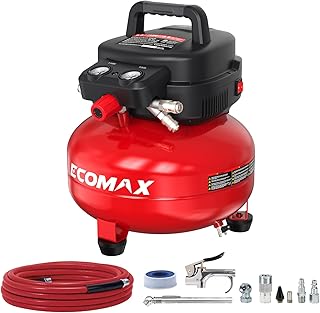
 CRAFTSMAN 6 Gallon 150 PSI Oil-Free Pancake AirMedium15.8 x 16.4 x 17 inches30.8 poundsCheck on Amazon

What's inside
- 1. The 6-gallon pancake: the only correct first small air compressor for DIY
- 2. The quiet 1-gallon: what unlocks interior work you can stand to be near
- 3. The 10 to 20-gallon vertical: what unlocks air tools that are not nailers
- 4. Twin-stack and hot dog tanks: the sideways move that sometimes pays
- What to skip
- Frequently asked questions
- Related Guides
- 1. The 6-gallon pancake: the only correct first small air compressor for DIY
- 2. The quiet 1-gallon: what unlocks interior work you can stand to be near
- 3. The 10 to 20-gallon vertical: what unlocks air tools that are not nailers
- 4. Twin-stack and hot dog tanks: the sideways move that sometimes pays
- What to skip
- Frequently asked questions
- Related Guides
As an Amazon Associate I earn from qualifying purchases. This post may contain affiliate links at no extra cost to you.
Most people buy the wrong small air compressor for DIY because they shop by tank size and price instead of by the tool they actually want to run. A 6-gallon pancake will drive a finish nailer all day and then choke the moment you attach a die grinder. A 20-gallon vertical will run that grinder and then sit in the corner of the garage because it is too heavy to carry to the deck you are rebuilding. Both are good compressors. Only one of them is right for you.
So this list is ordered by what to buy first, not by price. Each placement earns its spot because of the job it unlocks. If you already own something from a higher slot and you are itching to upgrade, skip to the what-to-skip section near the end, because the most common upgrade people make is the one that does the least.
As an Amazon Associate we earn from qualifying purchases at no extra cost to you.



| Rank | Type | The job it unlocks | Buy it if |
|---|---|---|---|
| 1 | 6-gallon pancake, 2.6+ SCFM at 90 PSI | Brad, finish and framing nails, tire inflation, blowing out dust | This is your first compressor, period |
| 2 | 1-gallon quiet oil-free, sub-60 dB | Indoor trim work without ear protection or waking the house | You do interior carpentry or live in an apartment |
| 3 | 10 to 20-gallon vertical, 4+ SCFM | Impact wrenches, ratchets, HVLP touch-up, short blasting bursts | Automotive work or a permanent garage station |
| 4 | Twin-stack 4 to 5-gallon | Two nailers off one hose, faster recovery than a pancake | You work with a partner or run a punch list |
| 5 | Cordless battery inflator | Tires and sports gear only | You already have a compressor and want convenience |
1. The 6-gallon pancake: the only correct first small air compressor for DIY
If you own zero compressors, buy a 6-gallon pancake rated for at least 2.6 SCFM at 90 PSI with a 150 PSI max tank pressure. That spec combination is close to an industry default now, and there is a reason. It covers roughly 90 percent of what a homeowner actually does with air: brad nailing baseboard, finish nailing casing, stapling underlayment, framing a shed wall in bursts, topping off car and mower tires, and clearing sawdust out of a router table.
The job it unlocks is nail guns, and nail guns are the reason most DIYers want air in the first place. A pneumatic brad nailer costs a fraction of its cordless equivalent, weighs less in your hand, and never runs out of battery halfway through a room of trim. The pancake exists to feed it.
Pay attention to two numbers and ignore the marketing on the rest of the box. SCFM at 90 PSI tells you whether the tool will keep up. Recovery time, which manufacturers often bury, tells you how long you wait between bursts. Tank gallons only determine how long you can work before the motor kicks on, which matters far less than people assume.
6-Gallon Pancake Air Compressor
Look for 6 gallons, 150 PSI max, and at least 2.6 SCFM at 90 PSI, with two universal quick-connect couplers so you and a helper can each run a gun. Oil-free is fine here and means no maintenance beyond draining the tank. Brands like DeWalt, Bostitch, Craftsman and Porter-Cable all sell essentially the same machine at different noise levels, so buy on price and warranty rather than badge.
2. The quiet 1-gallon: what unlocks interior work you can stand to be near
A standard pancake is loud in a way that is hard to appreciate until you run one inside a hallway with hard floors. It is the kind of loud that ends work early, annoys everyone in the house, and makes you stop wearing hearing protection out of impatience. That is a real safety problem, not a comfort complaint.
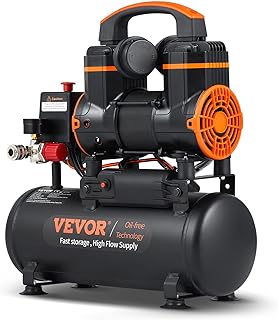
Quiet compressors in the 1 to 2-gallon range use low-RPM induction motors instead of the screaming universal motors in budget pancakes. They land in the high 50s to low 60s on the decibel scale, which is roughly conversation volume. You can talk over one. You can run one at 7 a.m. in a townhouse. California Air Tools popularized the category and Makita’s Quiet Series sits at the premium end.
The tradeoff is honest and worth stating: less air. A 1-gallon quiet unit will keep up with a brad or finish nailer and nothing bigger. Try to run a framing nailer and you will spend more time waiting than shooting. Buy this second, as a specialist, not first as a general-purpose machine.
- ✔ Runs at roughly conversation volume, so you actually keep working
- ✔ Light enough to carry up stairs one-handed
- ✔ Induction motors typically outlast cheap universal motors
- ✔ Ideal for trim, cabinets and shop assembly work
- ✘ Not enough SCFM for framing nailers, impact wrenches or spray guns
- ✘ Costs noticeably more per gallon of tank than a pancake
- ✘ Small tank means the motor cycles often on continuous work
3. The 10 to 20-gallon vertical: what unlocks air tools that are not nailers
Here is the wall every DIYer eventually hits. Impact wrenches, air ratchets, cut-off tools, die grinders and HVLP spray guns are not intermittent tools. They consume air continuously, and their appetite is measured in the 4 to 6 SCFM range or higher. No pancake on earth keeps up. You will hear the motor run nonstop and the tool will lose power mid-cut.
A vertical 10 to 20-gallon unit with a real induction motor solves it. The footprint stays small because the tank stands up rather than sprawling out, and most have wheels. This is a garage-station compressor, not a job-site compressor. Once you own one, you stop carrying it, and that is exactly why it should not be your first purchase.
Match the compressor to the thirstiest tool you own and add about 30 percent headroom. If your impact wrench wants 4.5 SCFM at 90 PSI, shop for 6 SCFM. Undersizing here is the single most expensive mistake in the category, because the fix is a whole new compressor.
20-Gallon Vertical Air Compressor
This is the upgrade to make only when you have a specific continuous-duty tool in mind, like an impact wrench for brake jobs or an HVLP gun for cabinet doors. Check whether it needs a 120V 15-amp circuit or a dedicated 20-amp line before you buy, and confirm the tank has an accessible bottom drain valve. Oil-lubricated models run quieter and last longer but require checking the oil.
4. Twin-stack and hot dog tanks: the sideways move that sometimes pays
Twin-stack compressors in the 4 to 5-gallon range are narrower than pancakes and stack two small tanks to improve recovery. They shine when two people need air at once or when you are working through a long punch list of trim, since the shape carries better through doorways and up ladders.
Single-tank hot dog compressors around 2 to 3 gallons are the lightest useful option and fine for inflation plus light brad work. Just know that below roughly 2 SCFM at 90 PSI you are buying an inflator with delusions of grandeur.
What to skip
Skip anything that hides its SCFM rating. If the listing brags about PSI and horsepower but never states SCFM at 90 PSI, the number is bad. Peak horsepower claims on small compressors are close to meaningless.
Skip the 30-gallon-plus tank for DIY. Bigger tanks do not create more air, they just store more of it. The pump determines your capability. A 30-gallon tank on a weak pump gives you a longer first burst and the same frustrating wait afterward, in a package you cannot move.
Skip cordless battery compressors as your only air source. The DeWalt XR, Milwaukee M18 and Makita LXT inflators are genuinely excellent for tires, bike tubes and sports gear. They are not designed to feed nail guns for a full day. Own one alongside a tank compressor, not instead of it.
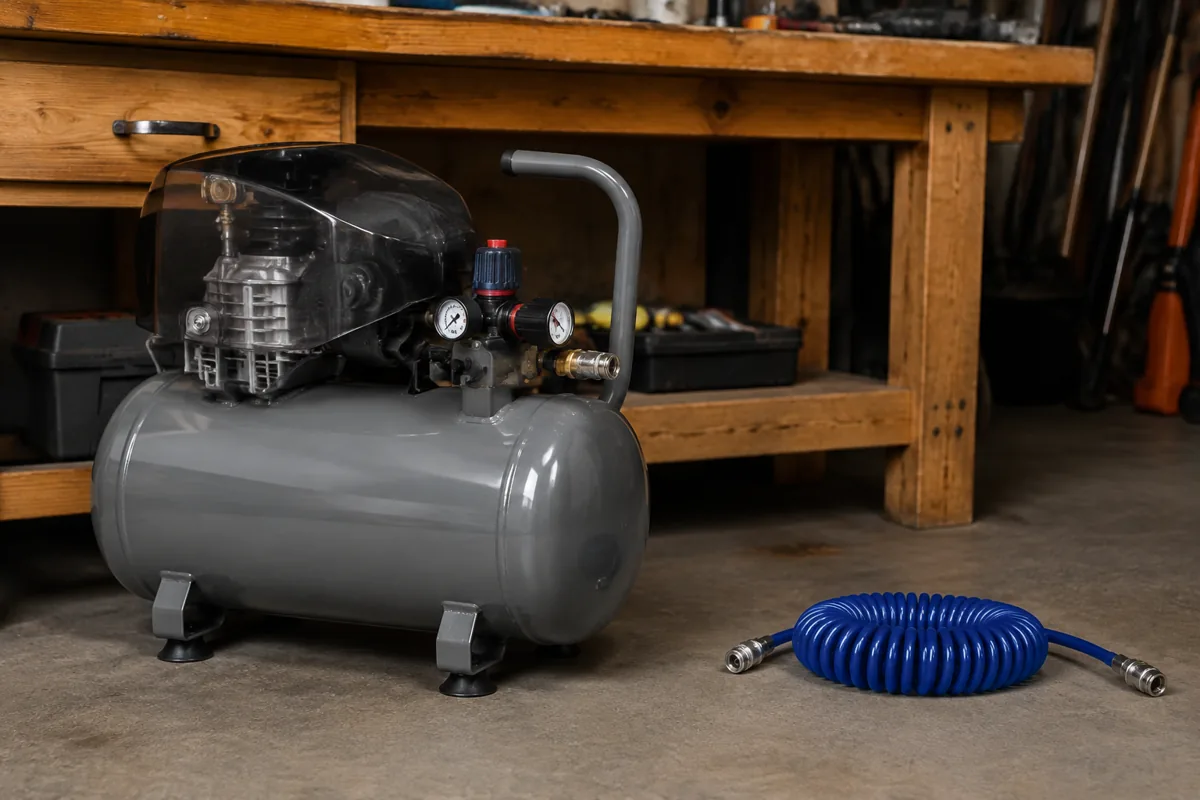
Skip the cheap coiled recoil hose. They kink, they fight you, and they drag your nailer around the floor. Buy a 50-foot polyurethane or hybrid hose in a quarter-inch or three-eighths-inch diameter. It is the cheapest upgrade that improves every compressor.
Skip the airbrush-grade tankless units for anything structural. They are for models and cake decorating.
Frequently asked questions
What size small air compressor do I need for a brad nailer? A 1-gallon quiet unit is enough for occasional trim, and a 6-gallon pancake is enough for a whole house of baseboard with room to spare. Brad and finish nailers only sip air on each shot, so the tank size mostly determines how often the motor cycles, not whether the gun fires correctly.
Do I need an oil-lubricated compressor or is oil-free fine? Oil-free is fine for nearly all DIY use and needs no maintenance beyond draining the tank after every session. Oil-lubricated pumps run quieter and last longer under heavy continuous loads, which makes them worth considering only when you reach the 20-gallon garage-station tier.
Can a small air compressor run an impact wrench? Briefly, in short bursts, and badly. Impact wrenches draw air continuously in the 4 to 5 SCFM range or higher, so a pancake will run its motor nonstop and still fall behind. If automotive work is the goal, go straight to a vertical tank with the SCFM rating to match.
Buy the tool that unlocks the job in front of you. For most people reading this, that is a 6-gallon pancake and a decent hose, and it will still be working in ten years.
Check prices on Amazon →