What's inside
As an Amazon Associate I earn from qualifying purchases. This post may contain affiliate links at no extra cost to you.
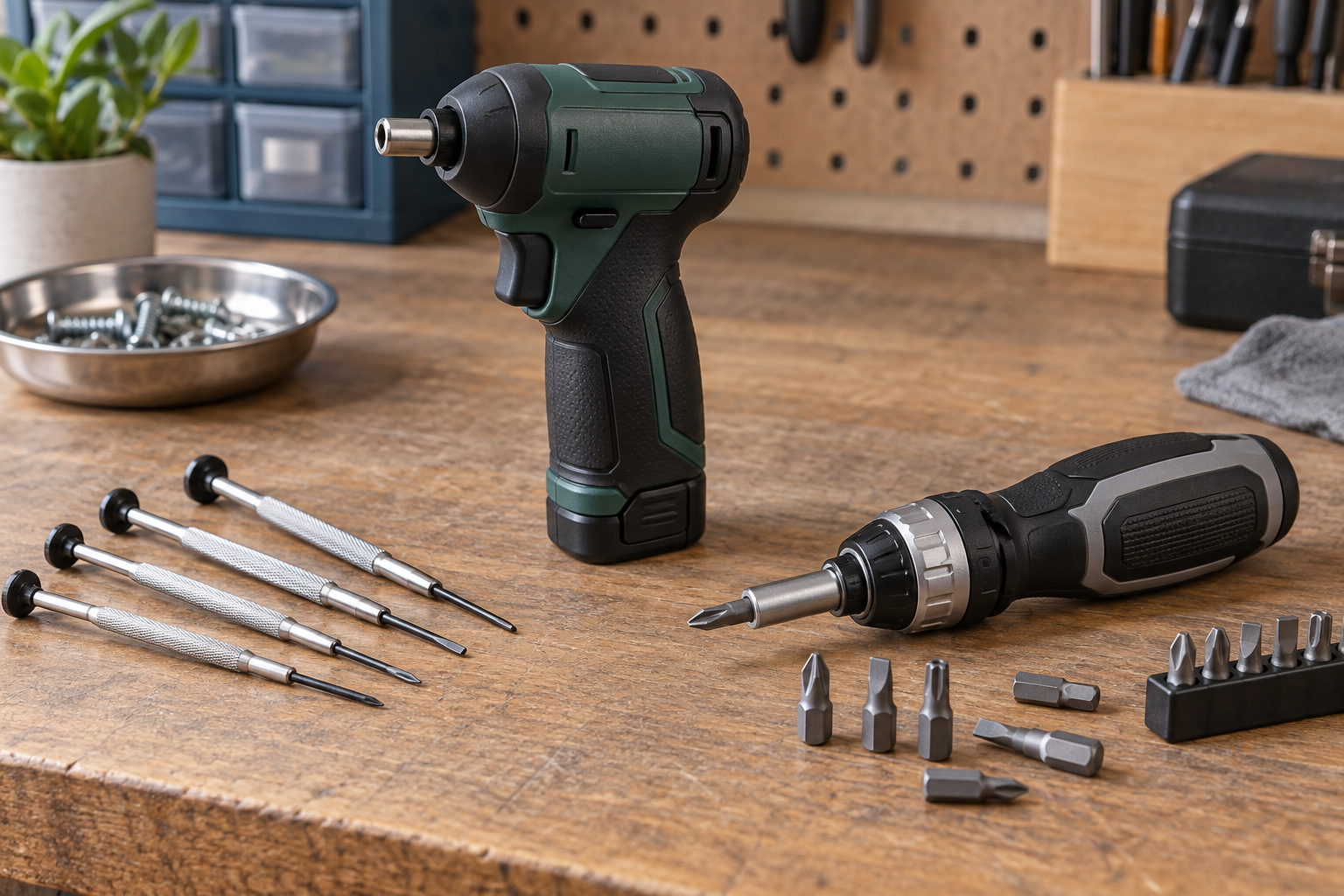
Appliance service work calls for a different cordless screwdriver than cabinet assembly or deck building. You need controlled torque, a compact head, good visibility, and a battery that will survive repeated short jobs. Raw power is less important than avoiding stripped screws, cracked plastic, pinched wires, and fasteners that are impossible to remove later.
The best setup is usually a 12V or compact 18V/20V tool with a real clutch, a two-speed gearbox, and batteries shared with other cordless tools. A full-size drill can work, but it is often awkward inside dishwashers, refrigerators, ranges, and washing machines. An impact driver is useful for stubborn screws, but it is a poor primary tool for delicate appliance panels.
As an Amazon Associate we earn from qualifying purchases at no extra cost to you.



What to Look For in an Appliance Service Screwdriver
Clutch control comes first. Sheet-metal screws and cabinet screws often need surprisingly little torque. A clutch with at least 15 to 20 settings lets you run fasteners down without deforming a panel or stripping a soft screw head. The clutch is not a guarantee: dirty, corroded, or thread-locking fasteners may need more power than expected. Start low and increase one setting at a time.
Compact size matters more than peak torque. A tool under roughly 7 inches long is easier to use behind a dishwasher or between a refrigerator cabinet and a wall. A shorter 12V drill may reach places that a powerful 20V drill cannot. Look for a slim battery, rather than a bulky high-capacity pack, when working in tight cavities.
Choose a two-speed gearbox. A low range around 0 to 400 or 500 rpm gives control for starting screws. A high range around 1,300 to 1,700 rpm speeds up repetitive panel removal. Variable trigger control is useful, but it does not replace a mechanical clutch.
Use a 1/4-inch hex driver when service work is the priority. A hex chuck accepts screwdriver bits directly and is shorter than a 3/8-inch drill chuck. A compact drill is more versatile because it accepts round-shank drill bits, but its chuck adds length and can loosen when used at awkward angles. For drilling out broken screws, a compact drill is the better choice.
For most technicians, a 12V compact cordless drill kit is the best starting point. Choose a 1.5Ah or 2.0Ah battery for low weight and keep a second pack charging. A 4.0Ah pack can extend runtime, but its extra weight becomes noticeable during overhead work.
The Best Cordless Tool Types
| Tool type | Best use | Main advantage | Important drawback |
|---|---|---|---|
| 12V drill/driver | General appliance repair | Small, light, clutch-controlled, accepts drill bits | Less reserve for seized fasteners |
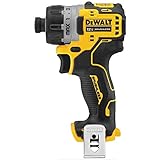
| 12V hex screwdriver | Removing and installing panels | Short nose and fast bit changes | Less useful for drilling and sometimes less torque |
| Compact 18V/20V drill/driver | Mixed repair and light construction | More torque and a larger battery ecosystem | Heavier and longer in confined spaces |
| Right-angle drill | Access behind cabinets and tight frames | Reaches corners a straight tool cannot | Slower, bulkier, and often expensive |
| Impact driver | Freeing stubborn screws or fasteners | High breakaway power in a short body | Impact action can damage plastic and strip screws |
A 12V cordless screwdriver with an adjustable clutch is a sensible second tool if most of your work involves appliance panels. It is not the right choice if you routinely drill new holes, remove rusted structural fasteners, or work on commercial equipment.
Battery Platforms and Chargers
Do not choose only by the tool’s advertised torque. The battery platform determines what you can add later: a work light, inspection vacuum, compact reciprocating saw, radio, or heated jacket. Staying within one platform also means fewer chargers and fewer incompatible batteries in the service vehicle.
For occasional home appliance repairs, a low-cost 12V kit is often enough. A two-battery kit with a charger is preferable to a bare tool, even if the second battery adds some cost. Appliance repairs are inconvenient when a pack dies halfway through removing a rear panel.
For daily service work, a compact 18V or 20V platform may be the better investment. These tools usually offer more torque and a wider range of compatible equipment. The trade-off is weight: a 2.0Ah compact pack may be manageable, while a 5.0Ah pack can make a small driver tiring after a few hundred screws.
Battery age matters. Lithium-ion packs lose capacity over time, especially when stored fully charged in a hot vehicle. Do not leave batteries on a dashboard or in a truck above roughly 100°F for long periods. Use the manufacturer’s charger, inspect packs for swelling or damage, and retire any battery that becomes unusually hot, cracks, or refuses to charge normally.
When the Cheaper Option Is Fine
A budget cordless screwdriver is adequate for replacing dishwasher toe-kick panels, refrigerator handles, dryer covers, and small access plates if it has a usable clutch and a removable battery. You do not need premium brushless electronics for a few repairs each year. A corded screwdriver is also perfectly workable in a home workshop, provided an extension cord is safe and the work area is dry.
Spend more when the tool will be used daily, when downtime costs money, or when you need a complete platform of compact tools. Brushless motors generally run cooler and deliver better runtime, but they are not automatically more precise. Clutch calibration, trigger feel, balance, and service support have more effect on appliance work than a headline torque number.
Using the Tool Without Damaging the Appliance
Disconnect power before removing covers. Unplug the appliance, switch off the breaker when necessary, and shut off gas or water supplies as appropriate. Some appliances contain capacitors that can retain a charge after unplugging; follow the service procedure rather than assuming the unit is safe.
Use the correct bit and press it firmly into the screw. Start at low speed, keep the tool aligned, and stop as soon as the clutch slips repeatedly. For plastic fasteners, select a low clutch setting and finish by hand. Keep a magnetic bit holder or small parts tray nearby—losing one screw inside a control panel can create a second repair.
When a screw will not move, do not immediately switch to an impact driver. Apply penetrating oil where appropriate, clean the recess, use a fresh bit, and try manual breakaway torque first. If impact action is necessary, use the lowest setting and short bursts. For routine service, controlled force prevents more problems than maximum power solves.
For most buyers, the practical choice is a compact 12V drill/driver with two batteries. Add a right-angle tool only after you encounter access problems repeatedly, and keep an impact driver as a specialty tool for seized fasteners rather than your everyday appliance screwdriver.
Related guides
- Longest Lasting Lawn Mower Battery: AGM vs Lithium vs Flooded Lifespan and Cost per Season
- Duralast Gold Lawn Mower Battery Review: U1 Fit, CCA and When to Pay for AGM
- Greenworks Pro 80V 21-Inch Mower Review: Runtime Math, Push vs Self-Propelled and Yard Fit
- Bosch High Pressure Washer Gun Replacement: Fittings, Adapters and What Fits Your Model