What's inside
As an Amazon Associate I earn from qualifying purchases. This post may contain affiliate links at no extra cost to you.
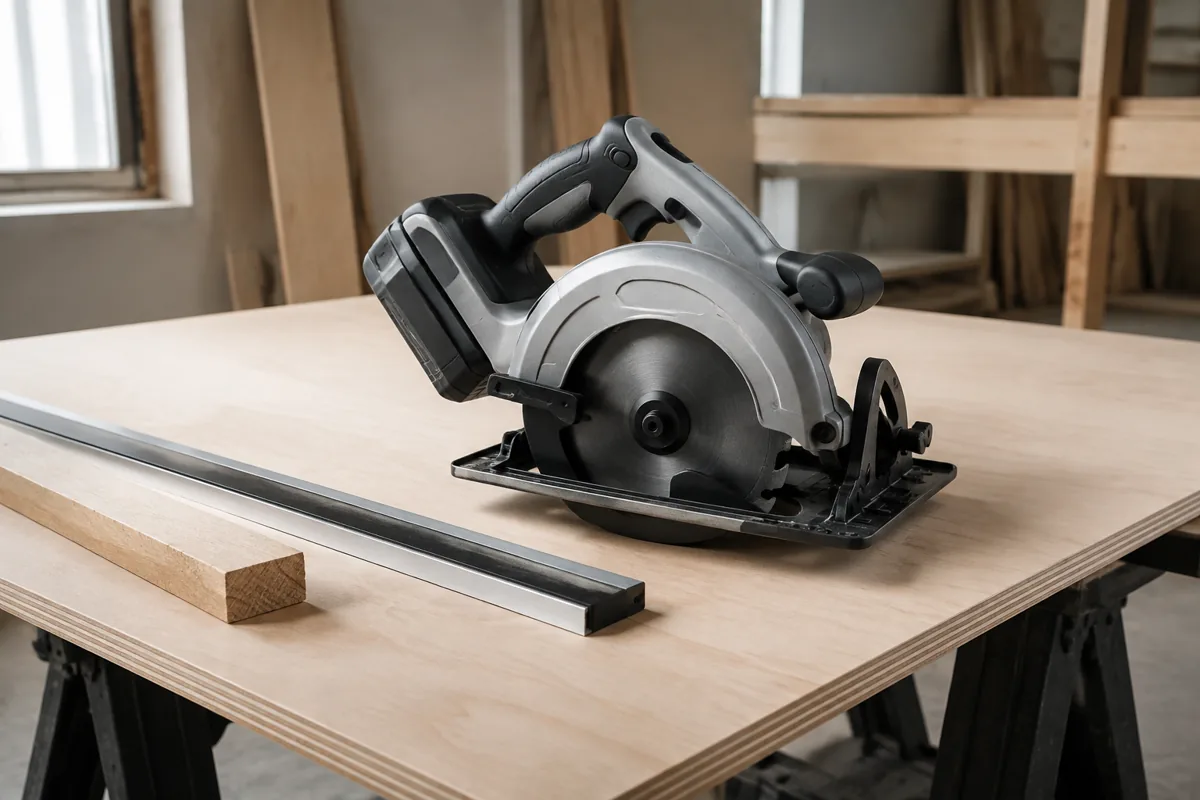
In a fabrication shop, a cordless metal-cutting circular saw is most useful for fast, straight cuts in tube, angle iron, sheet, strut, and light plate. It is not a replacement for a band saw or abrasive chop saw. Its advantage is portability: carry it to a rack, cut installed material, or break down stock without dragging an extension cord through the shop.
The important distinction is blade type. Metal-cutting saws use a toothed carbide blade designed for steel, while abrasive models use a thin grinding wheel. A carbide blade usually cuts faster, makes less dust, throws fewer hot sparks, and produces a cleaner kerf. The trade-off is cost: hitting a hardened spot, a weld, or a hidden fastener can damage an expensive blade.
As an Amazon Associate we earn from qualifying purchases at no extra cost to you.


What to look for before buying
Start with the material you cut most often. A compact 5-1/2-inch saw is convenient for conduit, tubing, and sheet, but its practical cutting depth is commonly around 1-5/8 inches at 90 degrees. That covers much fabrication work, including 1-1/2-inch square tube. Larger 6-1/2- to 8-inch saws provide roughly 2-1/4 to 2-5/8 inches of capacity, making them better for heavier angle, channel, and stacked material.
Blade speed matters, but it is not the only specification. A saw with a lower metal-cutting speed and a properly designed guard can outperform a faster general-purpose saw. Look for a metal-rated blade, a rigid shoe, a positive bevel adjustment, a brushless motor, and a good chip collection path. A rafter hook and a bright work light are useful on a jobsite, but they should not outweigh balance and blade visibility.
Battery voltage is a poor shortcut for performance. A 20V or 18V compact saw may be adequate for occasional cuts, while a 36V or 40V platform can maintain speed better in thick stock. Larger batteries add weight. For repeated fabrication work, a 5.0Ah battery is a sensible starting point; high-output 6.0Ah or 8.0Ah packs can reduce voltage sag but may make a compact saw tiring to use.
The best cordless saw categories
| Category | Best use | Typical capacity | Main drawback |
|---|---|---|---|
| Compact 18V/20V saw | Conduit, tubing, sheet, trim work | About 1-5/8 inches | Slower in thick stock; shorter battery runtime |
| High-output 18V/20V saw | General shop fabrication and installation | About 2-1/4 inches | Heavier and more expensive |
| 36V/40V saw | Frequent cuts in angle, channel, and plate | About 2-5/8 inches | Requires a separate high-voltage battery ecosystem |
| Abrasive cordless saw | Dirty demolition and occasional rough cuts | Varies by wheel size | Hot sparks, dust, burrs, and rapid wheel wear |
For a shop already invested in Milwaukee M18, the M18 cordless metal-cutting circular saw category is a strong general-purpose choice. Milwaukee offers both compact and larger metal-saw approaches, so check the exact blade diameter and cutting capacity rather than assuming every M18 saw is equivalent. These saws are particularly useful when you already own several M18 batteries and chargers.
DeWalt users should compare the DeWalt 20V MAX metal-cutting circular saw options. Compact DeWalt models are practical for conduit and light tube, and bare-tool pricing is often reasonable for an existing 20V MAX owner. They are less attractive as a new ecosystem purchase if your work routinely involves thick channel or long production runs.
Makita’s higher-voltage platform is worth considering for a shop that does not already own batteries. Search the Makita XGT metal-cutting saw category when sustained power and larger cutting capacity matter. The extra performance can be useful, but the battery, charger, and tool investment is hard to justify for occasional cutting.
Blades, runtime, and operating cost
Budget for replacement blades. A carbide metal-cutting blade can last a long time when cutting clean mild steel, but one accidental contact with concrete, a clamp, or a hardened weld can ruin it. Keep a spare blade on hand and verify the arbor size before ordering. Do not install a wood blade simply because its diameter and arbor fit.
Runtime depends more on material and feed pressure than on the advertised battery capacity. As a practical expectation, a 5.0Ah pack may handle dozens of cuts in light tubing, but thick angle iron, stainless steel, or repeated full-depth cuts can reduce that number sharply. If the motor bogs down, stop pushing. Excessive force overheats the motor, rounds carbide teeth, and can twist the saw out of the cut.
Safe cutting practices in the shop
Clamp the work firmly and support long stock on both sides of the cut. Unsupported tube can pinch the blade as the offcut drops. Keep the shoe flat, let the blade reach full speed, and feed steadily. Metal chips remain hot even when they do not look like sparks, so wear eye protection, hearing protection, gloves suitable for handling stock, and nonflammable work clothing.
Check the guard before every use. A guard that sticks open, collects chips, or fails to retract smoothly is a repair issue, not something to work around. Clear chips with a brush or vacuum after removing the battery. Never touch the blade immediately after cutting; carbide teeth and the surrounding steel can stay hot for several minutes.
Which one should you buy?
Choose a compact 18V or 20V saw if most of your work is conduit, tubing, and occasional sheet, especially when you already own that battery platform. Choose a larger high-output model for daily fabrication, heavier sections, and fewer slow cuts. Step up to 36V or 40V only when the added capacity and sustained power will be used regularly.
If cuts are repetitive and bench-based, spend the money on a corded band saw or cold-cut saw instead. If portability is the deciding factor, buy the cordless metal saw that matches your existing batteries, then select the largest blade size you can comfortably control. The cheaper compact option is fine when it fits the material; paying for a larger saw will not compensate for poor clamping, a dull blade, or forcing the cut.
FAQ
Which one should you buy?
Related guides
- Longest Lasting Lawn Mower Battery: AGM vs Lithium vs Flooded Lifespan and Cost per Season
- Duralast Gold Lawn Mower Battery Review: U1 Fit, CCA and When to Pay for AGM
- Greenworks Pro 80V 21-Inch Mower Review: Runtime Math, Push vs Self-Propelled and Yard Fit
- Bosch High Pressure Washer Gun Replacement: Fittings, Adapters and What Fits Your Model