What's inside
As an Amazon Associate I earn from qualifying purchases. This post may contain affiliate links at no extra cost to you.
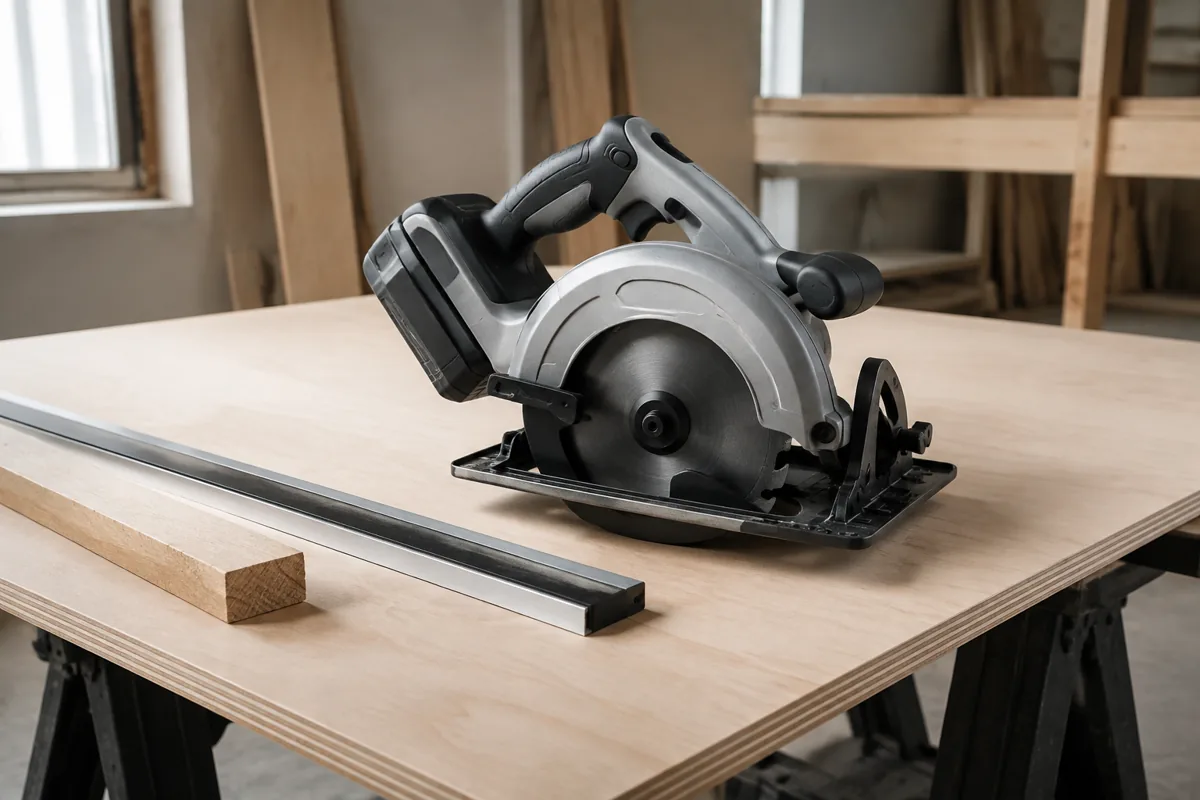
Sheet goods punish a saw that wanders, runs out of battery, or leaves a ragged edge. For on-site work, the best cordless circular saw is the one that tracks reliably against a guide, has enough depth for the material, and fits the battery system you already own. A 6½-inch saw is usually the easiest to handle; a 7¼-inch model is useful when you also cut thick stock or want the widest blade selection.
As an Amazon Associate we earn from qualifying purchases at no extra cost to you.


What matters when cutting sheet goods
Most plywood and OSB panels are 4 by 8 feet, so the saw must make a long, controlled cut without the operator fighting its weight. A 6½-inch saw typically cuts about 2⅛ inches deep at 90 degrees—enough for common ¾-inch panels stacked on a sacrificial surface. A 7¼-inch saw generally offers around 2½ inches of depth, but weighs more and can be tiring overhead or during repeated cuts.
For clean cabinet or furniture cuts, the blade and setup matter as much as the motor. Use a sharp, fine-tooth blade intended for plywood or finish work, support both sides of the cut, and keep the panel from pinching the blade. A guide rail or straightedge makes a bigger difference to accuracy than buying the highest-powered saw. Check that the saw’s base is flat, the depth and bevel locks hold securely, and the dust outlet can connect to your extractor if indoor cleanup matters.
Cordless saw types compared
| Saw type | Best for | Trade-off |
|---|---|---|
| 6½-inch, 18V/20V-class | Regular panel breakdown, lower weight, existing battery owners | Less depth; some models use blades with fewer local options |
| 7¼-inch, 18V/20V-class | General construction use and deeper cuts | Heavier; may draw down small batteries quickly |
| Higher-output platform saw | Long, repeated cuts or demanding work | Higher tool and battery cost; often unnecessary for occasional panels |
Voltage labels alone do not tell you how a saw will perform. Battery design, motor, blade condition, and feed rate all affect cutting speed. A compact battery is lighter, but a higher-capacity pack often holds power better through repeated long cuts. For a full day of panel work, plan on at least two compatible batteries so one can charge while the other is in use.
Which cordless saw to buy
For most people: choose a 6½-inch saw from the battery platform you already use. It is easier to control on a guide, and the smaller blade is adequate for typical sheet goods. Compare bare-tool prices if you own batteries, but check what is included: some listings omit the blade, guide, or battery, and a “tool-only” bargain may not be a bargain if you are starting from scratch. Browse cordless 6½-inch circular saws in your existing system.
For one saw to cover more jobs: a 7¼-inch model is a sensible choice if you also cut framing lumber, thicker stock, or need to make occasional bevel cuts at greater depth. It is not automatically better for panels: the added weight can make long guide cuts harder to steer, particularly with a small battery. Look for a model with a stable base, readable scale, and a blade brake. Compare cordless 7¼-inch circular saws if that wider use justifies the extra size.
For repeated production cuts: consider a higher-output saw only if you regularly cut full sheets, dense panels, or multiple sheets per day. A brushless motor and a suitable high-output battery can reduce bogging, but they add cost and weight. If your work is occasional, a conventional platform saw with a sharp blade and a proper guide is usually the better value.
Set up for straight, safe cuts
Before cutting, measure and mark the line, then clamp a guide so the blade—not the saw’s edge—is aligned with the mark. Make a test cut on scrap to account for the distance between the blade and the base edge. Set the blade depth just below the panel, roughly ⅛ inch past its underside. Too much exposed blade increases risk and can worsen tear-out.
Support the panel on foam insulation, a cutting grid, or evenly spaced sacrificial strips. Keep the offcut supported without trapping it against the blade. Stand to one side of the saw’s path, hold the tool with both hands, and let the blade reach speed before entering the material. If the saw slows sharply, stop feeding; forcing it can overheat the tool, drain the battery, or cause kickback if the kerf closes. Remove the battery before changing blades or clearing a jam.
Use eye and hearing protection, and control dust with extraction where practical. Fine plywood dust is unpleasant and accumulates quickly indoors; a saw’s small dust port may not capture everything, so a respirator and cleanup plan remain useful. For a cleaner visible edge, put the good face in the direction recommended by the blade and saw manufacturer, then test on offcuts—blade rotation and tooth geometry affect which face tears out more.
Battery and platform costs
If you already own batteries and a charger, staying in that ecosystem usually beats switching brands for a modest performance gain. If starting fresh, compare the complete kit price, battery capacity, charger speed, warranty, and availability of other cordless tools you expect to buy. A compact battery may be fine for a few cuts; for sustained sheet breakdown, a larger pack and a spare reduce interruptions. A spare battery is often a more useful upgrade than paying extra for a saw whose additional power you will rarely use.
Finally, budget for a good blade and guide. A basic straightedge can do the job, while a dedicated track system improves repeatability and dust handling at a higher price. For occasional site work, a compatible saw, sharp plywood blade, stable panel support, and carefully clamped guide are enough to make accurate cuts without buying into a premium setup.
Related guides
- Longest Lasting Lawn Mower Battery: AGM vs Lithium vs Flooded Lifespan and Cost per Season
- Duralast Gold Lawn Mower Battery Review: U1 Fit, CCA and When to Pay for AGM
- Greenworks Pro 80V 21-Inch Mower Review: Runtime Math, Push vs Self-Propelled and Yard Fit
- Bosch High Pressure Washer Gun Replacement: Fittings, Adapters and What Fits Your Model