Our Top Picks
 KingTool 276-Piece Tool Set Kit with 12V Cordless276 Count (Pack of 1)16.4 x 13.1 x 6.57 Inches1.76 PoundsCheck on Amazon
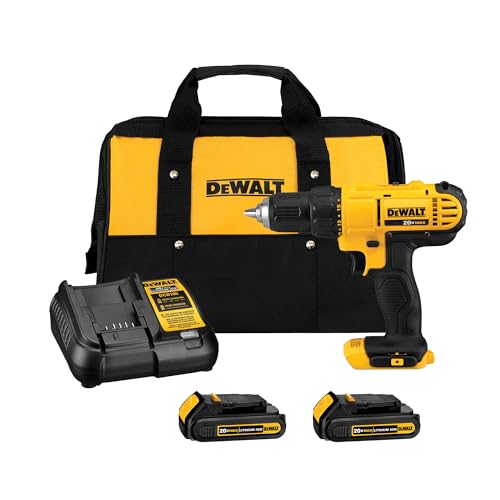
 DEWALT 20V MAX Cordless Drill and Impact DriverOne Size15.06 x 6.4 x 9.88 inches3.6 PoundsCheck on Amazon
 BLACK+DECKER 20V MAX* POWERCONNECT Cordless Drill Driver KitDrill Project Kit15.5 x 5.6 x 14.4 inches6.1 PoundsCheck on Amazon

What's inside
As an Amazon Associate I earn from qualifying purchases. This post may contain affiliate links at no extra cost to you.
New to power tools and overwhelmed by choice? Don’t be. These five tools, bought in this order, will handle nearly everything a beginner tackles — and nothing here is a wasted purchase.
Most people buy in the wrong order. They start with whatever looks like the fun part, usually something with a big spinning blade, then discover the first dozen jobs on their list are all holes and screws. The best power tools for beginners are not the most impressive ones. They are the tools that unlock the widest range of work for the least money and the least floor space, bought in the order you will actually need them.
As an Amazon Associate we earn from qualifying purchases at no extra cost to you.



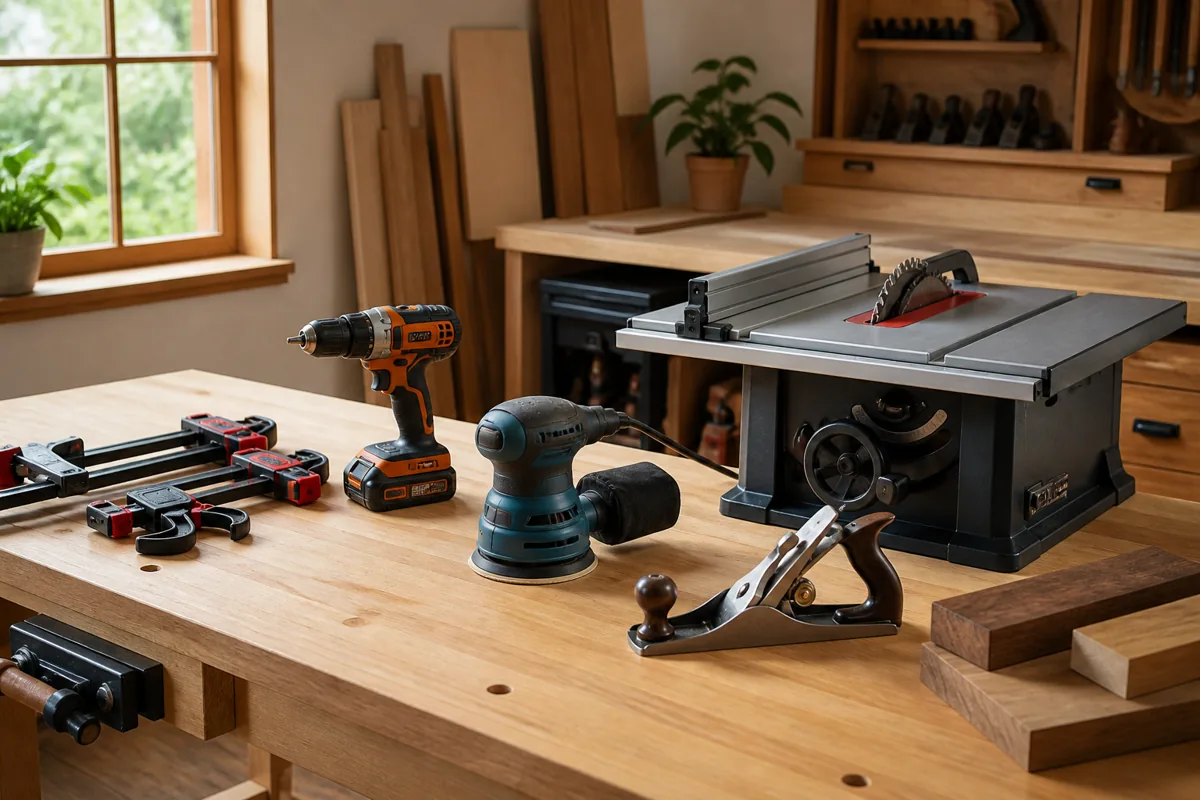
So this list is ordered by purchase priority, not by price and not by how satisfying the tool is to use. Each entry says what it unlocks, what separates a good example from a bad one, and who can safely leave it for later. The real test of a first tool is whether it still earns its place once you get good: you want to outgrow your skills, not your kit.
How To Judge A Beginner Tool Before You Buy
Four criteria decide whether a tool is worth owning, and they do not carry equal weight. Beginners usually get this backwards, comparing the number printed largest on the box while ignoring the two things that actually determine whether the tool gets picked up.
- Battery platform. This matters more than any single tool in your cart. Commit to one 18V/20V family and every later purchase gets cheaper, because you buy bare tools instead of kits. Choose a tool badly and it costs you once; choose a platform badly and it costs you for years.
- Control, not power. Variable speed, a working clutch, a smooth trigger, a base plate that stays where you set it. An underpowered tool is annoying. An uncontrollable tool is dangerous, and it produces work you throw away.
- Weight and balance in your hand. A tool you dread lifting is a tool you will work around. This is the criterion you cannot read off a spec sheet, so handle it in a store if you have the chance.
- Consumables. Blades, abrasives and bits are where performance actually lives, and they are an ongoing cost. Budget for them from day one rather than treating them as an afterthought.
Weighing them against each other is simple: platform beats everything, control beats power, and consumables beat brand prestige. A mid-range tool on a good platform with a sharp blade in it will out-cut a premium tool on a dead-end platform running the blade it shipped with.
The Five Tools, In Buying Order
1. Cordless drill/driver
The tool you’ll use every single session. Non-negotiable, buy it first.
It unlocks almost everything: assembly, shelves, cabinets, hinges, flat-pack, pilot holes, pocket screws, deck boards, hardware, even mixing finish. It is also where you set your battery platform, which makes this the most consequential purchase in the whole article.
Look for a two-speed gearbox, a keyless half-inch chuck, an adjustable clutch and two batteries in the box. The gearbox is the feature beginners underrate — low gear for driving with torque and control, high gear for clean holes. A clutch that slips before the screw head strips is what keeps you from snapping fasteners and blowing out soft pine.
At the bottom of the market you get single-speed gearboxes, sloppy chucks that let bits spin, one small battery and a charger that takes half a day. The middle band buys a brushless motor, two usable batteries, a clutch with settings that mean something and a light that points where you are drilling. The top of the range buys power you will not need for years, so put the difference into batteries and quality bits instead.
Who should size down: if your work is indoor furniture, shelves and small repairs, a 12V compact drill/driver is genuinely better. It is lighter and it fits inside a cabinet. Who should skip 12V: anyone planning to add saws, because the serious cutting tools live on the 18V/20V platforms.
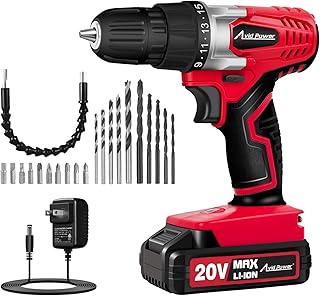
Cordless Drill/Driver
The most-used tool in any kit. Drills holes, drives screws, and works with countless accessories. Start here and build around it.
2. Circular saw
With a straightedge, a circular saw breaks down sheet goods and makes straight cuts better than a beginner’s table saw — for a fraction of the price and space.
What it unlocks is size. It turns a full sheet of plywood from something you cannot lift into parts you can build with, and it hangs on a wall instead of eating a quarter of your garage. Cabinet carcasses, workbench tops, shelving, boards cut to length: all of it starts here.
The thing to inspect is the base plate. A thin stamped shoe that flexes, or one that is not parallel to the blade, will not cut straight no matter how good you get. Beyond that, you want depth and bevel levers that clamp hard and do not creep, a clear sightline to the blade, an electric brake and a dust port. A corded 7-1/4-inch saw gives you the most capacity for the money; a cordless 6-1/2-inch saw gives you freedom and keeps you on your platform. Either is a fine first choice.
Two mistakes account for most bad cuts. The first is freehanding: clamp a straightedge for every cut that matters and swap the stock framing blade for a higher-tooth-count finish blade. The second is cutting a sheet across two sawhorses, so the offcut folds down and pinches the blade. Support the whole sheet on rigid foam or a sacrificial sheet on the floor, and set the blade depth just past the material.
Who can wait: if everything you build is small and made from pre-dimensioned lumber, this can slide to third. It still comes before a miter saw and before a table saw, because it does more jobs than either.
3. Random orbit sander
Saves your hands and gives every project a professional finish.
Sanding is the step people notice without knowing why. Look for the five-inch hook-and-loop pad, since that is the standard and paper for it is everywhere. Add variable speed, a pad brake so the disc does not spin freely and gouge the work when you set it down, low vibration, and a dust port that actually fits a shop-vac hose.
This is the one tool where corded costs you nothing. Sanding is sustained work that flattens batteries fast, and a corded sander is usually cheaper and lighter than its cordless equivalent.
The classic errors are pressing down, moving too fast and skipping grits. The tool’s own weight is the correct pressure; leaning on it just polishes the paper and burns swirl marks into the wood. Work 80 to 120 to 180, and replace discs before they glaze — clogged paper burnishes instead of cutting.
4. Jigsaw
The jigsaw handles curves, interior cutouts and any shape a circular saw cannot follow. It is fourth because most beginner projects are straight lines, and unnecessary until the first one is not.
Buy one that takes T-shank blades, changes them without a tool, offers orbital action settings and has a base that genuinely locks at 90 degrees. Cheap jigsaws fail in the same places every time: the shoe drifts off square, the blade wanders and bevels the cut edge, and the vibration numbs your hand in ten minutes.
Blade choice matters more than the saw itself. Coarse teeth for fast rough cuts in thick stock, fine teeth for tight radii, and a down-cut blade for veneered plywood and laminate so the chipping happens on the back face instead of the show side.
5. Oscillating multi-tool
A jigsaw for curves and a multi-tool for the awkward jobs round out a kit that can tackle almost anything. This is the rescue tool: flush-cutting a proud dowel or nail, undercutting a door jamb, trimming a bad joint in place, sanding into a corner, plunging a cut where no other blade can reach.
Check that the accessory fitment is a common standard rather than a proprietary one, then look for tool-free blade changes, variable speed and some attempt at vibration damping. Cheap examples buzz your hands raw and chew through blades.
Blades are the real running cost, and bimetal is worth it for anything that might touch a fastener — a bargain wood blade will last one cut into a nail. It sits fifth because it solves problems rather than producing parts. Move it up if you do renovation and repair work rather than building from scratch.
What This Kit Gets Right, And Where It Stops
Taken together, these five cover the overwhelming majority of what a beginner will attempt, with no overlap and no dead ends.
- ✔ Every tool earns its place
- ✔ Reasonable total cost
- ✔ Covers 90% of projects
- ✔ Nothing to outgrow
- ✘ No table saw yet (by design)
- ✘ Buy quality blades separately
The missing table saw is deliberate. It is the biggest commitment in money, floor space and learning curve, and a circular saw with a straightedge covers most of the same work in a small shop. Add one when repeated identical rips become your bottleneck, not before. And treat the blades and discs in the box as proof the tool runs, nothing more.
The Mistakes That Cost Beginners Most
- Buying the giant bundle. Six-tool kits look like value, but you are paying for a brushed saw, a flashlight and a radio to get a drill and two batteries. Buy fewer, better tools and add bare tools as jobs demand.
- Mixing platforms. Three brands means three chargers and no spare battery that fits anything when one dies mid-cut.
- Spending everything on tools and nothing on accessories. Clamps, a square, a straightedge, sharp blades and fresh abrasives are what make good tools feel good.
- Skipping dust and hearing protection. Cutting sheet goods and sanding produce the fine dust you least want to breathe, and every tool here is loud enough to matter. Safety glasses, muffs and a shop vac are part of the purchase, not an upgrade.
- Buying the sixth tool before mastering the first five. Almost every beginner project that goes wrong goes wrong because of technique, not because a tool was missing.
FAQ
Do I really need cordless, or is corded fine?
Corded is fine for anything stationary, and it is usually cheaper for the same performance — the sander is the obvious case. Go cordless for the drill and the saws, where being tethered actively changes how you work. Mixing the two is not a compromise, it is the sensible answer.
Is brushless worth the extra money on a first tool?
Worth it on the drill, because it is the tool that runs hundreds of cycles a day and heat is what kills motors. On the sander, jigsaw and multi-tool it is a nice-to-have. If the choice is a brushless tool with one battery or a brushed tool with two, take the batteries.
Should I buy a combo kit or one tool at a time?
A two-tool kit that includes batteries and a charger is usually the cheapest way onto a platform, so that first purchase is worth kitting. After that, buy bare tools. You already own the expensive part.
What should I buy sixth?
Let the projects tell you. If you are cutting a lot of trim and framing, a miter saw. If you are building furniture, a trim router. If you are driving long fasteners into anything structural, an impact driver. Buy the tool that removes the bottleneck you keep hitting, not the one that looks best on the shelf.
Build in order
Buy them one at a time as projects demand — you’ll spread the cost and learn each tool properly. Get the drill now, and let the next four wait until a project genuinely stalls without them; that pause is what turns a pile of tools into skills. See our full brand rankings to pick a platform.