What's inside
As an Amazon Associate I earn from qualifying purchases. This post may contain affiliate links at no extra cost to you.
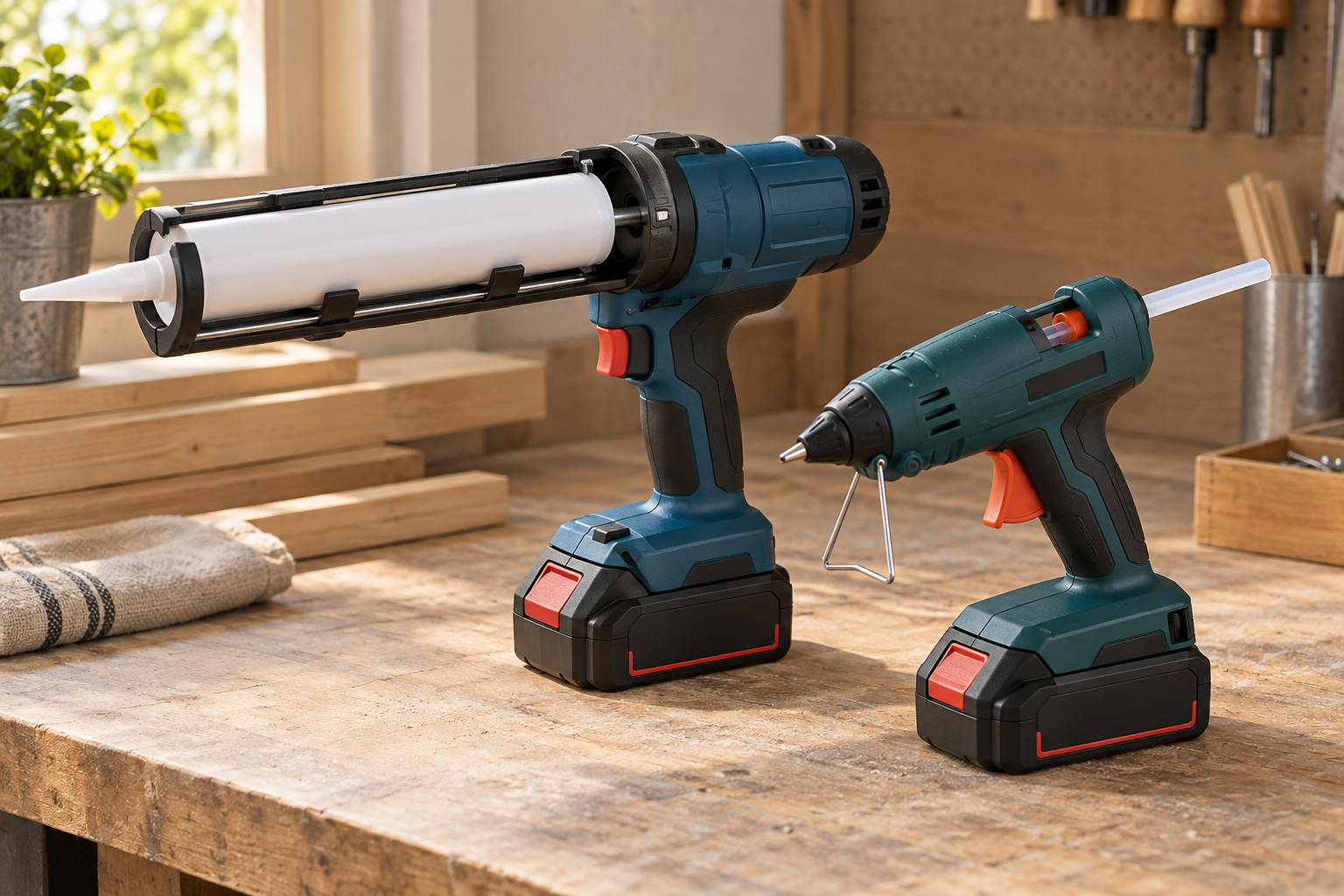
A cordless glue gun is useful when the work is away from an outlet: installing labels, tacking cable covers, assembling displays, securing foam, or making quick packaging repairs. It is not a replacement for a cordless adhesive dispenser or a corded high-output glue gun. The right choice depends mainly on your existing battery platform, how many glue sticks you use per job, and whether the bond must survive heat, vibration, or moisture.
As an Amazon Associate we earn from qualifying purchases at no extra cost to you.


What to Look For in a Cordless Glue Gun
Start with warm-up time. Most practical cordless hot-melt guns reach working temperature in roughly 60 to 180 seconds. A faster gun matters when you are moving between workstations, but it usually comes with higher battery demand or a more powerful heater. For occasional assembly, waiting an extra minute is rarely a serious problem.
Check the glue-stick diameter before buying. Many general-purpose guns use 0.44-inch (11 mm) sticks, while compact craft guns often use 0.28-inch (7 mm) sticks. The sticks are not interchangeable. A mismatched diameter can cause poor feeding, leaks, or a jammed mechanism.
Look for a stable base, a protected nozzle, a mechanical feed trigger, and a replaceable nozzle if possible. A drip-control feature is valuable in mobile work because hot glue left on a tool case, bench, or finished panel is difficult to remove. A trigger lock or on/off switch is also preferable to a gun that heats as soon as its battery is connected.
Choose the Battery Platform First
If you already own cordless tools, staying within that battery system is usually the sensible option. You avoid buying another charger and can carry one battery type through the job. The trade-off is that hot glue guns are not available for every platform, and platform-specific tools can cost more than a basic corded gun.
| Option | Best use | Main advantage | Main drawback |
|---|---|---|---|
| 18V or 20V platform glue gun | Frequent mobile assembly | Uses batteries you already own; generally better runtime | Heavier and often more expensive |
| 12V platform glue gun | Light repair and trim work | Compact and easier to handle overhead | Lower output and fewer platform choices |
| Dedicated rechargeable gun | Occasional work without a tool battery system | Small, simple, and independent | Separate charger; limited runtime and battery replacement options |
| Corded high-output gun | Long production runs at a fixed bench | Continuous power and high glue throughput | Requires an outlet and manages a power cord |
For owners of an established 18V system, a platform-matched 18V cordless hot glue gun is often the most economical purchase, provided the tool is offered for your battery family. Do not assume that every brand’s “18V” battery fits another brand’s tool. Voltage labels are not a compatibility standard.
Where Cordless Glue Guns Work Well
Hot melt is excellent for fast positioning and light-duty assembly. It grabs quickly, fills gaps, and works on many porous materials such as cardboard, fabric, wood, cork, and some foams. It is particularly useful for holding parts in place while screws, staples, or a more durable adhesive are applied.
A cordless gun is also convenient for temporary fixtures. You can tack a cable route, hold a template, stabilize a loose trim piece, or secure a small sensor during a test installation. Use low-temperature glue where the material may soften or discolor, but remember that low-temperature formulations generally provide less heat resistance and a weaker bond.
For regular field work, consider buying 11 mm industrial hot-glue sticks matched to the gun. Cheap craft sticks are fine for signs, packaging, and temporary positioning, but they can vary in diameter and soften too easily in a warm vehicle. Keep several spare sticks in a sealed bag; dust and grit on the stick can contaminate the feed path.
Common Failure Modes
The most common mistake is using hot glue on a surface that cannot tolerate heat. Thin plastic, vinyl, painted foam, and some laminates may warp, blister, or release their finish. Test on scrap first. Hot glue also bonds poorly to oily plastic, dusty concrete, silicone rubber, and smooth polyethylene or polypropylene. Roughening the surface helps, but it does not turn hot melt into a structural adhesive.
Heat is another limitation. A dark enclosure in a vehicle can become hot enough to soften ordinary glue and release the joint. Use a high-temperature formulation where appropriate, and avoid relying on hot glue for parts exposed to engine heat, direct sun, heavy vibration, or sustained tension.
Battery tools can also be awkward in confined spaces. A full-size 18V battery may make the gun top-heavy, especially when you are reaching into a cabinet or working above shoulder height. A smaller battery improves balance, while a larger pack extends runtime. In most assembly jobs, battery capacity is not the limiting factor: a 2.0Ah pack can typically handle many short glue applications, but the exact number varies with warm-up cycles and trigger time.
Practical Buying Advice
Buy the gun that matches the work rather than the advertised voltage. If you already own a compatible battery and need occasional mobile tacking, the platform tool is usually the cheaper option overall. If you have no battery ecosystem, a dedicated rechargeable glue gun can make sense for light jobs and storage in a vehicle.
Choose a corded model instead when you will apply glue continuously for more than 20 or 30 minutes at a bench. It will normally cost less, stay lighter, and avoid interruptions while batteries charge. Choose an adhesive or caulk dispensing gun—not a hot glue gun—when you need controlled beads of construction adhesive, silicone, or polyurethane. Those tools solve a different problem and should not be substituted just because both have a trigger.
Before taking the tool to a job, test the glue, surface, nozzle temperature, and cure behavior on offcuts. Carry a heat-resistant mat, spare sticks, and a small scraper. That preparation prevents the most expensive cordless glue-gun failure: making a fast bond that must later be removed from a finished surface.
Related guides
- Longest Lasting Lawn Mower Battery: AGM vs Lithium vs Flooded Lifespan and Cost per Season
- Duralast Gold Lawn Mower Battery Review: U1 Fit, CCA and When to Pay for AGM
- Greenworks Pro 80V 21-Inch Mower Review: Runtime Math, Push vs Self-Propelled and Yard Fit
- Bosch High Pressure Washer Gun Replacement: Fittings, Adapters and What Fits Your Model