What's inside
As an Amazon Associate I earn from qualifying purchases. This post may contain affiliate links at no extra cost to you.
A cordless foam gun is useful when a job calls for repeatable bead size and clean starts and stops, not simply because the tool runs on a battery. For occasional gaps around a pipe, a standard can with its supplied straw may be cheaper and adequate. A powered gun makes more sense when you’re applying foam across many openings, working overhead, or trying to keep bead size consistent.
As an Amazon Associate we earn from qualifying purchases at no extra cost to you.


What a cordless foam gun does
These tools dispense one-component polyurethane foam from a compatible pressurized can. The battery drives a metering mechanism; it does not pressurize the can. A trigger or control setting regulates how much foam comes out, while the can’s valve and nozzle still matter. Most tools in this category are designed around a particular can connection, so check compatibility before buying—“foam gun” does not necessarily mean it accepts every retail can.
Foam expands after application. A bead that looks small when wet can grow substantially, and too much can bow trim, push on a frame, or make cleanup harder. Follow the can’s temperature, moisture, ventilation, and curing instructions. Wear gloves and eye protection: uncured foam sticks to skin and clothing, and cured foam is difficult to remove mechanically.
Choosing a tool
For a one-off repair, start with a straw-dispensed foam can. It costs less and avoids adding a battery platform to your kit. The trade-off is less control at the trigger and more risk of drips or inconsistent beads, especially if the can’s short applicator is awkward to reach into a narrow gap.
If you already own batteries from a cordless platform, a cordless foam gun compatible with that platform may be a practical choice for repeated work. Confirm whether the listing includes the tool only, a battery and charger, or additional nozzles. A bare tool can be a good value if you own compatible batteries; it is a poor deal if buying into the platform just for a few cans of foam.
Before ordering, check can fitment, control range, cleaning requirements, and whether the product is a complete dispensing tool or an accessory that still needs a separate foam gun. Also look for clear instructions on how long a can may remain installed. Foam can cure in the nozzle or gun if left too long, even when the tool itself is functioning properly.
Cordless gun versus simpler options
| Option | Best fit | Main advantage | Main trade-off |
|---|---|---|---|
| Straw can | Small, occasional repairs | Lowest cost and fewest parts | Less consistent control; can be messy |
| Manual gun | Several cans or regular DIY use | Mechanical trigger control without batteries | Requires compatible cans and cleanup |
| Cordless gun | Repeated application or awkward access | Powered dispensing and familiar battery platform | Higher cost, platform dependence, and more maintenance |
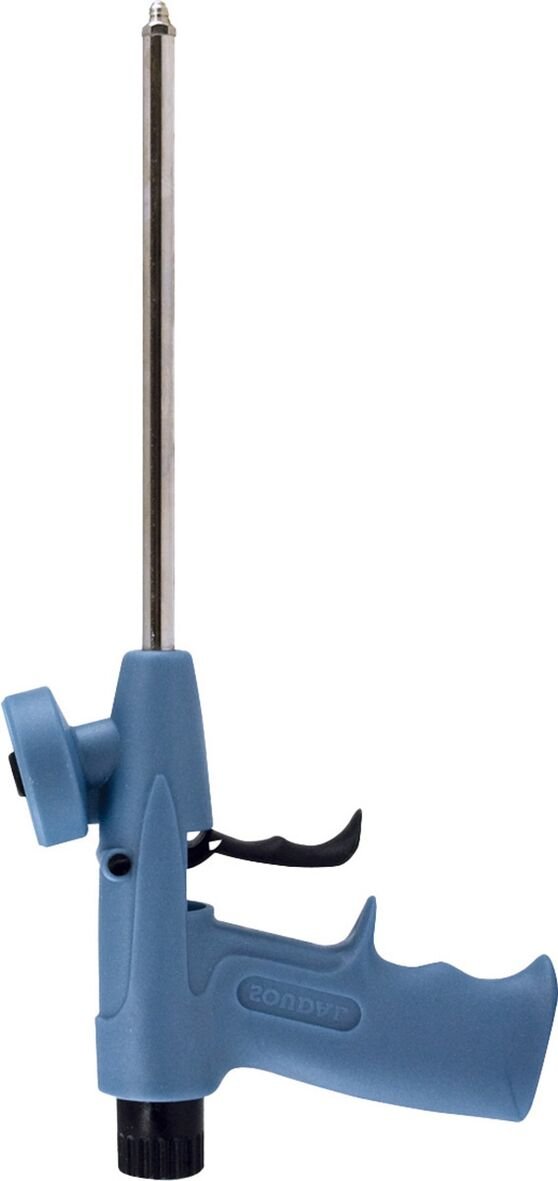
A manual gun is worth considering if you want better control but do not need a powered tool. Search for a polyurethane foam dispensing gun and verify its can connection before purchase. A quality manual gun can be simpler than a cordless model, and there is no battery to charge or store. For a few short beads, that simplicity often wins.
Battery and platform trade-offs
A foam gun typically draws power only while dispensing, so runtime is rarely the main buying question for ordinary sealing jobs. Compatibility, control, and cleanup matter more. Still, a tool tied to a battery ecosystem has a real cost: if you do not already own the battery and charger, include them in the total. A compact battery may make the tool easier to handle in a cramped corner, while a larger pack can add weight without helping much for intermittent trigger use.
Do not choose a tool solely because its battery matches your drill. Verify the exact platform and battery family in the product documentation; brands sometimes have multiple incompatible voltage lines. If you already have chargers and packs, a bare tool can keep cost down. If not, compare the complete kit price against a manual gun and the number of cans you expect to use.
Application and maintenance
Prep the opening first: remove loose debris, protect nearby surfaces, and check that the gap is suitable for the foam type. Apply a modest bead rather than trying to fill a deep cavity in one pass. Foam expands, and large voids may need staged application according to the can directions. Near window and door frames, use a product intended for that application; high-expansion foam can distort frames if overfilled.
Start on scrap if the gun has adjustable flow. A short test bead reveals whether the setting is too generous before you work on a finished surface. Keep the nozzle pointed safely away from people, and do not assume releasing the trigger instantly stops all flow; pressure and residual foam can produce a small tail. Wipe uncured foam only with a cleaner approved for the product and surface. Once cured, solvent generally will not remove it.
Follow the tool maker’s instructions for leaving a can attached, cleaning the gun, and storing it. A clogged valve or cured foam in the nozzle is a common failure, not a battery problem. Do not force a jammed trigger or dismantle a pressurized assembly. If the gun will sit unused, use the manufacturer’s storage procedure; leaving foam in an unsuitable tool can turn a convenient purchase into a disposable one.
Who should buy one?
Buy cordless if you already own the matching battery platform and expect enough repeat work to value controlled dispensing—such as sealing multiple penetrations or insulating several openings. Choose a manual gun if consistency matters but battery convenience does not. For a single small gap, the cheaper straw can is usually fine. Spend the difference on the right foam type, surface protection, and careful application rather than buying a powered tool you may use once.
FAQ
Who should buy one?
Related guides
- Longest Lasting Lawn Mower Battery: AGM vs Lithium vs Flooded Lifespan and Cost per Season
- Duralast Gold Lawn Mower Battery Review: U1 Fit, CCA and When to Pay for AGM
- Greenworks Pro 80V 21-Inch Mower Review: Runtime Math, Push vs Self-Propelled and Yard Fit
- Bosch High Pressure Washer Gun Replacement: Fittings, Adapters and What Fits Your Model