What's inside
As an Amazon Associate I earn from qualifying purchases. This post may contain affiliate links at no extra cost to you.
What matters most in panel assembly
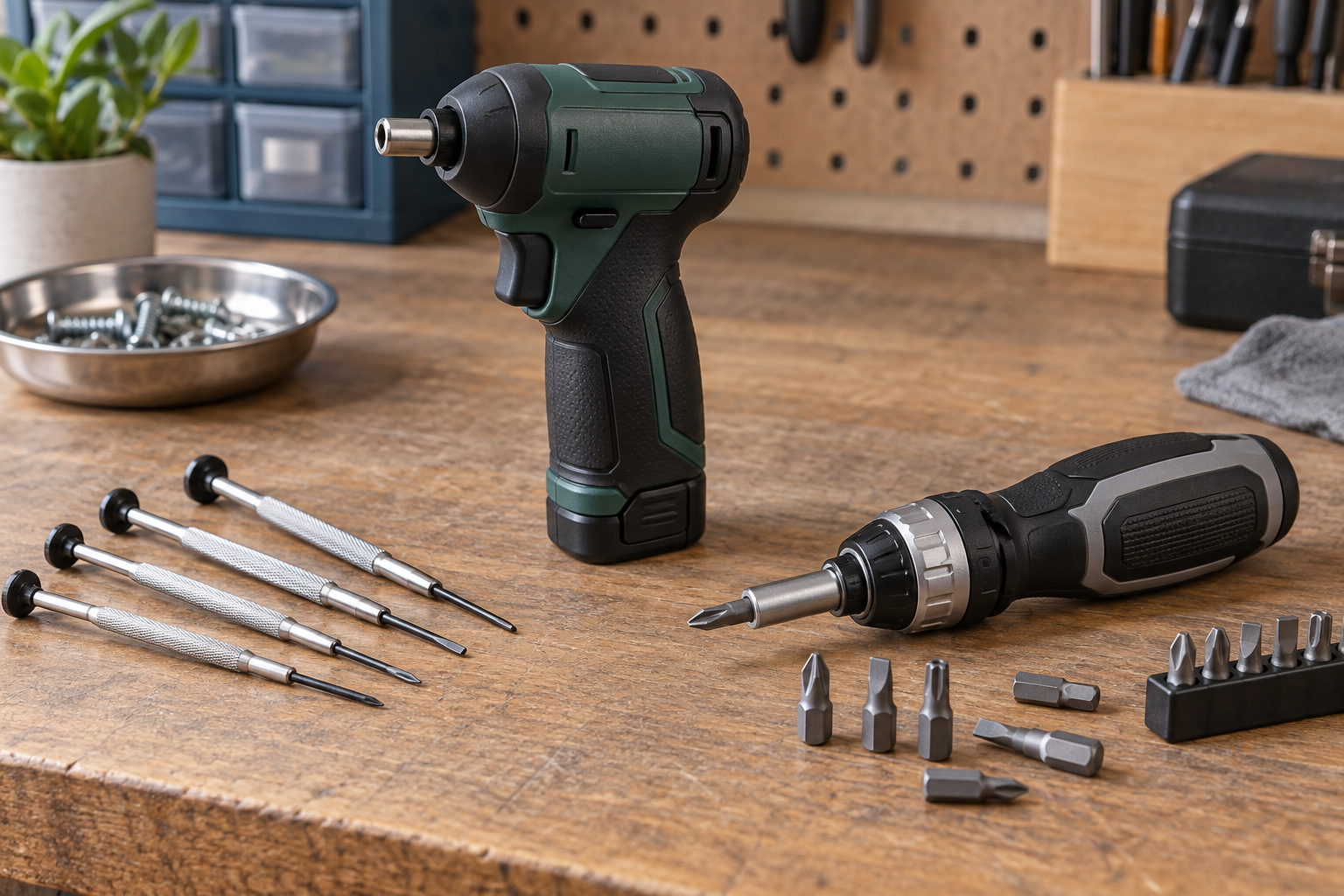
Electrical panel assembly is a poor use for a high-powered impact driver. The job needs controlled fastening, good visibility, and repeatable results—not maximum speed. A cordless screwdriver should drive terminal screws, enclosure screws, grounding screws, and accessory hardware without stripping heads or damaging threads.
Before choosing a tool, check the torque specifications for the breakers, lugs, neutral bars, and terminal blocks you are installing. Many connections require a final tightening torque measured in inch-pounds. A standard cordless screwdriver is useful for running screws down, but it should not be treated as a substitute for a calibrated torque screwdriver or torque wrench. Final torque should be applied and verified with the specified hand tool.
As an Amazon Associate we earn from qualifying purchases at no extra cost to you.



Work de-energized, verify the absence of voltage with an appropriate tester, and follow the panel and equipment manufacturer’s instructions. Insulated hand tools and a cordless tool with a nonconductive housing do not make live work safe.
The best cordless screwdriver type
For most panel work, choose a compact 12V or 18V/20V drill-driver with a clutch, two speed ranges, and a 1/4-inch hex chuck or standard keyless chuck. A clutch is important because it lets you stop driving before a screw head, plastic enclosure, or small terminal is damaged.
A dedicated electric screwdriver with a narrower torque range can be even better for repetitive assembly. These tools are lighter and easier to control, but they usually have less general-purpose usefulness than a compact drill-driver. If you also install conduit fittings, drill enclosure knockouts, or work on equipment outside the panel, a small drill-driver is the more practical purchase.
Use a 12V cordless drill-driver with a clutch when low weight and control matter most. Choose an 18V or 20V compact model if you regularly drill holes, drive larger fasteners, or want to stay within a broader battery platform.
Cordless screwdriver choices compared
| Tool type | Best use | Advantages | Limitations |
|---|---|---|---|
| 12V drill-driver | Terminal screws and light panel assembly | Light, controllable, compact | Less drilling power and shorter runtime under heavy load |
| 18V/20V compact drill-driver | Mixed electrical and general trade work | More power, broad battery ecosystem, longer runtime | Heavier and easier to overtighten small screws |
| Dedicated cordless screwdriver | Repetitive screw installation | Good balance, simple controls, often excellent clutch behavior | Less versatile for drilling and larger fasteners |
| Impact driver | Large structural or enclosure fasteners | Fast and powerful | Poor choice for small terminals; can strip or over-torque hardware |
Torque control and clutch settings
Clutch numbers are not standardized. A setting marked “10” on one brand may not match “10” on another, and battery charge, bit condition, screw type, and material all change the result. Treat the clutch as a control aid, not a calibrated torque setting.
Start at a low setting and test on scrap material or an unused part of the same assembly. Increase the clutch gradually until the screw seats without stripping. For small terminal screws, the correct setting may be surprisingly low. If the clutch slips before the screw is fully seated, finish the connection with the specified torque tool rather than simply turning the clutch to maximum.
Some manufacturers publish torque charts for their tools, but these are usually approximate. A torque screwdriver is the right choice for final electrical connections. Depending on the equipment, required values can range from only a few inch-pounds to well over 100 inch-pounds, so one tool will not cover every panel connection.
Battery platform and charger considerations
Battery compatibility matters more than a small difference in advertised voltage. A compact tool is easier to use inside a crowded enclosure, while a larger battery can make the same tool awkward and front-heavy. For panel assembly, a 1.5Ah or 2.0Ah battery is often enough for a day of intermittent fastening and keeps the tool light. Larger 4.0Ah or 5.0Ah packs make sense when the same platform powers saws, grinders, or rotary hammers.
If you already own batteries, buying a bare tool is usually the cheapest option. Otherwise, compare the kit price carefully. A kit with two batteries and a charger may cost more initially but can be a better value than buying each part later. Look for a platform with readily available batteries, chargers, compact lights, and other cordless hand tools—not just the lowest advertised tool price.
A compact 18V or 20V drill-driver kit is the sensible starting point for someone building a cordless system. If the tool will stay at a bench and only drive small screws, the cheaper 12V platform is often sufficient.
Bits and accessories that prevent failures
Use correctly sized Phillips, Pozidriv, slotted, square, and Torx bits as required by the equipment. A worn or undersized bit is a common cause of cam-out and damaged screw heads. Keep several fresh bits available; a bit that looks usable can still have rounded edges that make it unsafe for terminal work.
A short bit holder improves control in tight spaces, but avoid excessive extensions because they increase flex and reduce visibility. Magnetic holders are convenient for enclosure screws, though they should not be used where loose magnetic parts could interfere with sensitive equipment. A compact work light is useful inside a dark panel, especially when the tool’s battery blocks the built-in LED.
When the cheaper option is fine
You do not need a premium brushless tool for occasional assembly of a small residential panel. A basic 12V drill-driver with a usable clutch, a spare battery, and good bits will handle light screw installation well. The cheaper option becomes less attractive when the tool is used every day, when it must drill metal regularly, or when the platform has expensive or hard-to-find replacement batteries.
Brushless motors generally offer better efficiency, longer service life, and improved runtime, but they are not automatically more accurate. For electrical assembly, clutch behavior, trigger control, balance, and bit quality matter more than brushless branding.
Buying checklist
Prioritize a low-speed trigger, a clutch with enough adjustment range, a compact head, a belt hook or stable base, and a battery that does not make the tool cumbersome. Confirm that replacement batteries and chargers are readily available. Add a calibrated insulated torque screwdriver for electrical terminals for final tightening.
For mixed trade use, select a compact 18V or 20V drill-driver platform. For bench assembly and lighter panels, a 12V tool is easier to control and less tiring. In either case, use the cordless screwdriver to install hardware efficiently, then rely on the specified torque procedure to make the electrical connection reliable.
Related guides
- Longest Lasting Lawn Mower Battery: AGM vs Lithium vs Flooded Lifespan and Cost per Season
- Duralast Gold Lawn Mower Battery Review: U1 Fit, CCA and When to Pay for AGM
- Greenworks Pro 80V 21-Inch Mower Review: Runtime Math, Push vs Self-Propelled and Yard Fit
- Bosch High Pressure Washer Gun Replacement: Fittings, Adapters and What Fits Your Model