What's inside
As an Amazon Associate I earn from qualifying purchases. This post may contain affiliate links at no extra cost to you.
Unistrut and similar slotted channel are easy to cut, but the wrong cordless saw can make the job noisy, slow, and surprisingly dangerous. The best choice is usually a cordless portable band saw, followed by a dedicated metal-cutting circular saw for fast, square cuts. An abrasive cutoff saw is the low-cost option, but it creates sparks, heat, dust, and rougher edges.
Before buying, check the channel size and material. Standard strut is often 1-5/8 inches wide, while deeper channel, pipe, threaded rod, and angle iron may require a saw with a larger throat or cutting capacity. Also decide whether you are making a few cuts on a ladder or processing a large batch on a bench. Those jobs favor different saws.
As an Amazon Associate we earn from qualifying purchases at no extra cost to you.


Which Saw Type Works Best?
| Saw type | Best use | Main advantages | Main drawbacks |
|---|---|---|---|
| Cordless portable band saw | Unistrut, threaded rod, conduit, pipe, repeated cuts | Cooler cuts, low sparks, controlled operation | Slower than a circular saw; blades eventually break |
| Metal-cutting circular saw | Fast, straight cuts in channel and sheet | Quick cuts, good depth, easy blade changes | More sparks and flying chips; kickback demands attention |
| Abrasive cutoff saw | Occasional cutting on a tight budget | Lowest tool cost; cuts many metals | Hot cuts, sparks, dust, wheel wear, rough edges |
| Reciprocating saw | Demolition and awkward installed material | Fits into confined areas; uses common blades | Slow, rough, and difficult to keep square |
For most installers, a cordless portable band saw is the safest all-around recommendation. Its blade wraps around the work and removes a narrow amount of metal, so it produces little heat and usually no shower of sparks. That matters when you are cutting inside a finished building, near insulation, or around paint and wiring.
Why Portable Band Saws Suit Unistrut
A band saw is easier to control than a cutoff wheel because the blade does not normally grab the edge and climb out of the cut. Set the channel on a stable surface, keep both hands on the saw, and let the blade’s teeth do the work. A typical cut through 1-5/8-inch strut should take only a few seconds with a sharp blade, although heavy-gauge channel and stainless hardware take longer.
Look for a capacity of at least 2-1/2 by 2-1/2 inches if you want flexibility beyond standard strut. A variable-speed trigger is useful for thin-wall conduit and stainless steel. A hook or hanging point helps when working from a lift, but do not hang the saw by its trigger or battery.
Blade selection is critical. A bi-metal blade in roughly 14/18 TPI is a practical starting point for standard channel and mixed metal sizes. Finer 18/24 TPI blades work better on thin wall material and threaded rod; coarse blades cut faster in thick stock but can snag or strip teeth in thin channel. Keep several spare blades available. A dull blade encourages excess pressure, overheats the work, and can break at the weld.
Battery size affects balance as much as runtime. A compact battery keeps the saw lighter for overhead work, while a 4.0Ah or larger pack is more useful for dozens of cuts. High-output packs can improve speed on some platforms, but they add weight. If you already own batteries, staying within that ecosystem is usually cheaper than buying a bare tool and a new charger.
When a Circular Saw Is the Better Choice
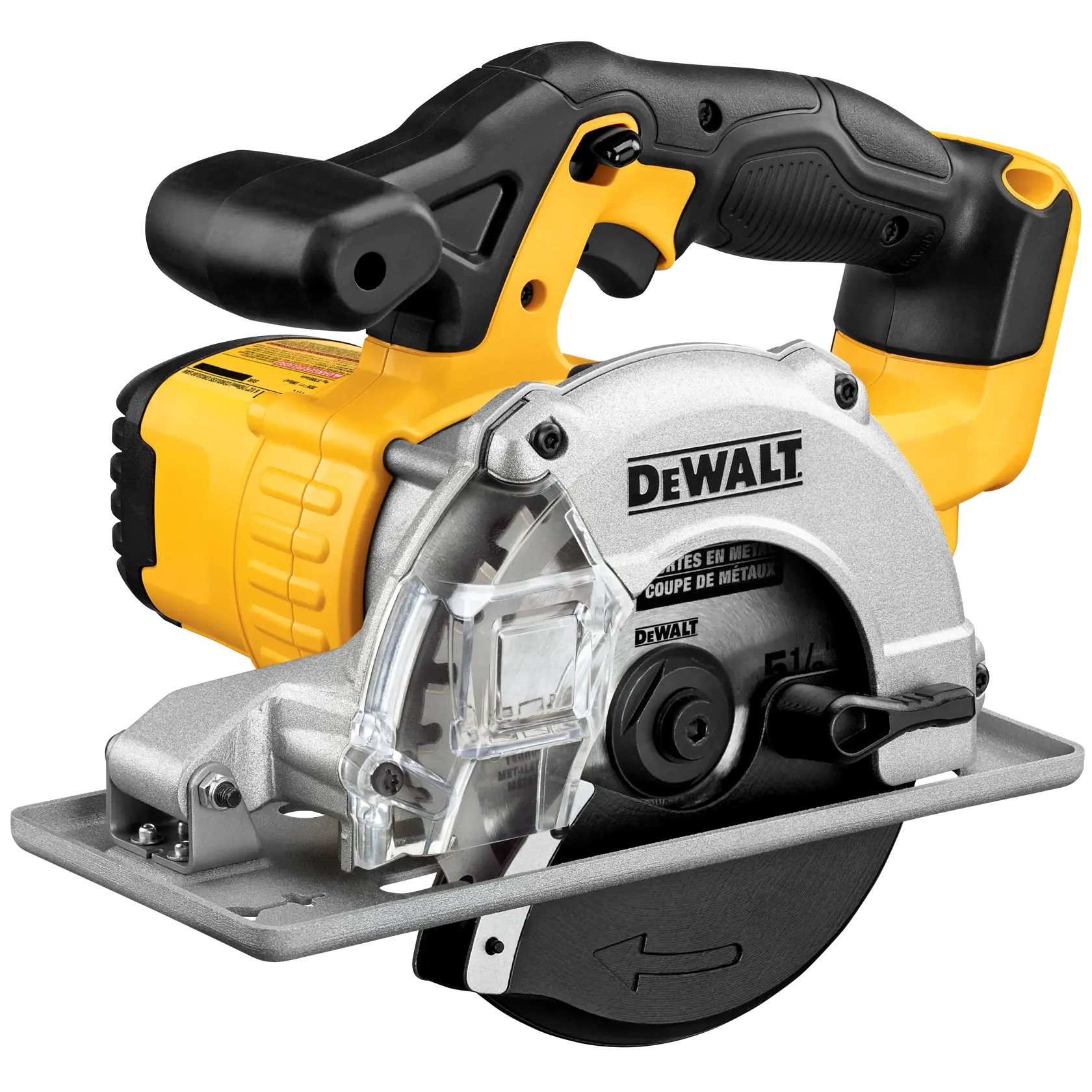
A dedicated cordless metal-cutting circular saw is faster when you have a pile of channel to cut to the same length. Its rigid shoe makes it easier to produce repeatable square cuts, and a 5-3/8- or 6-1/2-inch blade usually has enough depth for strut. Use a blade specifically rated for ferrous metal, not a wood blade with carbide teeth intended for lumber.
These saws still throw hot chips and may produce sparks, especially when cutting thicker steel. Wear eye protection and hearing protection, clear flammable materials from the cutting zone, and support the offcut so it cannot pinch the blade. Keep the shoe flat against the channel. Twisting the saw near the end of the cut is a common cause of binding and kickback.
Metal-cutting circular saws are not automatically better for overhead work. They are heavier in the cut, louder, and less forgiving if the material moves. For occasional home-shop work, the speed advantage may not justify buying another saw platform.
Where Abrasive Cutoff Saws Fit
A cordless angle grinder or cutoff tool with a thin metal cutoff wheel can handle Unistrut, but it is a compromise. The wheel removes more material, so it cuts slowly as it wears and leaves a hot edge with burrs. Sparks can travel several feet and ignite dust, cardboard, wood shavings, or insulation. The wheel can also shatter if it is bent, side-loaded, or damaged.
A cordless metal cutoff saw is fine for a few outdoor cuts when you already own the battery and can control the sparks. It is not my first choice for finished interiors or repeated installation work. Deburr every cut with a file, flap wheel, or deburring tool; sharp strut edges can damage cable insulation and cut hands.
Battery Platform and Running Cost
For a single project, the cheapest complete kit may win, especially if it includes a battery and charger. For regular work, compare the whole platform: replacement batteries, charger speed, compact packs, and the availability of cordless drills, impacts, grinders, and lights. A tool-only price can look attractive until a battery and charger add $100 or more.
Do not choose a high-voltage platform solely for cutting standard strut. A compact 18V or 20V-class band saw has ample power for this material. Larger packs improve runtime but make overhead cutting tiring. Keep the battery out of direct heat and stop using it if the case is cracked, swollen, or unusually hot.
A Better Way to Cut Unistrut
Measure from the correct reference edge, mark all pieces with a fine marker, and clamp or firmly support the channel. Cut with the open side oriented so the blade does not immediately encounter a loose lip. Start the blade before contacting the metal, use light pressure, and avoid forcing the saw when the teeth stop clearing chips.
After cutting, remove burrs from every edge. If the channel will support cable, conduit, or a threaded rod assembly, inspect the cut closely for raised metal that can interfere with fittings or damage insulation. Touch up bare steel where the environment requires corrosion protection. For a clean installation, a slightly slower band-saw cut followed by quick deburring is usually better than the fastest possible cut.
What to Buy
Choose a cordless portable band saw if you install strut regularly, work indoors, or need controlled cuts with minimal sparks. Choose a cordless metal-cutting circular saw if speed and repeatability matter more than low spark output. Choose an abrasive cutoff tool only when the job is occasional, the cutting area is safe for sparks, and the lower purchase cost is important.
If your work includes both strut and heavier stock, prioritize capacity, blade availability, and comfortable handling over maximum advertised speed. A saw that uses common replacement blades and batteries you already own will usually cost less to operate than a faster tool on an entirely new platform.
Related guides
- Longest Lasting Lawn Mower Battery: AGM vs Lithium vs Flooded Lifespan and Cost per Season
- Duralast Gold Lawn Mower Battery Review: U1 Fit, CCA and When to Pay for AGM
- Greenworks Pro 80V 21-Inch Mower Review: Runtime Math, Push vs Self-Propelled and Yard Fit
- Bosch High Pressure Washer Gun Replacement: Fittings, Adapters and What Fits Your Model