What's inside
As an Amazon Associate I earn from qualifying purchases. This post may contain affiliate links at no extra cost to you.
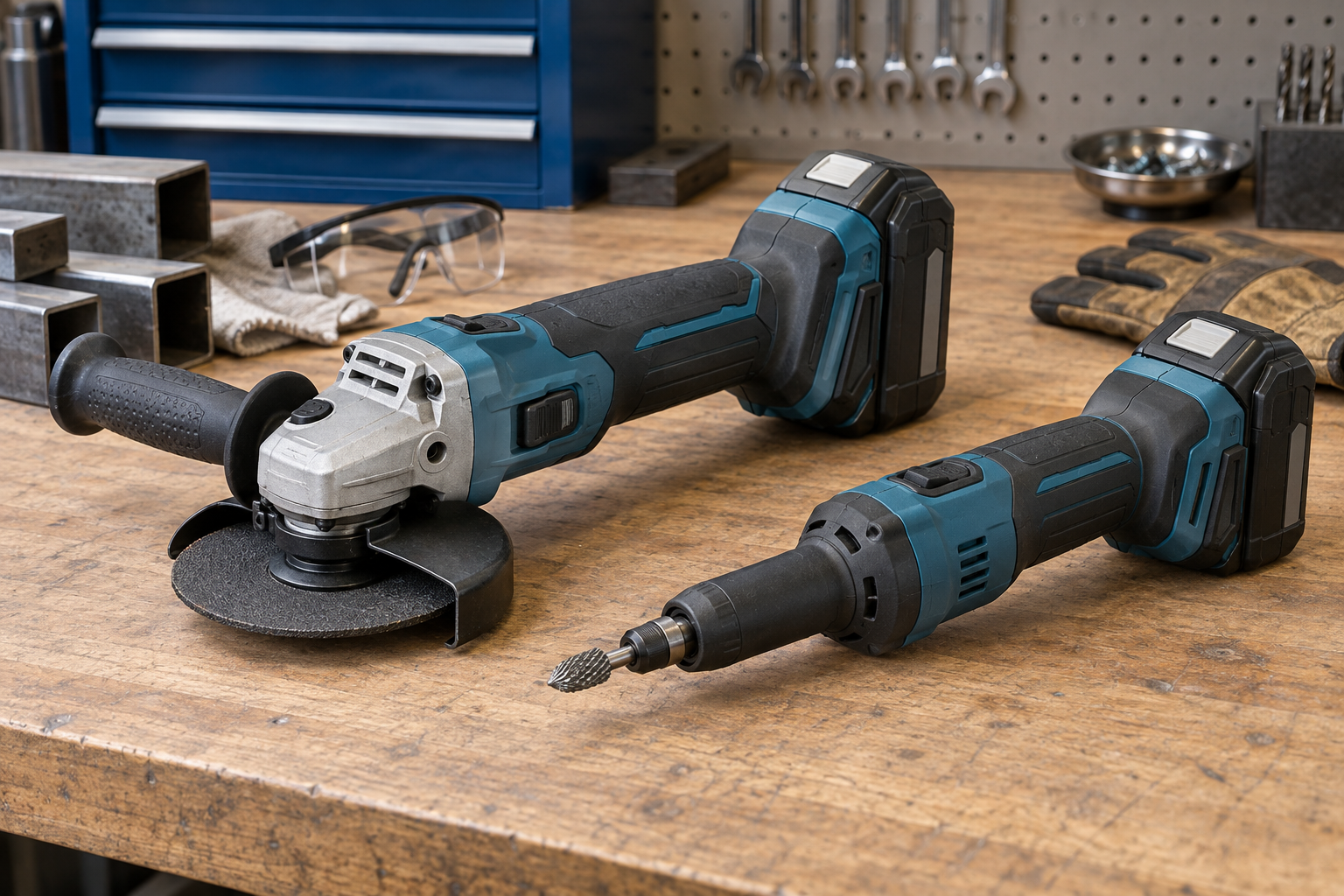
Deburring is a small operation that can consume a surprising amount of shop time. A sharp edge left on a laser-cut bracket, machined part, or welded assembly can damage wiring, cut gloves, or make a finished part fail inspection. A cordless die grinder is useful when parts are spread around the shop, when an air hose is inconvenient, or when you already own batteries in a compatible tool platform.
For most metal fabrication work, the best choice is a brushless 18V or 20V die grinder with a variable-speed trigger, a 1/4-inch collet, and enough battery capacity to finish a batch without excessive heat. The cheapest tool can be perfectly adequate for occasional edge cleanup, but sustained grinding exposes differences in speed control, thermal protection, vibration, and battery cost.
As an Amazon Associate we earn from qualifying purchases at no extra cost to you.


What to look for in a cordless die grinder
Speed control matters more than maximum RPM. Carbide burrs and small abrasive wheels cut cleanly at different speeds. A tool with several speed settings or a controllable trigger is easier to use than a single-speed grinder running flat out. Typical cordless die grinders run somewhere around 10,000 to 25,000 RPM. Lower speeds help prevent burning on aluminum and reduce the chance of grabbing thin sheet metal.
Use a 1/4-inch collet. It accepts the common carbide burrs used for weld cleanup and deburring. A good collet should hold a shank concentrically without excessive runout. Visible wobble can leave scallops on an edge, increase vibration, and loosen the accessory. Avoid forcing a 1/8-inch shank into an unsuitable collet or relying on an adapter for heavy work.
Brushless motors are preferred for production work. They usually run cooler, use battery energy more efficiently, and tolerate repeated starts better than brushed motors. A brushed tool may still make sense for occasional fabrication, especially if it is already part of your battery system. The trade-off is shorter runtime per battery and potentially more maintenance over several years.
Pay attention to the nose and switch. A slim nose gives better visibility around brackets and weld toes. A lock-on switch can be useful for long blending operations, but a paddle or trigger that is easy to release is safer when a burr catches. Look for a tool that can be shut off without changing your grip.
Platform choices for fabrication shops
The battery platform often matters more than a small difference in grinder specifications. Buying a bare tool is economical only when you already own compatible batteries and a charger. Starting a new platform for one die grinder can cost more than buying a corded tool or a complete kit.
| Platform type | Best use | Advantages | Limitations |
|---|---|---|---|
| Compact 12V | Light deburring and work in tight spaces | Low weight, easy control, less hand fatigue | Shorter runtime and less reserve for heavy burrs |
| 18V/20V brushless | General fabrication and repair work | Good balance of power, runtime, and tool size | Heavier than compact tools; batteries add bulk |
| High-output 18V/20V | Large batches and aggressive weld cleanup | More sustained power and better thermal reserve | Heavier, more expensive, and easier to overwork small accessories |
| Corded electric | Fixed workbench or continuous production | Consistent power and no battery downtime | Cord management and less mobility |
For most users, an 18V/20V brushless model is the sensible middle ground. A compact 12V grinder is easier to hold for a long series of small edges, but it may bog down with a large carbide burr or a hard weld. High-output versions are worthwhile when the tool will remove substantial material every day, not simply knock off a sharp edge.
Practical buying options
If you already use a major 18V or 20V battery system, buy the bare tool from that ecosystem. This avoids another charger and lets you share batteries with drills, impact drivers, and saws. Search for brushless 18V/20V cordless die grinders and compare the exact battery compatibility, speed range, and included collet.
A cheaper brushed model is fine for occasional maintenance, farm repairs, or a home shop where the grinder runs for only a few minutes at a time. It is less attractive for repeated deburring because heat builds in the motor and battery faster. If you choose one, keep the accessory load reasonable and let the tool cool rather than forcing it through a large weld.
For a compact setup, consider 12V brushless cordless die grinders. They work well with small carbide burrs, flap wheels, and abrasive points. Their lower weight can improve control on thin parts, but expect to carry a spare battery if you are deburring more than a small batch.
Battery size is a trade-off. A 2.0Ah pack keeps the grinder manageable and is often enough for intermittent work. A 4.0Ah or 5.0Ah pack usually provides better runtime, but its weight can make a nose-heavy grinder tiring. For continuous shop use, two medium batteries and a fast charger are often more practical than one very large pack.
How to use one without damaging parts
Clamp the part securely and mark the edges that need attention. Start at a low or medium speed with a carbide burr, small flap wheel, or abrasive point appropriate to the material. Hold the tool at roughly 30 to 45 degrees and make several light passes instead of trying to remove the entire burr in one cut. Heavy pressure slows the motor, overheats the edge, and can cause the burr to chatter or dig in.
On steel, a carbide burr removes a substantial lip quickly, followed by a flap wheel for a smoother finish. On aluminum, use a burr designed for aluminum and clean its flutes frequently; packed aluminum can turn the cutter into a rough, grabbing tool. For thin sheet, a hand deburring tool or small abrasive pad may be safer and faster than a power grinder.
Do not use a cutoff wheel without the correct guard and accessory rating. A die grinder spinning near 20,000 RPM can overspeed an unsuitable wheel. Keep the shank inserted well into the collet without bottoming it out, tighten the collet properly, and inspect accessories for cracks before use.
Runtime, heat, and safety
Runtime varies too much by material and accessory to promise a fixed number of parts. As a practical rule, a small battery may last through light intermittent deburring but can be depleted quickly by continuous weld blending. If the housing becomes uncomfortably hot, stop and let it cool. Repeated thermal shutdowns are a sign that the tool or battery is undersized for the job.
Wear safety glasses plus a face shield when sparks or fragments can reach your face. Use hearing protection, suitable gloves that do not fit loosely around rotating tools, and respiratory protection when the material or coating creates hazardous dust. Remove paint, galvanized coatings, and unknown finishes only with appropriate ventilation and controls.
For most fabrication benches, choose the 18V/20V brushless die grinder kit that matches your existing batteries. Spend more for brushless power and better speed control when the tool will run daily. Otherwise, a basic compatible grinder and a spare battery are usually a better value than paying for maximum output you will rarely use.
Related guides
- Longest Lasting Lawn Mower Battery: AGM vs Lithium vs Flooded Lifespan and Cost per Season
- Duralast Gold Lawn Mower Battery Review: U1 Fit, CCA and When to Pay for AGM
- Greenworks Pro 80V 21-Inch Mower Review: Runtime Math, Push vs Self-Propelled and Yard Fit
- Bosch High Pressure Washer Gun Replacement: Fittings, Adapters and What Fits Your Model