Our Top Picks
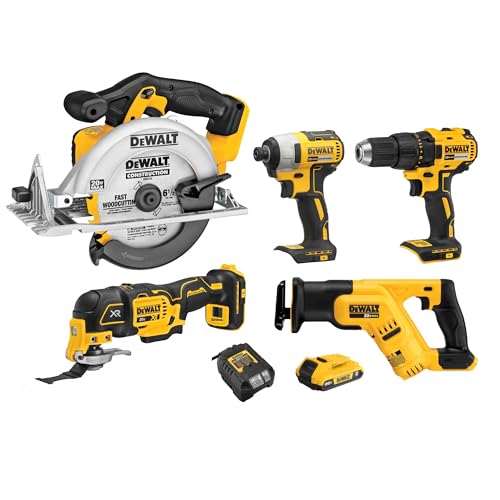
 DEWALT 20V MAX Cordless Drill and Impact DriverOne Size15.06 x 6.4 x 9.88 inches3.6 PoundsCheck on Amazon



What's inside
- How to weigh the buying criteria against each other
- 1. A single battery platform, chosen deliberately
- 2. Brushless hammer drill and impact driver
- 3. A circular saw you trust
- 4. Jobsite table saw
- 5. Cordless nailers
- 6. SDS-Plus rotary hammer
- 7. Storage that stacks and rolls
- Mistakes that quietly cost the most
- What separates a pro kit from a DIY kit
- What to skip
- FAQ
- Related Guides
- How to weigh the buying criteria against each other
- 1. A single battery platform, chosen deliberately
- 2. Brushless hammer drill and impact driver
- 3. A circular saw you trust
- 4. Jobsite table saw
- 5. Cordless nailers
- 6. SDS-Plus rotary hammer
- 7. Storage that stacks and rolls
- Mistakes that quietly cost the most
- What separates a pro kit from a DIY kit
- What to skip
- FAQ
- Related Guides
As an Amazon Associate I earn from qualifying purchases. This post may contain affiliate links at no extra cost to you.
A homeowner’s tool fails after ten years of light use. A contractor’s tool fails in March because it has already done more work than the homeowner’s will do in a decade. That difference drives every recommendation on this page.
Ranked by what matters when tools are a business expense: durability, service network, warranty and how fast you can replace one on a Saturday.
As an Amazon Associate we earn from qualifying purchases at no extra cost to you.


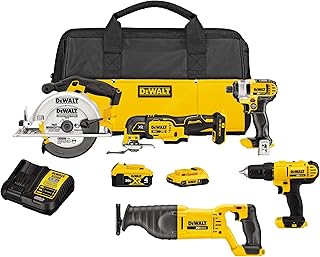

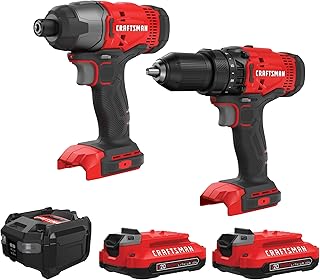

Which is why the best power tools for contractors are almost never the ones that win a spec-sheet comparison. A tool that is five percent faster and two weeks away from a warranty repair is worse than a slightly slower tool you can replace before the crew notices it died. Price every purchase against a lost day of billable work and the decisions get simpler, and slightly more expensive.
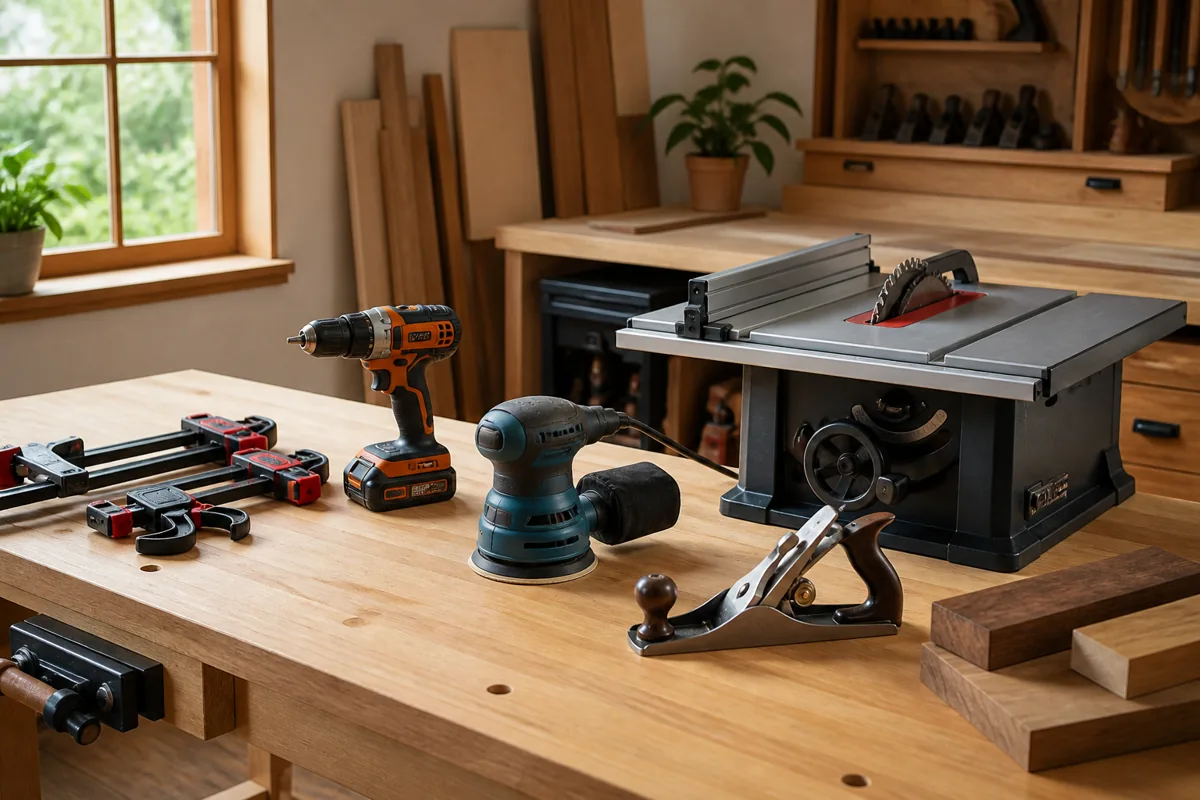
How to weigh the buying criteria against each other
Five things matter and they do not matter equally. In rough order of weight:
- Replacement speed. Can you buy this exact tool today, within half an hour of the job? If not, you need a spare or a different brand.
- Platform depth. How many tools you actually use run on the pack already in your bag.
- Warranty and service reality. Length matters, but so does whether the nearest authorised service centre is a drive or a shipping label. Check the warranty on the specific tool, not the brand — it varies by line.
- Serviceable parts. Switches, chucks, brushes, cords and shoes. A tool you can rebuild for a small part cost is a cheaper tool than its sticker suggests.
- All-day ergonomics. Weight, balance and vibration. This is the criterion buyers ignore and installers complain about six months later.
When these conflict, use a simple rule: on tools you touch every day, availability and comfort win. On tools you use occasionally but hard, raw capability wins, because you will not be using it long enough for the ergonomics to hurt. Torque and RPM numbers belong near the bottom of the list. Every professional-tier tool in these categories has enough of both.
1. A single battery platform, chosen deliberately
Before any individual tool: pick one platform and commit. Milwaukee M18 and DeWalt 20V MAX are the two safest professional choices in the US — deepest ranges, best availability, strongest service. Owning three half-built platforms is the most expensive mistake in this trade.
The reason is inventory, not loyalty. On one platform every pack in the truck fits every tool, every charger earns its space, and you buy bare tools for the rest of your career instead of paying the kit premium for batteries you already own. Split across three brands and you carry three chargers, strand half your packs in the wrong bag, and always seem to be holding the dead one.
Milwaukee M18 FUEL kits
Five-year warranty on most tools, exceptional trade-specific range, and resale value that holds. The premium is real but so is the return.
DeWalt 20V MAX / FlexVolt kits
The widest tool catalogue on one battery, plus FlexVolt for big saws. Discounts often enough that a patient buyer saves hundreds.
Who should skip both: anyone already deep in Makita, Bosch or Ridgid with a healthy set of large packs and a local service option. Depth you already own beats depth you have to buy. Switching platforms is worth it only when you are replacing most of your batteries anyway, which happens roughly every few seasons whether you plan for it or not.
2. Brushless hammer drill and impact driver
The two tools that never leave the truck. Buy full-size professional-tier versions — XR or FUEL class — not the compact entry models. The compact ones are excellent second tools, not primary ones.
At the bottom price band you get brushed motors, plastic-jaw chucks and a clutch that slips before it protects your wrist. The middle band buys brushless but often pairs it with a shorter warranty and compact-only packs. Professional tier is where you get the things that actually show up in the work: an all-metal chuck that holds a bit through hammer mode, a side handle that mounts solidly, electronic anti-rotation control for when a hole saw or auger binds in a stud, and a driver with genuine modes rather than one speed and a light.
The common mistake is buying the promo bundle. Extra tools in the box are paid for with battery capacity and motor quality, so a kit shipping two small packs is a homeowner kit wearing a trade badge. Look at the batteries first — they tell you what the kit really is.
3. A circular saw you trust
Cordless has caught up. A 60V or high-output 18V circular saw will cut a full sheet of ply without complaint, and losing the cord on a site is worth real time every day. Keep a corded worm-drive if you frame heavily.
Within any price band, judge a circular saw by its shoe and its blade. A thin stamped base that flexes when you lean on it will never cut a straight line no matter what the motor does. Then look for a blade brake, depth and bevel levers you can move wearing gloves, and clear sightlines to the cut. After that, spend on blades: a thin-kerf framing blade for structure, a higher tooth count for sheet goods and finish material. A good blade on a mid-tier saw beats a worn blade on a premium one, every time.
Cordless circular saws for site work
Rear-handle and worm-drive style cordless saws now handle framing work. Pair with a high-capacity battery — this is the tool that drains packs fastest.
4. Jobsite table saw
Rack-and-pinion fences changed this category. A good jobsite saw sets up in a minute, holds a fence square, and folds onto a stand you can wheel. This is a buy-once tool — cheap ones cost you accuracy on every cut.
Cheap in this category means a fence that racks out of parallel under hand pressure, a stand that walks across a floor, and a riving knife so awkward to remove that it ends up in the van permanently. Check that the fence returns to square after being moved and locked a dozen times, that the guard and riving knife come off and on without tools, and that the dust port connects to a hose you already own. If you mainly break down sheet goods rather than rip narrow stock all day, a track saw is the more accurate and safer buy — skip the table saw until trim volume justifies it.
Jobsite table saws
Look for rack-and-pinion fence adjustment and a stand that rolls over rough ground. Everything else is negotiable.
5. Cordless nailers
Framing and finish nailers without a compressor and hose have quietly become good enough for professional use. For punch-list and trim work especially, the time saved not dragging a compressor into a finished house is significant.
Buy in the right order: a cordless brad or finish nailer first, because that is where the compressor is most annoying, and a cordless framer later. Judge them on the practical details — tool-free depth adjustment, dry-fire lockout, a jam clear you can do without a punch, and how long the tool takes to be ready after it wakes up. Production framers and roofers should keep pneumatics as the primary system; the volume still favours hose and compressor, with a cordless nailer as the tool that handles the last two percent of the job.
6. SDS-Plus rotary hammer
Anchors into concrete are part of nearly every job eventually. A rotary hammer around 2 joules of impact energy handles anchor work without destroying your hammer drill.
Impact energy matters more than no-load speed, and vibration control matters more than either once you are drilling more than a few holes at a stretch. Get a model with rotation-stop for light chiselling and a dust extraction option, because concrete dust control has become a site expectation rather than a nicety. For breaking slab or drilling large-diameter holes, rent SDS-Max rather than buying — that tool sits idle most of the year for most contractors.
7. Storage that stacks and rolls
PACKOUT, TOUGHSYSTEM or TSTAK — pick a modular system and stay in it. Tool storage is not glamorous but it is the difference between loading the truck in five minutes and twenty.
The criteria are unglamorous too: latches that hold when a box is lifted by the top unit, wheels large enough to clear gravel and thresholds, and lids that seal well enough for an overnight rain. Lockable boxes also make theft slower and inventory obvious, which matters more than any feature the marketing mentions.
Modular tool storage systems
Stackable, lockable, rolls over gravel. Whichever brand you choose, commit to one — mixed systems do not stack.
Mistakes that quietly cost the most
- Buying a second platform for one tool. That tool now costs its price plus a charger, plus packs, plus the confusion.
- Shopping torque numbers instead of service coverage. Specs do not help on a Saturday morning; a stocked shelf nearby does.
- Storing packs in the truck year-round. Heat and deep cold both shorten pack life. Bring them inside.
- Binning a tool that needs a part. Chucks, switches, shoes and cords are cheap; check parts availability before you replace.
- Running dull consumables. A worn blade or bit makes every tool look weak and every cut look amateur.
What separates a pro kit from a DIY kit
- ✔ Full-size professional-tier tools, not compact versions
- ✔ At least four large-capacity batteries in rotation
- ✔ Modular storage, not a pile of blow-mould cases
- ✔ Warranty length treated as a purchase criterion
- ✔ Consumables budgeted for — blades and bits, constantly
What to skip
- ✘ Multi-tool “everything” kits with tiny batteries
- ✘ Second-tier brands to save 20% on tools used daily
- ✘ Corded versions of tools you carry between floors
- ✘ Buying a saw before you own a decent drill and driver
FAQ
Milwaukee or DeWalt for a new contractor? Milwaukee if you are in a specialist trade (electrical, plumbing, mechanical). DeWalt if you build and remodel broadly.
How many batteries do I need? Four minimum on a working kit — two large, two mid — plus a fast charger in the truck.
Is it worth buying used? Bare tools yes, batteries no. Used packs are the fastest way to buy someone else’s problem.
Kits or bare tools? Kits once, to set the platform and get your first packs and charger. Bare tools after that. The exception is when a kit is discounted below the bare-tool price, which happens often enough to be worth watching before you commit.
Compare professional kits on Amazon →