What's inside
- M12 FUEL vs M18 FUEL: Core Differences at a Glance
- Vibration and Control: Where the M12 Wins
- Plunge-Cut Speed in Hardwood: Where the M18 Wins
- Decision Matrix: Which Milwaukee Oscillating Tool Fits Your Work?
- Durability and Ownership: What Actually Wears Out
- Setup for Clean Plunge Cuts in Hardwood and Flooring
- Bottom Line for loapowertools.com Readers in 2026
- FAQ
- M12 FUEL vs M18 FUEL: Core Differences at a Glance
- Vibration and Control: Where the M12 Wins
- Plunge-Cut Speed in Hardwood: Where the M18 Wins
- Decision Matrix: Which Milwaukee Oscillating Tool Fits Your Work?
- Durability and Ownership: What Actually Wears Out
- Setup for Clean Plunge Cuts in Hardwood and Flooring
- Bottom Line for loapowertools.com Readers in 2026
- FAQ
As an Amazon Associate I earn from qualifying purchases. This post may contain affiliate links at no extra cost to you.
The best milwaukee oscillating tool for most trim and flooring work is the M12 FUEL 2526 if you value one-handed control and lower vibration, while the M18 FUEL 2836 is the better pick if you need faster plunge cuts in hardwood and longer runtime on large jobs.
As an Amazon Associate we earn from qualifying purchases at no extra cost to you.
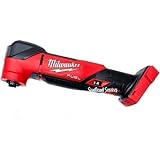


M12 FUEL vs M18 FUEL: Core Differences at a Glance
Both are brushless FUEL oscillating tools with tool-free blade changes and variable speed, but they are built for different power classes. The M12 runs on Milwaukee’s 12V platform and prioritizes compact size and control. The M18 runs on 18V and prioritizes power and sustained speed under load. Choosing between them comes down to how much cutting you do in dense material and how long you need to work overhead or in tight spaces.
| Specification | M12 FUEL Oscillating Tool 2526-20 | M18 FUEL Oscillating Tool 2836-20 |
|---|---|---|
| Voltage Platform | 12V | 18V |
| Motor Type | Brushless FUEL | Brushless FUEL |
| Oscillations Per Minute (OPM) | 10,000 – 20,000 OPM (10-speed dial) | 10,000 – 20,000 OPM (10-speed dial) |
| Oscillation Angle | 3.9 degrees | 4.2 degrees |
| Tool Weight (bare tool) | 1.9 lbs (0.86 kg) | 3.0 lbs (1.36 kg) |
| Weight with Battery (typical) | 2.4 lbs with 3.0Ah, 2.7 lbs with 6.0Ah | 3.9 lbs with 5.0Ah, 4.5 lbs with 8.0Ah HIGH OUTPUT |
| Length | 11.18 inches | 12.75 inches |
| Vibration Level (per EN 62841) | ~8.5 – 11.2 m/s² | ~11.5 – 14.8 m/s² |
| Noise Level (LpA) | ~78 dB(A) | ~84 dB(A) |
| Blade Change | FIXTEC tool-free + universal adapter | FIXTEC tool-free + universal adapter |
| LED / Extras | Single LED, vibration dampening counterweight | Dual LED, Auto-Load speed control, vibration dampening |
Vibration and Control: Where the M12 Wins
Vibration is the deciding factor for detailed trim work, and this is where the smaller milwaukee oscillating tool has a clear advantage. The M12 FUEL 2526 uses an internal counterbalance and lower mass to keep vibration in the 8-11 m/s² range under typical load. The M18 FUEL 2836 runs a larger eccentric and wider 4.2-degree oscillation angle, which cuts faster but produces measurably higher hand-arm vibration at 11-14 m/s².
In practical terms:
- One-handed overhead cuts: The M12 at 2.4 to 2.7 lbs with battery can be operated single-handed for undercutting door jambs, trimming shoe molding, or cutting drywall for an outlet. The M18 at nearly 4 lbs requires two hands for accurate, prolonged control, especially overhead.
- Fatigue on flooring jobs: For flush-cutting dozens of jambs or scraping adhesive, lower vibration lets you work longer before hand fatigue. Installers doing 2-3 rooms in a day consistently report less tingling and better line accuracy with the M12.
- Precision: The shorter body and narrower grip circumference of the M12 make it easier to keep a plunge cut vertical when starting a cut in installed baseboard or coping trim.
Plunge-Cut Speed in Hardwood: Where the M18 Wins
When you drive a 1-3/8 inch bi-metal or carbide blade straight into 3/4 inch solid oak, maple, or engineered hardwood flooring, the M18 FUEL holds speed significantly better. Milwaukee’s Auto-Load feature on the 2836 senses load and prevents the motor from bogging, keeping OPMs higher during the cut.
Expect this type of performance difference with a sharp wood blade and steady feed pressure:
- M12 FUEL 2526: 15-22 seconds to plunge through 3/4 inch white oak. Speed drops noticeably in the last 1/4 inch as the blade loads up. You need to pulse or lighten pressure to keep from stalling.
- M18 FUEL 2836: 8-13 seconds through the same cut with less slowdown. The extra torque and wider oscillation angle clear sawdust faster and maintain cutting efficiency.
- Hardwood flooring with nails: Both will cut through embedded finish nails with a bi-metal blade, but the M18 recovers speed faster after hitting metal, while the M12 requires a pause.
For occasional plunge cuts to fit flooring around a vent or door casing, the M12 is fast enough. For repetitive plunge cuts in hardwood, subfloor cutouts, or cutting through 1-1/2 inch thick material like stacked trim or hardwood thresholds, the M18 saves significant time.
Runtime Reality by Battery
Runtime on an oscillating tool is dominated by load, not just battery capacity. Continuous plunge cutting draws far more current than light sanding or caulk cutting.
| Task (with sharp blade) | M12 with 3.0Ah (CP3.0) | M12 with 6.0Ah (XC6.0) | M18 with 5.0Ah (XC5.0) |
|---|---|---|---|
| Continuous plunge in 3/4″ oak | 22-28 min | 45-55 min | 55-70 min |
| Cutting door jambs (intermittent) | ~70-90 jambs per charge | ~140-170 jambs | ~180-220 jambs |
| Sanding / scraping (low load) | 60-85 min | 120-160 min | 150-190 min |
If you already own M18 batteries for a drill or circular saw, the 2836 leverages batteries you have. If you are buying into a platform specifically for an oscillating tool for trim and punch-list work, the M12 kit is lighter and less expensive as a general market range, with compact batteries that make one-handed use practical.
Decision Matrix: Which Milwaukee Oscillating Tool Fits Your Work?
| Your Situation | Pick This Model | Why |
|---|---|---|
| Trim carpenter, flooring installer, or remodeler doing detail work, jambs, and drywall cutouts most days | M12 FUEL 2526 | Best power-to-weight ratio, lowest vibration, true one-handed control, fits in a tool pouch |
| General contractor or remodeler cutting hardwood, subfloor, nails, and doing demo | M18 FUEL 2836 | Higher sustained OPM under load, faster plunge speed, better for long or deep cuts |
| Homeowner or DIYer with limited space and only occasional use | M12 FUEL 2526 | Smaller storage footprint, cheaper entry into FUEL performance, adequate for most home tasks |
| Pro who already owns M18 HIGH OUTPUT batteries and no M12 batteries | M18 FUEL 2836 | Avoids buying into a second battery platform; maximizes runtime you already own |
| You need both finesse and power (finish crew + demo) | M12 for trim, M18 for demo | Many crews keep the M12 in the trim bag and the M18 in the demo kit for this reason |
Durability and Ownership: What Actually Wears Out
Both tools share Milwaukee’s FIXTEC clamp and universal blade adapter, but the consumables and maintenance are the same regardless of voltage.
- Blades and pads wear first: Bi-metal blades dull after 30-60 linear feet in hardwood depending on nail hits. Carbide-tooth blades last 4-6x longer in nail-embedded wood but cost more and cut slower initially. Sanding pads overheat if you press hard; let the oscillation do the work and replace hook-and-loop pads when the hooks glaze over.
- Blade clamp: The FIXTEC lever can slip if dust packs behind the clamp flange. Blow out the clamp area with compressed air after dusty jobs and check that the blade is fully seated before locking. A loose blade increases vibration and can round the arbor.
- Vibration and bearings: The counterbalance weight reduces vibration but does not eliminate it. Avoid running at full speed without load for extended periods, which accelerates bearing wear. Use the speed dial: 50-70% for drywall and softwood, 80-100% only for hardwood plunge cuts.
- Dust and sealing: Neither tool is dust-sealed for masonry. For grout removal, use a diamond blade, connect a vacuum, and clean the air vents after each use. Fine cement dust is the most common cause of premature motor failure.
- Common mistake: Using excessive feed pressure to make the M12 cut like an M18. It slows the motor, overheats the blade, and burns the wood. Lighten pressure, keep the blade moving slightly side-to-side to clear chips, and let the OPMs stay high.
Setup for Clean Plunge Cuts in Hardwood and Flooring
A clean plunge starts before you pull the trigger. This sequence works for both the M12 and M18 FUEL:
- 1. Choose the blade: Use a 1-3/8 inch Japanese-tooth or precision wood blade for hardwood. For flooring with nails or staples, use a titanium-coated bi-metal blade. Match the blade width to the cut length to reduce friction.
- 2. Set the speed: Start at 60% speed to score the surface without wandering. Once the blade is 1/8 inch deep, increase to 90-100% for the full plunge. Lower speed at entry prevents kickback.
- 3. Stabilize the tool: Rest the flat of the blade guard or the shoe lightly against the work as a fulcrum. Keep your wrist locked and pivot from the elbow, not the wrist, for a vertical cut.
- 4. Pulse on exit: As the blade breaks through the backside of hardwood, lighten pressure to avoid splintering. Pull the tool straight back, do not lever sideways while the blade is buried.
Bottom Line for loapowertools.com Readers in 2026
Choose the milwaukee oscillating tool that matches how you actually work, not just peak power. If your day is trim, flooring undercuts, drywall, and one-handed jobs in tight spaces, the M12 FUEL 2526 will feel lighter, smoother, and easier to control all day. If your day includes hardwood plunge cuts, subfloor surgery, and nail-embedded demo where every second counts, the M18 FUEL 2836 will cut faster and stay cooler under load. For many pros who can only own one, the M12 is the better all-around oscillating tool, while the M18 is the better dedicated cutter for heavy material.
FAQ
Can I use the same oscillating blades on M12 and M18?
Yes. Both use the FIXTEC tool-free system and include a universal adapter that accepts standard OIS-style blades. Milwaukee, Bosch, Diablo, and other OIS blades fit either tool when the adapter is installed correctly.
Is the M18 FUEL too powerful for delicate trim?
It can be used for trim if you turn the speed dial down to 10,000-12,000 OPM and use a fine-tooth blade. The M12 is simply easier to feather because it is lighter and vibrates less at low speeds.
Do I need HIGH OUTPUT batteries for the M18 oscillating tool?
No, standard XC5.0 batteries run the 2836 well for most tasks. HIGH OUTPUT XC6.0 or XC8.0 batteries help most during long, continuous heavy cuts where voltage sag matters, but they add weight that reduces one-handed comfort.