What's inside
As an Amazon Associate I earn from qualifying purchases. This post may contain affiliate links at no extra cost to you.
The best battery-powered camping fan for most campers in 2026 is a jobsite-style tool battery fan like the Milwaukee 0886-20 M18 or the DEWALT 20V MAX Cordless Fan — they move 280–590 CFM, run 8+ hours on low, and accept batteries you may already own. If you don’t own a tool battery system, a dedicated rechargeable fan like the Geek Aire or O2COOL rechargeable models gives you better integrated value with USB charging. The right choice depends on four things: how much airflow your tent needs, whether you already own a tool battery platform, how long you need per night, and how you plan to recharge off-grid.
As an Amazon Associate we earn from qualifying purchases at no extra cost to you.


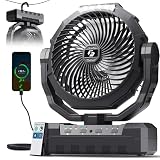
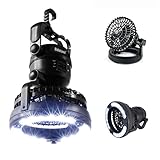
What Actually Matters When Comparing Camping Fans
Spec sheets list CFM and hours, but real-world usefulness comes down to three realities that listings gloss over:
- Runtime is quoted on the lowest setting. A fan claiming “24 hours” may only run 3–4 hours on the speed you’d actually use inside a stuffy tent. Always check runtime at medium and high.
- CFM doesn’t equal tent comfort. A 4-person tent (~110 cubic feet) feels noticeably different with 200+ CFM moving air across sleeping bodies. Below ~150 CFM, fans mostly push noise around.
- Battery swaps beat recharging. If you camp multiple nights, removable batteries (tool platforms) or USB-C fast charging matter more than peak CFM.
Airflow vs. Tent Size
A useful rule of thumb: multiply your tent’s floor area by ceiling height for cubic footage, then aim for a fan that can exchange that air roughly every 1–2 minutes on medium. A 6-person cabin tent (~300 cubic feet) wants 200–300 CFM minimum; a 2-person backpacking tent does fine with a small 80–150 CFM unit hung from the loop.
Spec Comparison: Top Picks for 2026
| Fan | Airflow (CFM, high) | Battery | Runtime (low / med / high) | Weight (w/ battery) | Noise (approx.) | Charging Options |
|---|---|---|---|---|---|---|
| Milwaukee 0886-20 M18 Jobsite Fan | ~590 | M18 batteries (sold separately) | ~10 h / 6 h / 3 h (on 5.0Ah) | ~7.5 lbs | ~52 dB low | AC adapter included; battery swap |
| DEWALT 20V MAX Jobsite Fan (DCE511B) | ~500 | 20V MAX batteries | ~8 h / 5 h / 3 h (on 5.0Ah) | ~8 lbs | ~50 dB low | AC adapter or battery |
| RYOBI 18V ONE+ Hybrid Fan | ~160 (hybrid head) | 18V ONE+ or AC | ~10 h / 4 h / 2 h (on 4.0Ah) | ~5 lbs | ~45 dB low | Battery or wall outlet |
| Geek Aire 12″ Rechargeable Fan | ~1500 claimed (~400 effective) | Built-in 10,400–15,600 mAh | ~18 h / 8 h / 4 h | ~4.5 lbs | ~50 dB high | USB-C / USB-A in some versions, AC wall charger |
| O2COOL 10″ Rechargeable Fan | ~200 | Built-in lithium | ~24 h / 10 h / 6 h | ~3 lbs | ~40 dB low | AC adapter, some versions USB |
| Coleman OneSource Rechargeable Fan | ~150 | Removable 4800 mAh pack | ~15 h / 6 h / 3 h | ~2.5 lbs | ~42 dB low | USB charging; pack swaps with other OneSource gear |
Note on numbers: tool-brand fans quote honest CFM; consumer rechargeable fans often inflate claims. The “effective” column estimate reflects airflow at typical 3-foot distance.
Decision Matrix: Pick by Your Situation
| Your Situation | Best Pick | Why |
|---|---|---|
| Already own Milwaukee, DEWALT, or Ryobi batteries | Matching tool-brand fan | Zero battery cost, longest low-speed runtime, spares are cheap |
| Family camping, 3+ nights, big tent | Milwaukee M18 or DEWALT fan + two 5.0Ah batteries | Swap batteries; high CFM cools a cabin tent |
| Solo camper or small 2-person tent | Coleman OneSource or O2COOL 10″ | Light, quiet, packs small; low speed is plenty overnight |
| Off-grid a week, only solar/USB charging | Geek Aire rechargeable | USB-C recharging from a power bank or solar panel |
| Car camping on a budget | O2COOL rechargeable | Under typical $50 range, decent runtime, simple |
| Need a fan + want one battery system for camp lights etc. | Coleman OneSource ecosystem | Same battery pack powers lanterns and speakers |
Runtime Math You Can Do Yourself
Ignore the box. Calculate runtime per night instead:
Worked example: You sleep 8 hours per night in a warm tent and run the fan on medium the whole time.
- Milwaukee M18 with one 5.0Ah battery: ~6 hours on medium → won’t finish the night. You need a 9.0Ah or two batteries.
- Geek Aire on medium: ~8 hours → one charge per night, recharge during the day via USB-C.
- Coleman OneSource on low: ~15 hours → almost two nights per charge, and the pack charges off a power bank.
If your nights are hot enough to need high speed, halve everything and plan on a second battery or mid-day solar charging.
Use Inside Tents and Campers: What Listings Don’t Say
- Mounting matters more than power. Fans aimed at your torso from 2–3 feet away feel twice as effective as a floor fan across the tent. Look for a hanging hook, tripod mount, or stable wide base. Tool fans sit flat and tilt — great on a camp table, awkward in a dome tent.
- Noise compounds at night. A fan that’s quiet at noon sounds loud at 2 a.m. Under ~45 dB on low is the threshold most campers sleep through. Jobsite fans on medium often exceed that.
- Condensation is the hidden win. Even a small fan run on low for the first hour of sleep cuts interior condensation noticeably by keeping humid air moving toward vents.
- RVs and campervans: a 12V or USB fan wired to your house battery beats a battery fan — you’re just paying to recharge batteries from a battery. A jobsite fan only makes sense if your van lacks a leisure battery.
Ownership Realities
- What wears first: brushed motors and plastic tilt hinges. Tool-brand fans last years; budget rechargeables often develop wobble or a dead battery after 2–3 seasons. Built-in lithium batteries degrade after ~300–500 charge cycles — expect noticeably shorter runtime by year three.
- Consumables: tool batteries are the expensive consumable (a spare 5.0Ah costs as much as a budget fan). Built-in-battery fans have no consumables — the whole unit is the consumable.
- Cleaning: dusty campground air gunks up blades fast. Fans with removable front grills clean in two minutes; sealed units need compressed air. Clean before storage, not after — grit left on blades unbalances them.
- Common mistake: buying a fan with a proprietary barrel-plug charger for off-grid trips. If it can’t charge via USB, it can’t charge from your power bank, car, or solar panel.
Bottom Line
For the best battery powered camping fans in 2026: buy into a tool battery platform you already own if you can — it’s the cheapest path to serious airflow and multi-night runtime. Otherwise, a USB-C rechargeable fan like the Geek Aire covers most campers, and the Coleman OneSource is the smart pick if you’ll buy other gear in that battery ecosystem. Match runtime on medium to your sleep hours, prioritize a hanging or tilting design for tent use, and keep it under 45 dB on the setting you’ll sleep next to.