What's inside
As an Amazon Associate I earn from qualifying purchases. This post may contain affiliate links at no extra cost to you.
For most home wine cellars up to roughly 600 cubic feet that sit below grade, the best choice is a self-contained through-wall unit in the 1,800–2,000 BTU/h class — the CellarPro 1800XT and WhisperKOOL SC Pro 2000 are the two models most often specified for that job, and both install without a licensed refrigeration contractor. Step up to a split system once the cellar passes about 1,000 cubic feet, sits above grade or behind glass, or shares a wall with a bedroom, because a split moves the compressor noise and heat outdoors. Everything below compares the two system types by BTU, room-size coverage, humidity control and measured noise, then maps those numbers to specific cellars.
As an Amazon Associate we earn from qualifying purchases at no extra cost to you.


Our Top Picks
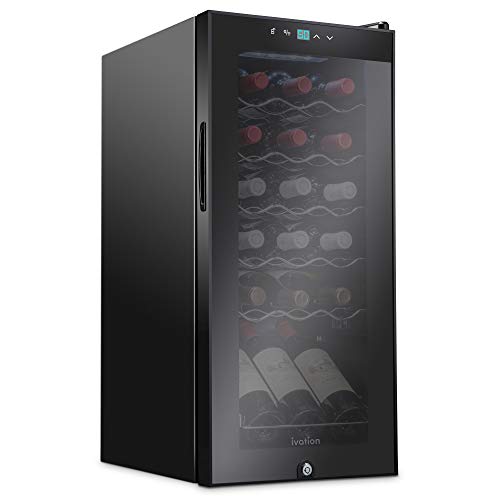 Ivation 18 Bottle Compressor Wine Cooler Refrigerator w/Lock18 Bottle17.72 x 13.58 x 30.31 Inches43 poundsCheck on Amazon
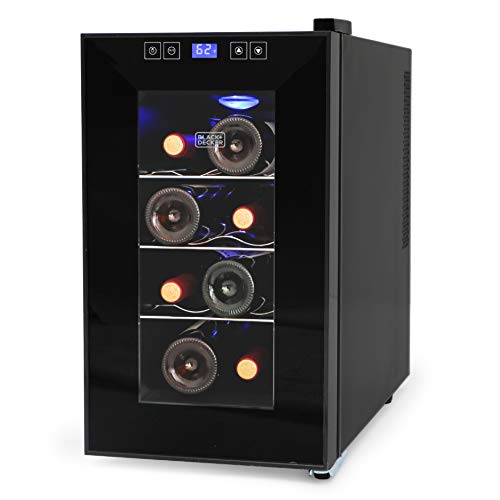 BLACK+DECKER 8-Bottle Thermoelectric Wine Cellar8 Bottles20.1 x 10.24 x 18.5 inches20.9 poundsCheck on Amazon
 Electactic 26 Bottle Wine Cooler 130 Can Beverage3.2 cu.ft (26 Bottles/130 Cans)19.29 x 17.32 x 30.79 inches48.86 poundsCheck on Amazon
Quick Comparison: The Picks
| Pick | Best for | Key specs | Typical price range |
|---|---|---|---|
| CellarPro 1800XT (self-contained, through-wall) | Best overall for below-grade cellars up to ~600 cu ft | 1,800 BTU/h; digital thermostat; condensate drain; mid-50s dBA | $1,200–$1,800 |
| Breezaire WKL 1060 class (self-contained, through-wall) | Best budget pick for small cellars up to ~300–400 cu ft | ~1,000 BTU/h class; analog or basic digital control; 48–52 dBA | $900–$1,400 |
| WhisperKOOL SC Pro 3000 / 4000 (self-contained, through-wall) | Best for mid-size cellars, 900–1,200 cu ft | 3,000–4,000 BTU/h; humidistat-compatible; 52–57 dBA | $2,000–$3,500 |
| Ceiling-mount self-contained (WhisperKOOL ceiling-mount line, CellarPro 4200XT) | Best for large or awkward cellars with no free wall | 4,000–5,000 BTU/h; ceiling discharge; 54–58 dBA | $2,500–$4,000 |
| Wine Guardian split system (1/4–1/2 ton) | Best quiet option; above-grade and glass-walled cellars | 3,000–6,000 BTU/h; remote condenser; 40–48 dBA at the evaporator; humidifier option | $4,000–$8,000 installed |
Self-Contained vs Split: The Four Specs That Decide It
A self-contained unit packages the compressor, condenser coil and evaporator in one chassis that mounts through a wall or ceiling and dumps its waste heat into the room on the other side. A split system separates them: the evaporator (the quiet part) stays in or near the cellar, and the condenser and compressor sit outside or in a garage or utility space, connected by refrigerant lines. That single difference drives every spec that matters.
| Spec | Self-contained (through-wall or ceiling) | Split system |
|---|---|---|
| Typical BTU range | 1,000–5,000 BTU/h | 3,000–12,000+ BTU/h |
| Cellar coverage (below grade, R-19) | ~300–1,500 cu ft | ~1,000–4,000 cu ft |
| Noise at 5 ft (manufacturer spec sheets) | 48–58 dBA | 40–48 dBA at the evaporator; compressor noise is remote |
| Humidity control | Dehumidifies as a byproduct; dries small cellars out when it runs constantly; add-on humidifier usually external | Same dehumidification plus factory humidifier options and ducted air distribution |
| Installation | Cut one wall opening, 110V circuit, drain line — DIY-friendly | Licensed refrigeration tech, line-set brazing, 220V often required |
| Heat rejection | Into the adjacent room — that room gets 10–15°F warmer | Outdoors or into a utility space |
The heat-rejection row is the one buyers underestimate. A 4,000 BTU/h self-contained unit releases roughly 5,000 BTU/h of total heat into whatever room backs onto the cellar wall. Put that unit through a wall into a 100 sq ft laundry room with the door closed and you have built a small oven that also shortens the compressor’s life. Per manufacturers’ installation guides, self-contained units need a room at least 4–6 times the cellar’s volume, or a louvered door, to reject heat properly.
The Picks in Detail
Best overall: CellarPro 1800XT
This is the through-wall unit most residential cellars end up with. Per the manufacturer’s spec sheet it delivers 1,800 BTU/h, uses a digital controller with a condensate evaporator tray, and is rated for cellars in the 500–700 cubic foot range when they are below grade and insulated to R-19. It suits a 400- to 600-bottle cellar that backs onto a garage, basement hallway or utility room. The trade-off is heat and noise: the compressor sits on the cellar side of the wall, so you get mid-50s dBA inside and a warmed room outside. If either is unacceptable, this is the wrong unit regardless of price.
Best budget: Breezaire WKL 1060-class through-wall
Breezaire’s smallest WKL-series unit is the entry point for a closet-sized cellar — roughly 1,000 BTU/h, a few hundred cubic feet, basic controls. It suits a 150- to 300-bottle cellar in a cool basement where the budget is under $1,500. The trade-offs are real: less precise temperature control (expect ±2–3°F swings rather than ±1°F), no humidity management beyond condensate drainage, and noisier operation than premium units. It is a good first unit, not a good last one.
Best for mid-size cellars: WhisperKOOL SC Pro 3000 or 4000
WhisperKOOL’s SC Pro self-contained series covers the 900–1,200 cubic foot band at 3,000–4,000 BTU/h and is the brand most often specified when the cellar sits inside a finished basement with a large adjacent space. It suits 800- to 1,200-bottle rooms. The main trade-off versus a split is noise — 52–57 dBA — and the fact that WhisperKOOL’s own literature recommends keeping the unit accessible for coil cleaning, which means no cabinetry built tight around it.
Best for large or awkward cellars: ceiling-mount self-contained
When the cellar has no exterior wall, or the only free wall is a racking wall, a ceiling-mount unit such as those in WhisperKOOL’s ceiling-mount line or the CellarPro 4200XT solves the layout problem at 4,000–5,000 BTU/h. It suits 1,200- to 1,500-bottle cellars. The trade-off is service access: filters and coils live above your head, and a ceiling unit still needs a drain path and an adjacent volume of air to dump heat into.
Best quiet option: Wine Guardian split system
Wine Guardian’s 1/4- to 1/2-ton split systems put the compressor outdoors and leave only a fan coil in the cellar, which is why manufacturer figures land in the 40–48 dBA range — roughly the sound of a refrigerator. They suit cellars above 1,000 cubic feet, above-grade rooms, glass-walled displays, and any cellar that shares a wall with a bedroom or dining room. Wine Guardian also offers a factory humidifier option, which matters in dry climates. The trade-off is cost and complexity: $4,000–$8,000 installed, a licensed technician, and a condenser location with real airflow. US Cellar Systems and CellarPro both build comparable split and ducted systems if your installer prefers another brand.
How to Size the Unit (Worked Example)
Manufacturers’ sizing guides converge on a rule of thumb of roughly 2.5–3 BTU/h per cubic foot for an insulated, below-grade cellar, and 4–6 BTU/h per cubic foot for an above-grade cellar or one with glass doors. Those figures already include door openings, racking mass and normal infiltration.
Take a 10 × 12 × 8 ft cellar: 960 cubic feet. Below grade with R-19 walls, that is 960 × 2.5 = 2,400 BTU/h, so you specify the 3,000 BTU/h class. Add a glass door and move it above grade in a warm climate and the multiplier jumps to 4–5, giving 3,840–4,800 BTU/h, which puts you in the 4,500–5,000 BTU/h class or a small split.
| BTU/h class | Coverage, below grade (R-19) | Coverage, above grade or glass | Rough bottle capacity | Typical noise |
|---|---|---|---|---|
| 1,000–1,500 | 300–500 cu ft | 150–250 cu ft | 300–500 bottles | 48–52 dBA |
| 1,800–2,000 | 500–700 cu ft | 300–400 cu ft | 500–700 bottles | 50–55 dBA |
| 3,000–3,500 | 900–1,200 cu ft | 500–650 cu ft | 900–1,200 bottles | 52–57 dBA |
| 4,000–5,000 | 1,300–1,600 cu ft | 700–950 cu ft | 1,300–1,600 bottles | 54–58 dBA |
| 6,000+ (split) | 1,800–2,500+ cu ft | 1,000–1,400 cu ft | 1,800–2,500 bottles | 40–48 dBA |
Bottle capacity assumes roughly one bottle per cubic foot of room volume, which holds for floor-to-ceiling racking with a normal aisle; plan on 0.8 bottles per cubic foot if you want a wider aisle or a tasting area. Do not oversize by more than about 25–30%: an oversized unit cools the room in a few minutes, shuts off, and never runs long enough to pull moisture out of the air, so you get temperature swings and a dry cellar.
Humidity and Noise: The Specs Listings Don’t Print
Target 55–75% relative humidity, with 60–70% the comfortable band for cork integrity. Every cooling unit dehumidifies as it cools, because moisture condenses on the evaporator coil and drains away. The consequence is that the unit which runs the longest dries the cellar the most, which is why undersized units cause dried-out corks and shrunken labels as often as oversized ones cause temperature swings. Fix the envelope first — vapor barrier, sealed door, insulated ceiling — then choose a unit with a humidistat or a humidifier option if you live below 30% ambient RH.
On noise, the number on the spec sheet is measured at a fixed distance in a lab, not through a wall. A 52 dBA through-wall unit in a bedroom-adjacent cellar is louder in practice than a 52 dBA split evaporator, because the compressor vibration travels through the wall framing. If the cellar shares structure with sleeping space, budget for a split or for isolating the unit with a vibration pad and flexible sealant around the chassis.
Which System Fits Your Situation
| Your situation | Best fit | Why |
|---|---|---|
| Under 400 cu ft, below grade, budget under $1,500 | Self-contained through-wall, 1,000–1,800 BTU/h | Cheapest installed cost, no refrigeration tech |
| 500–1,000 cu ft, adjacent room can absorb heat | Self-contained through-wall, 3,000–4,500 BTU/h | Best value per cubic foot cooled |
| Shares a wall with a bedroom | Split system, remote condenser | Moves compressor noise outdoors |
| Above grade, glass door, warm climate | Split system, sized at 4–6 BTU/cu ft | Higher heat load needs capacity a through-wall can’t reach |
| No exterior wall or no condenser access | Ceiling-mount self-contained or ducted split | Solves layout without cutting a load-bearing wall |
| Over 1,500 cu ft | Split system, 6,000+ BTU/h | Only class with the capacity and quiet operation |
Ownership Realities: What Wears Out First
- The drain pan and drain line go first — algae and biofilm clog the line within 12–24 months in humid climates. Flush with white vinegar every three months; a clogged drain means water on your floor, not a warranty claim.
- The condenser coil fouls with dust and lint, especially on through-wall units near a laundry or garage. Clean it every 3–6 months; a fouled coil raises head pressure, shortens compressor life and can add 2–3°F to cellar temperature.
- The compressor is the expensive failure. Quality units commonly run 10–15 years; cheap ones that short-cycle because of oversizing or heat soak fail in 5–8. Most manufacturers back parts and labor for around two years and the compressor longer — confirm the current terms on the spec sheet before buying.
- Fan motors and bearings get noisy before they fail. A rattle or whine you can hear across the room is the early warning, not the failure itself.
- Consumables: filters, drain pan tablets, and humidifier wicks or pads where fitted. Budget $50–$150 a year, more in dusty locations.
- Common mistakes: building cabinetry tight around a through-wall unit and blocking its airflow; omitting a condensate drain path; skipping the vapor barrier and blaming the unit for humidity problems; and mounting a unit through an interior wall into a sealed closet with no return air.
Frequently Asked Questions
Do I need a self-contained or split wine cellar cooling unit?
Choose self-contained if your cellar is under about 1,000 cubic feet, sits below grade, and there is a room on the other side of the wall that can absorb heat and tolerate noise. Choose split if the cellar is larger, above grade, glass-fronted, or adjacent to living or sleeping space. Split systems cost roughly twice as much installed but are dramatically quieter and handle far higher heat loads.
What size cooling unit do I need for a 500-bottle cellar?
A 500-bottle cellar is typically around 500–700 cubic feet of room volume. Below grade with R-19 insulation, that calls for roughly 1,500–2,000 BTU/h, which is the CellarPro 1800XT class. Above grade or with a glass door, size up to the 3,000 BTU/h class. Always measure the room, not the racking.
Can I use a regular mini-split air conditioner for a wine cellar?
No. Standard comfort-cooling equipment is built for 70–75°F setpoints, cycles on room temperature alone, and removes far too much moisture at a 55°F evaporator temperature — it will dry your cellar to 30–40% RH and ice up. Wine cellar units run colder evaporators, include humidistats or humidifier provisions, and are sized for continuous duty. Using a comfort unit also voids its warranty in most cases.
How loud are wine cellar cooling units in real rooms?
Through-wall self-contained units generally land between 48 and 58 dBA at five feet per manufacturer spec sheets, which is roughly the volume of a dishwasher running. Split systems measure 40–48 dBA at the evaporator, closer to a refrigerator hum. Through-wall vibration travels into wall framing, so a 52 dBA through-wall unit often sounds louder in the next room than its rating suggests.
How do I keep humidity at 60–70% in a wine cellar?
Seal the envelope first: vapor barrier on the warm side, gasketed door, insulated ceiling, no unsealed penetrations. Then choose a unit with a humidistat or an add-on humidifier if your ambient air is dry. Avoid oversizing, because a unit that cools the room in three minutes never runs long enough to stabilize moisture. A small digital hygrometer placed at rack height is the cheapest diagnostic you can own.
How much maintenance does a wine cellar cooling unit need?
Plan on cleaning the condenser coil every 3–6 months, flushing the condensate drain line quarterly with vinegar, and checking the fan and door gasket annually. Budget $50–$150 a year for filters, drain tablets and humidifier wicks. Most of the failures that lead to premature replacement trace back to a clogged drain or a dust-packed coil, both of which are preventable in under 30 minutes.