What's inside
- Quick picks by hunting situation
- What makes a hunting knife good?
- Blade steel: edge retention versus easy maintenance
- Blade shape and size
- Handle materials and grip security
- Sheath quality is part of the knife
- Decision matrix: matching the knife to the owner
- Fixed blade versus replaceable blade
- Maintenance that prevents most failures
- Bottom line
As an Amazon Associate I earn from qualifying purchases. This post may contain affiliate links at no extra cost to you.
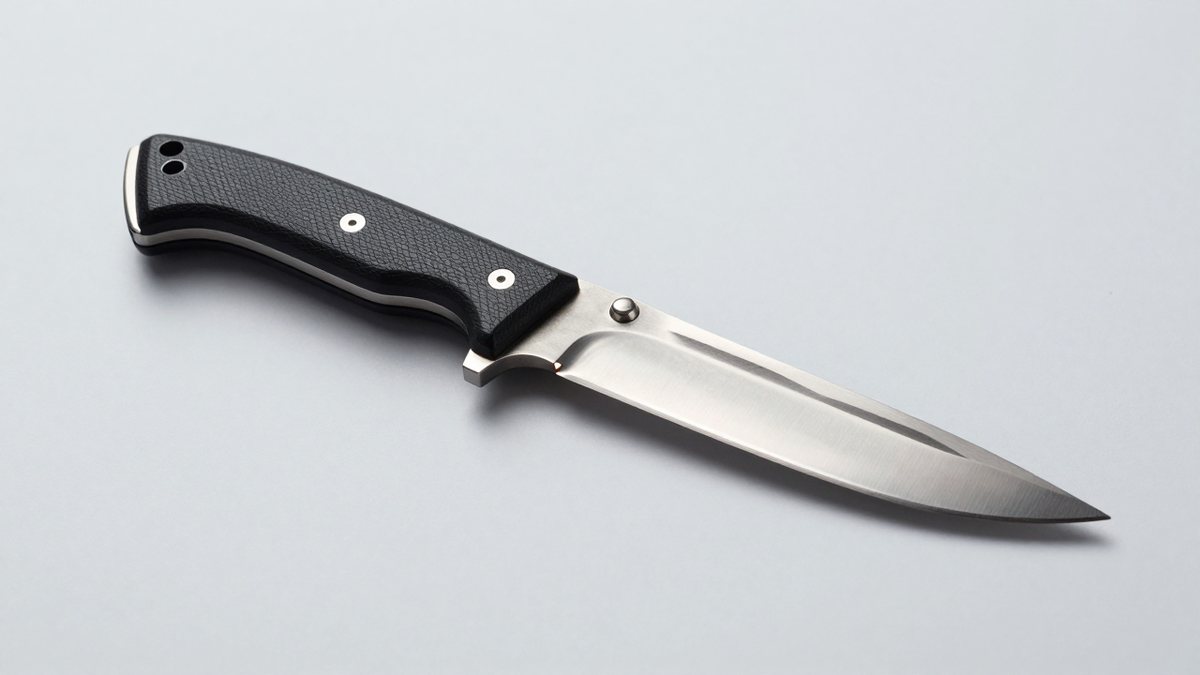
The best hunting knives are usually fixed-blade knives with corrosion-resistant steel, a secure handle, and a sheath that protects both the edge and the user; for most hunters, a 3.5–4.5-inch drop-point blade is the most useful all-around choice.
As an Amazon Associate we earn from qualifying purchases at no extra cost to you.

Our Top Picks

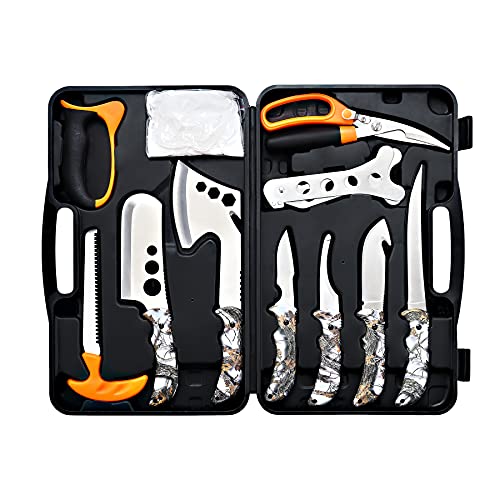
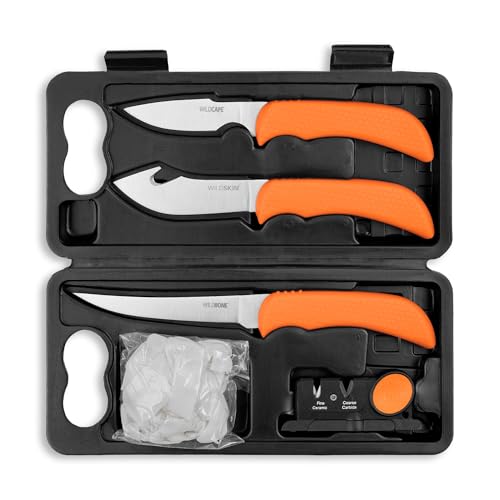

Quick picks by hunting situation
| Situation | Best knife type | Useful specification | Examples to consider | Typical price range |
|---|---|---|---|---|
| One knife for deer, camp, and general field work | Fixed drop point | 3.5–4.5-inch blade; 4–5 mm spine | Benchmade Hidden Canyon Hunter, Buck 113 Ranger Skinner | $70–$300 |
| Wet climates or coastal hunting | Stainless fixed blade | LC200N, MagnaCut, or quality 14C28N; textured synthetic handle | Corrosion-resistant fixed-blade designs | $60–$350 |
| Budget hunting and camp use | Simple stainless fixed blade | 3.5–4-inch blade; 80–130 g knife weight | Morakniv Companion, Mora Kansbol | $20–$60 |
| Replaceable blades and minimal sharpening | Replaceable-blade folder | 2.5–3-inch disposable blade; locking or secured blade carrier | Havalon Piranta, Outdoor Edge RazorLite | $35–$80 |
| Heavy camp chores and splitting small kindling | Robust fixed blade | 4–5-inch blade; full tang; 4–5 mm spine | ESEE-4, traditional full-tang outdoor knives | $100–$180 |
What makes a hunting knife good?
A hunting knife has to do more than cut cleanly when new. It must retain an edge through hide, connective tissue, and occasional contact with bone; remain controllable when hands are cold or wet; resist corrosion after exposure to blood and moisture; and survive being carried in a vehicle, pack, or sheath for months between hunts.
The most practical design is normally a fixed blade. It has fewer joints to trap dirt and no locking mechanism to clog. A folding knife is smaller and convenient for occasional users, but its pivot and lock require more cleaning, and the handle can be harder to grip securely when wearing gloves.
Blade steel: edge retention versus easy maintenance
Stainless and highly corrosion-resistant steels
Steels such as 14C28N, Nitro-V, S35VN, S45VN, MagnaCut, and LC200N are attractive for hunting because they resist rust better than many simple carbon steels. MagnaCut and LC200N are especially strong choices for damp environments, although their performance still depends on heat treatment and edge geometry. No stainless steel is completely stain-proof: salt, blood, and moisture can still cause discoloration or pitting if left on the blade.
14C28N is often an excellent value. It sharpens readily, offers useful toughness, and is common in affordable knives. S30V, S35VN, and S45VN generally offer stronger edge retention than basic budget stainless steels, but they can take longer to sharpen in the field. Premium steels make more sense for frequent hunters who would rather sharpen less often than minimize purchase cost.
Carbon and tool steels
1095 and similar carbon steels are tough, easy to sharpen, and widely used in outdoor knives. They can perform extremely well during a single trip, but they require more care. Wipe the blade dry after use, clean it before storage, and apply a thin food-safe protective oil where appropriate. Carbon steel is a poor choice for a hunter who routinely leaves a knife wet in a leather sheath.
Steel name alone does not determine performance. Heat treatment, edge thickness, sharpening angle, and manufacturing quality can matter just as much. A well-treated 14C28N blade may outperform a poorly treated premium steel blade.
Blade shape and size
A drop point is the safest all-purpose recommendation. Its broad belly makes controlled slicing easier, while the lowered point gives the tip useful strength. It works well for field dressing, trimming, food preparation, and ordinary camp tasks.
A trailing-point or skinner blade puts more cutting belly toward the tip and can be very effective for separating hide. It is less versatile for piercing and can have a more vulnerable tip. A clip point offers a fine point for detail work, but its narrowed tip is easier to damage if used for prying or twisting.
For most big-game field work, a 3.5–4.5-inch blade is the practical range. A blade around 3 inches is nimble and easy to control, while one over 5 inches can be useful for larger animals or camp chores but may feel cumbersome during precise cuts. Blade thickness around 2.5–4 mm balances strength and slicing ability. Very thick blades are durable but can wedge through material rather than cut smoothly.
Handle materials and grip security
Textured fiberglass-reinforced nylon, G10, rubberized compounds, and micarta are dependable handle materials. Synthetic handles tolerate rain, blood, temperature changes, and repeated washing better than many natural materials. Rubber provides excellent grip but may soften, crack, or become tacky after years of exposure to solvents and sunlight.
Micarta offers a comfortable, secure feel and can become grippier when damp, but it may absorb some moisture and needs more careful cleaning. G10 is dimensionally stable and highly resistant to water, although aggressive texture can irritate bare hands during prolonged camp work.
Look for a pronounced guard or finger choil, rounded handle edges, and enough room for a gloved grip. A lanyard hole is useful insurance, but a lanyard should not replace a proper guard. Avoid smooth polished handles if the knife will be used in rain, snow, or cold conditions.
Sheath quality is part of the knife
A good blade in a poor sheath is an incomplete hunting tool. The sheath should retain the knife securely when inverted, cover the edge completely, drain water, and attach comfortably to the intended belt or pack. Kydex and molded polymer sheaths dry quickly and resist blood and moisture. Leather is quiet, attractive, and comfortable, but it can hold moisture against a carbon-steel blade and may require more care.
Check that the sheath does not press against the cutting edge. Repeated contact can dull the blade during insertion and removal. A well-designed sheath should allow a positive thumb release and should not require the user to place fingers in front of the blade path.
Decision matrix: matching the knife to the owner
| Buyer profile | Prioritize | Avoid | Most sensible configuration |
|---|---|---|---|
| New hunter on a limited budget | Simple sharpening, secure sheath, stainless steel | Fragile tips and elaborate locking folders | 3.5–4-inch 14C28N or equivalent fixed blade |
| Frequent hunter in wet weather | Corrosion resistance, drainable sheath, synthetic scales | Unprotected carbon steel in a sealed leather sheath | MagnaCut, LC200N, or 14C28N fixed blade |
| Backcountry user carrying minimal equipment | Low weight, strong point, versatile geometry | Oversized blades intended mainly for chopping | 3.5–4-inch full-tang drop point under about 200 g |
| Hunter who dislikes sharpening | Replaceable blades or high edge retention | Using a disposable blade for batoning or prying | Replaceable-blade knife plus a sturdy backup |
Fixed blade versus replaceable blade
Replaceable-blade knives, including designs such as the Havalon Piranta and Outdoor Edge RazorLite, stay extremely sharp with minimal sharpening equipment. They are useful for hunters who value clean, low-effort cutting and want to carry several fresh blades. Their limitation is structural: thin replaceable blades are not intended for prying, twisting, cutting wood, or striking the spine.
A fixed blade has higher ownership value when maintained properly. It can be resharpened for many years, is easier to clean thoroughly, and tolerates a wider range of camp tasks. A practical two-knife setup is a sturdy drop-point fixed blade for general work and a replaceable-blade knife for situations where a fresh edge is especially convenient.
Maintenance that prevents most failures
- Clean immediately after field use. Rinse or wipe away blood and residue before they dry. Use mild dish soap and a soft brush around the guard and handle junction.
- Dry every surface. Pay attention to the pivot of a folder, the tang area, and the inside of the sheath. Moisture trapped in these areas causes more damage than ordinary outdoor exposure.
- Inspect the edge under good light. A shiny flat spot usually indicates dulling; small chips may require a coarser abrasive before normal sharpening.
- Sharpen before the knife becomes unusable. Maintaining a consistent angle of roughly 15–20 degrees per side is easier than repairing a severely damaged edge. Use the manufacturer’s recommendation when available.
- Store the knife outside a damp leather sheath. Keep the blade clean and lightly protected, particularly with carbon steel.
The first parts to wear are commonly the edge, sheath retention surfaces, handle fasteners, and pocket or belt attachment hardware—not the blade itself. Replacing a worn sheath or fastener can extend the useful life of an otherwise excellent knife. Do not use the knife as a screwdriver, pry bar, or improvised camp axe; those mistakes damage tips and edges far faster than normal field dressing.
Bottom line
Choose a 3.5–4.5-inch fixed drop-point knife with a secure synthetic or micarta handle, a properly treated stainless steel, and a sheath that drains and retains safely. Select 14C28N for strong value and easy sharpening, a premium stainless steel such as MagnaCut or S45VN for frequent use and longer edge retention, or carbon steel when toughness and simple field sharpening matter more than corrosion resistance. The best hunting knife is not the largest or most expensive model; it is the one whose steel, geometry, grip, and sheath match the weather, game, and maintenance you are prepared to provide.