Key takeaways
- Best respirators for woodworking dust: six half-mask, full-face and reusable options compared by filter class, certification and fit.
What's inside
As an Amazon Associate I earn from qualifying purchases. This post may contain affiliate links at no extra cost to you.
The best respirator for woodworking dust on this list is the GVS Elipse P100 half mask, because it carries a NIOSH P100 particulate rating, uses replaceable filters and keeps a low profile that sits under safety glasses. A woodworking respirator is a tight-fitting mask with filters that remove fine particles from the air you breathe, and the rating on the filter matters as much as the mask shape. If you also spray finishes, the half masks with A1 vapor filters add organic-vapor protection, while the full-face model covers your eyes too. The two lighter dust masks suit short, low-exposure jobs.
Several of these masks use European A1 and P2 ratings rather than NIOSH approvals, so read the filter notes carefully before you buy.
Quick List
- BASE CAMP M PRO Reusable Dust Mask – best for comfortable, light-duty sanding and yard work
- AirGearPro G-500 Half Mask with A1P2 Filters – best for sanding plus occasional finishing fumes
- GVS Elipse P100 Half Mask – best overall for NIOSH-rated protection from wood dust
- Full-Face Respirator with A1 and P2 Filters – best when you want eye protection built in
- Threlaco 2-Pack Reusable Dust Masks – runner-up for quick, light jobs and spare masks
- BEESAFETY RD-518 Half Mask with Goggles – best for a kit with goggles and spare filters
Which One Is Right for You?
| If you… | Choose |
|---|---|
| want a NIOSH-rated particulate filter for regular sanding and sawing | GVS Elipse P100 |
| spray lacquer or oil finishes as well as sand | AirGearPro G-500 or BEESAFETY RD-518 |
| need goggles and a stack of spare filters in one box | BEESAFETY RD-518 |
| find half masks fog your glasses or irritate your eyes | Full-Face Respirator with A1 and P2 |
| want a lightweight mask for a short sanding job or mowing the yard | BASE CAMP M PRO |
| need cheap spare masks for visitors or helpers | Threlaco 2-Pack |
Decide first how often you work and what you work with. For daily sanding or hardwood cutting, put a certified filter at the top of your list. For occasional, short, low-dust tasks, a comfortable mask you will actually wear is better than a heavy one that stays on the shelf.
All 6 Picks in Detail
1. BASE CAMP M PRO Reusable Dust Mask – Best for light-duty comfort
As an Amazon Associate we earn from qualifying purchases at no extra cost to you.
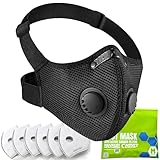
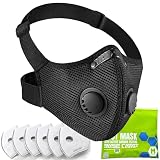
The BASE CAMP M PRO is a reusable mask with an L-shaped head strap, an adjustable nose clip and replaceable filters that include an activated carbon layer. The brand describes a multi-layer filter and says it reduces odors, and the listing family offers replacement filters. We did not find a NIOSH approval or a European filter class in the listing information, so the percentage claims are seller figures and should not be treated as a certified rating.
That makes it a comfort-first pick for yard work, light sanding and short projects, and a poor stand-in for a certified respirator when you are cutting hardwood or MDF for hours. The washable shell and spare filters make it economical to keep running.
Think of it as the mask you reach for when the job is short and the dust is modest: trimming a shelf, sanding a small table or cleaning out the shed. If you find yourself wearing it every day, step up to a mask with a stated approval so you know what the filter is actually rated to do.
- Reusable mask body with L-shaped strap and adjustable nose clip
- Replaceable activated carbon filters, with spares in the pack per the listing
- Seller claims high filtration of dust and pollen; no certification noted
- Marketed for woodworking, landscaping and DIY
- Certification and fit size range: confirm on the listing
Pros
- Light and comfortable for long wear
- Replaceable filters keep ongoing cost low
Cons
- No certification stated in the listing
- Not intended for vapor or finishing protection
Compared with the GVS Elipse, it is lighter and more casual but lacks a stated NIOSH rating, which is the main reason the GVS ranks higher.
2. AirGearPro G-500 Half Mask with A1P2 Filters – Best for sanding plus finishing fumes

The G-500 is a reusable half-mask respirator that takes combined A1P2 filters, meaning organic-vapor and particulate protection in one cartridge. The maker states the mask body conforms to the European EN 140 standard, the P2 particle filter to EN 143 and the A1 gas filter to EN 14387. That is a European framework, not a NIOSH approval, so US workplace rules that require NIOSH-approved respirators are a different matter from this hobby use.
P2 filters are rated for at least 94 percent of particles under EN 143, which is a step below a P100 filter, and the maker’s own materials are inconsistent on the exact percentage. The A1 layer helps with solvent vapors from paints and lacquers, which dust-only masks cannot do.
For a hobbyist who sands a cabinet on Saturday and brushes on a solvent-based finish on Sunday, one mask that handles both is convenient. Keep in mind that vapor cartridges have a limited life once the package is opened, so store spares sealed and replace the cartridges when you start to smell the finish through the mask.
- Half-mask design with A1P2 combined filters
- Maker lists EN 140, EN 143 and EN 14387 conformity
- A1 filters target organic vapors with boiling points above 65 degrees Celsius
- Maker lists safety goggles and ear plugs in the package; confirm on the listing
- Replacement filters sold by the brand
Pros
- Covers both dust and solvent vapors
- Replaceable filters extend the life of the mask
Cons
- European ratings, not NIOSH approvals
- P2 is a lower efficiency class than P100
Beside the BEESAFETY RD-518, it uses the same filter classes, but its package may differ, so compare what each box includes.
3. GVS Elipse P100 Half Mask – Best overall for NIOSH-rated wood dust protection
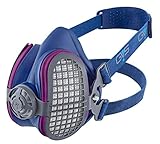
The GVS Elipse is a reusable half-mask respirator in medium/large with two replaceable P100 filters. Retailer details list a NIOSH approval for the P100 filter and describe the filter as removing at least 99.97 percent of 0.3-micron particles, including oil-based aerosols. The mask body is thermoplastic elastomer that is free of latex and silicone, with a large exhalation valve to reduce heat and moisture, and the low-profile filters leave room for safety glasses and sanding shields.
It is a particulate-only mask, so it does not stop paint or lacquer vapors, but for sanding, sawing and general wood dust it is the best-documented option here. This version comes in one size range, so check that it seals on your face.
The filters are replaceable and compatible with several related GVS models according to retailer details, so you are not locked into a single pack of cartridges. For a woodworker who spends several hours a week sanding, routing or running a table saw, this is the kind of mask that makes sense as a daily driver, with a spare set of filters kept sealed on the shelf.
- NIOSH-approved P100 particulate filters, per retailer details
- Size medium/large in this listing
- Low-profile filters designed to stay out of the way of eyewear
- Thermoplastic elastomer body, latex-free per retailer details
- Particulate protection only; no vapor option on this version
Pros
- Clear, widely documented particulate rating
- Low-profile design suits safety glasses and sanders
Cons
- Does not filter solvent vapors
- One size range may not seal on every face
Next to the AirGearPro, it trades vapor protection for a stronger, certified particulate filter.
4. Full-Face Respirator with A1 and P2 Filters – Best when eye protection is a priority

This unbranded full-face respirator uses A1 and P2 filters and is marketed for painting, woodworking, sanding, construction and cleaning. A full-face mask has a lens that covers the eyes, so it protects against airborne dust and splashes and avoids the fogged glasses and gritty eyes that often accompany a half mask. It is a sensible option for heavy sanding sessions in a dusty garage.
The listing name does not give a brand, a certification standard or a field of view, so confirm those on the product page. Because the filter ratings are the A1 and P2 classes, they are not the same as a NIOSH-approved P100, so treat the protection as a lower tier for fine hardwood dust.
Full-face masks also change how you work. You can look through the lens without fogging safety glasses, the strap system holds the mask in place for long sessions and your face is shielded from flying chips. The trade-offs are weight, heat and a narrower field of view, and you should confirm that the strap adjusts enough to give a good seal around the chin and forehead.
- Full-face design with an integrated lens
- A1 vapor and P2 particulate filters, per the listing name
- Marketed for woodworking, painting and cleaning
- Brand, mask standard and lens specifications: confirm on the listing
- Strap and seal fit across face sizes: confirm on the listing
Pros
- Eye protection is built in
- Covers both dust and organic vapors with the combined filters
Cons
- Heavier and warmer than a half mask
- Few documented certifications in the listing name
Compared with the BEESAFETY RD-518, it replaces separate goggles with a single lens, which is simpler to wear but harder to fit over thick glasses.
5. Threlaco 2-Pack Reusable Dust Masks – Runner-up for light jobs and spares

The Threlaco set contains two reusable dust masks with activated carbon filter cores. Retail details describe a five-layer filter, a dual-valve design and an adjustable nose clip and strap. The listings do not state a NIOSH or European certification, so we treat these as light-duty comfort masks and place them as a runner-up rather than a main woodworking respirator.
They are best for brief sanding, sweeping up, mowing or handing a spare mask to a helper. For hours of cutting hardwood or MDF, a certified filter is the better choice.
Because the pack contains two masks, one can stay clean in a drawer while the other is in use, and a second person can work alongside you. Wash the shells after use, change the cores when they clog and treat the whole set as a convenience purchase, not a protective upgrade.
- Two masks per pack, each with replaceable carbon filter cores
- Five-layer filter and dual valves per retail details
- Adjustable strap and nose clip
- Marketed for woodworking, mowing and sanding
- Certification: none stated in the listing; confirm before relying on it
Pros
- Two masks give a spare for a helper
- Washable shells and replaceable cores
Cons
- No stated approval or rating
- Not for vapors or long, heavy dust exposure
In comparison with the BASE CAMP M PRO, it is similar in concept but sold as a pair and described with fewer comfort details.
6. BEESAFETY RD-518 Half Mask with Goggles – Best for a kit with goggles and spare filters
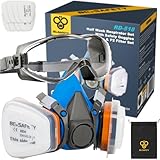
The BEESAFETY RD-518 pairs a half-face respirator with safety goggles and a big filter pack: two A1 organic-vapor filters and eight P2 dust filters. The listing says the P2 filters capture at least 95 percent of airborne particles, and the A1 filters are aimed at paint and solvent vapors. The kit is aimed at painting, sanding, resin and cleaning.
The listing does not show a NIOSH approval, so as with the AirGearPro it is best for hobby work where an EN-class filter is acceptable. The spare P2 filters are a practical bonus if you sand often.
The integrated goggles mean you do not need to juggle a separate pair of safety glasses, but check that they fit comfortably over your own eyewear and that the strap set leaves a clean seal around the nose. Replacement filters are sold separately in the same family, which helps if you plan to keep the mask for years.
- Half-face mask with safety goggles
- Two A1 organic vapor filters and eight P2 dust filters
- P2 filters described as capturing at least 95 percent of particles
- Marketed for painting, sanding, resin and cleaning
- Certification standard: confirm on the listing
Pros
- Goggles and plenty of spare filters in one kit
- Combined dust and vapor protection
Cons
- P2 class is below P100 efficiency
- Certification not shown in the listing
Against the GVS Elipse, it adds goggles and vapor filters but gives up the documented NIOSH P100 rating.
Specs Compared
| Model | Type | Filter class | Certification stated | Eye protection | Replaceable filters |
|---|---|---|---|---|---|
| BASE CAMP M PRO | Reusable dust mask | Multilayer carbon (seller claim) | None stated | No | Yes |
| AirGearPro G-500 | Half mask | A1P2 | EN 140, EN 143, EN 14387 (maker) | Goggles per maker; confirm on listing | Yes |
| GVS Elipse P100 | Half mask | P100 particulate | NIOSH P100 (retail details) | No | Yes |
| Full-Face Respirator A1 and P2 | Full-face mask | A1 plus P2 | Confirm on listing | Yes, full lens | Yes |
| Threlaco 2-Pack | Reusable dust mask | Five-layer carbon (seller claim) | None stated | No | Yes |
| BEESAFETY RD-518 | Half mask with goggles | A1 plus P2 | Confirm on listing | Yes, goggles included | Yes |
How We Chose These
This list is based on desk research of the six respirators in the product set, not on wearing or measuring them. We read manufacturer pages and retailer listing fields for filter class, certification statements, included parts and intended use, and then compared them with public guidance on wood dust from OSHA and with explanations of the NIOSH and European filter systems. We ranked certified, particulate-rated filters ahead of masks that state no rating, and we flagged every percentage as a seller or maker claim. Where a listing did not state a certification, we said so and told you to confirm it.
What to Look For
Know the filter rating system
In the United States, NIOSH approves particulate filters in classes N, R and P at 95, 99 or 100 percent efficiency. A P100 filter removes at least 99.97 percent of 0.3-micron particles and resists oil, while an N95 filter removes at least 95 percent. The European system labels particle filters P1, P2 and P3, with minimum efficiencies of about 80, 94 and 99.95 percent. A P2 filter is therefore closer to an N95, and a P3 is closer to a P100. A mask that lists no standard at all gives you no assurance about how well it filters.
Match the filter to the hazard
Wood dust is an irritant and OSHA describes it as a human carcinogen, and certain woods such as western red cedar are linked to asthma. Dust filters stop particles but not vapors. If you spray lacquer, varnish or oil-based finishes, you need an organic-vapor cartridge such as A1 or a NIOSH organic-vapor cartridge combined with a particulate filter. Activated carbon in a dust mask can reduce odors, but it is not a substitute for a cartridge rated for vapors.
Fit matters more than rating
A filter only works if the air passes through it, so the mask must seal to your face. Facial hair under the sealing edge breaks the seal. Do a seal check each time you put it on by covering the filters and inhaling gently, and look for the mask to pull in slightly. If you wear glasses, a low-profile filter or a full-face mask can avoid fogging. Try different sizes where offered, because a mask that is too large or small will leak.
Half mask or full face
A half mask covers the nose and mouth and is the more common choice. A full-face mask adds eye protection, which helps in very dusty or splashing work. Under US OSHA tables, approved half masks carry an assigned protection factor of 10 and full-face masks 50, which is a rough measure of how much they reduce exposure when properly fitted. Those factors apply to approved respirators used correctly, so they should not be assumed for masks with no stated certification.
Care, cleaning and storage
Wipe the mask body with a mild soap solution after heavy use, let it dry fully and keep it in a sealed bag or container away from sawdust. Never wash the filters, because water can damage the media and clog the pores. Check the valves and straps each time for cracks or stretching, and replace the whole mask if the sealing edge hardens or tears. Date the filters when you open them so you know how long they have been in service.
A simple rule of thumb
If you sand or cut for more than about an hour, choose a mask with a stated approval and a P100 or equivalent filter. Replace filters when breathing becomes hard, when they are damaged or when you smell vapors through a vapor cartridge. Store the mask in a sealed bag so the filters do not collect dust between jobs.
Questions
Is an N95 or P2 good enough for woodworking?
For short, light sanding it can be adequate, but many woodworkers choose P100 filters for regular work because they filter more. Check the rating on the filter itself and use the one that suits your exposure.
Do I need a respirator if I have dust collection?
Yes, in most cases. Collection reduces the dust in the air but does not remove it all, and sanding and sawing still produce fine particles. A respirator is a supplement to dust collection, not a replacement.
Can I use a dust mask for lacquer or spray finish?
No. Dust masks and P-rated filters do not stop solvent vapors. For finishing you need an organic-vapor cartridge, such as A1, combined with a particulate filter.
How often should I replace the filters?
Replace them when breathing gets harder, when they are damaged or dirty, or when you smell vapor through a vapor cartridge. Follow the maker’s schedule, and store the mask sealed between uses.
Why does my mask fog my glasses?
A poor nose seal lets warm breath escape upward. Adjust the nose clip, try a different size, switch to a low-profile mask or consider a full-face model.
Can I wear one with a beard?
Facial hair along the sealing edge keeps a tight-fitting mask from sealing. A clean-shaven edge gives the best result, and a loose-fitting powered hood is a different type of protection.
Update History
- October 20, 2026 – Initial publication; product set drawn from current catalog listings.
- Check the product page for current specifications and availability before buying.
Sources
- Manufacturer product and specification pages for GVS, AirGearPro, BASE CAMP and BEESAFETY listings
- Retailer listing titles and specification fields for each product
- OSHA wood dust guidance and NIOSH and European respirator standard summaries