What's inside
As an Amazon Associate I earn from qualifying purchases. This post may contain affiliate links at no extra cost to you.
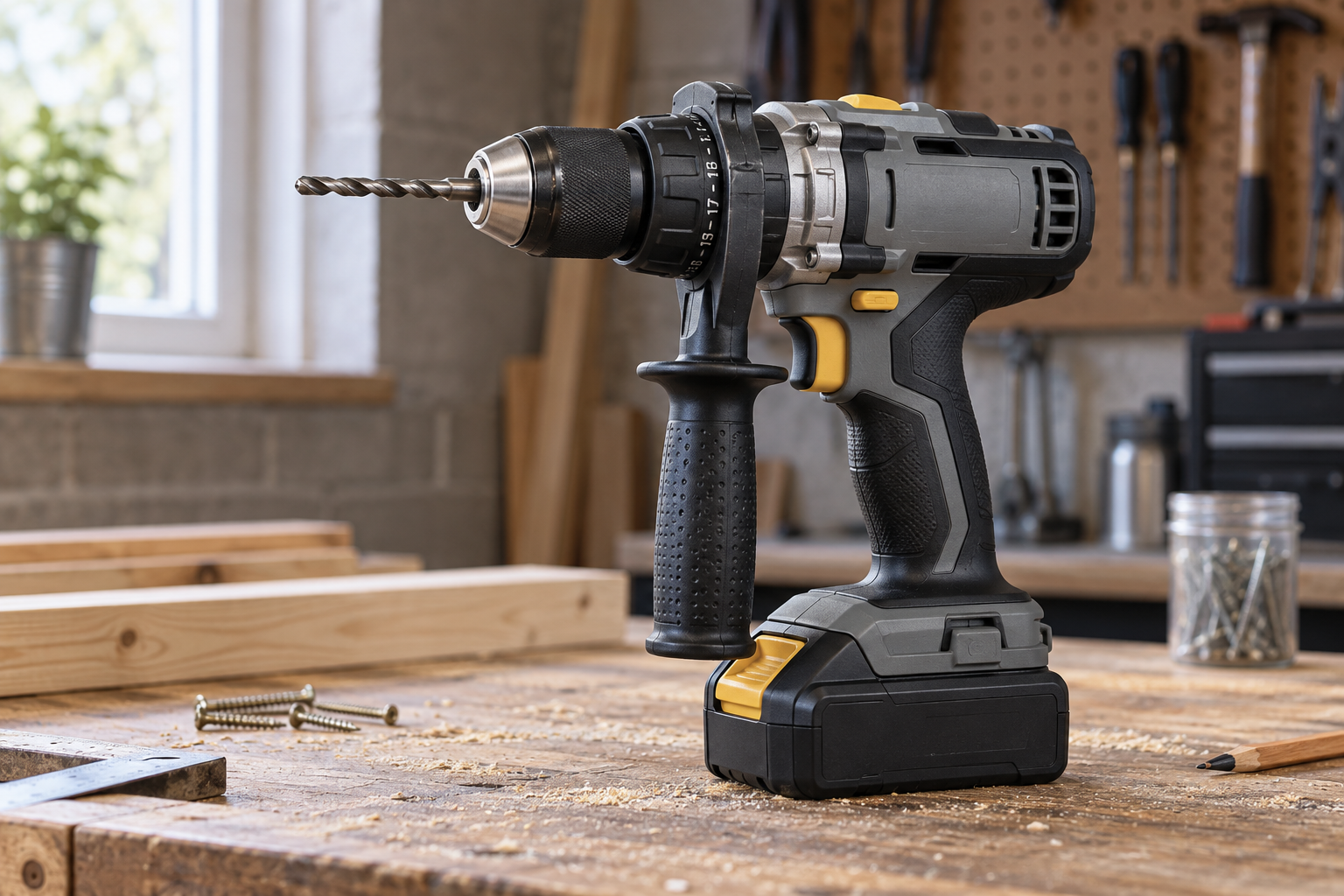
An 18V hammer drill can handle many masonry anchors, but the right choice depends on the hole diameter, the number of holes and the masonry itself. For a few 1/4-inch holes in brick, a compact drill may be enough. For repeated 3/8-inch holes in hard concrete, a heavier drill with a side handle and a capable battery is a better fit. If the job involves large holes or many anchors, a rotary hammer is usually the more suitable tool.
As an Amazon Associate we earn from qualifying purchases at no extra cost to you.



What the tool needs to do
A hammer drill combines rotation with a rapid hammering action. That action helps a carbide masonry bit cut into brick and concrete, but it is not the same as the stronger impact mechanism in a rotary hammer. The distinction matters: hammer drills are versatile tools for occasional masonry work, while rotary hammers are built for faster drilling and heavier use.
For typical sleeve or wedge anchors, check the anchor maker’s instructions for the required hole diameter and depth. A hole that is too wide or shallow can compromise the hold; dust left in the hole can also prevent proper seating. Use a depth stop or mark the bit, keep the drill perpendicular, and clear dust as the anchor instructions specify.
What to look for in an 18V drill
Side handle: This is important for larger bits and hard material. If a bit binds, the drill can twist suddenly. Hold the tool with both hands and use the side handle whenever the drill provides one.
Battery capacity: A compact 2.0Ah pack keeps the drill lighter, but it may run down quickly when drilling a batch of holes. A 4.0Ah or larger pack generally provides more working time, at the cost of added weight. Battery size alone does not guarantee faster drilling; the drill’s motor, hammer mechanism, bit and material all matter.
Clutch and speed control: Use the drill’s hammer setting for masonry and a suitable low or high speed according to the manual and bit. The clutch is useful for driving screws, but it is not a substitute for correct anchor installation. Avoid forcing the tool: excess pressure can overheat the bit, slow progress and make the hole wander.
Platform fit: If you already own batteries and a charger from a cordless tool brand, staying on that platform can save money. A bare tool is often the sensible purchase for an existing battery owner; a kit can be better value when you need batteries and a charger too.
Choosing a drill for the job
| Job | Suitable choice | Main trade-off |
|---|---|---|
| A few small holes in brick or mortar | Compact 18V hammer drill | Lighter and less costly, but slower in dense concrete |
| Several medium-size anchor holes | Full-size 18V hammer drill with side handle | More control and working time, with more weight |
| Frequent holes or larger diameters in concrete | Rotary hammer, often in the SDS-plus class | Faster drilling, but a separate tool and bit system |
| Very occasional masonry work | Borrow or rent a rotary hammer if the material is hard | Avoids buying a heavier tool for a one-off job |
These are job-based categories, not guarantees of performance. Concrete hardness, aggregate, bit condition and hole depth can change drilling time substantially. For a general-purpose option, compare 18V cordless hammer drills that match the battery platform you already own. If the job is a run of holes in hard concrete, compare cordless SDS-plus rotary hammers instead.
When a cheaper drill is fine
A basic 18V hammer drill is a reasonable choice for occasional, small-diameter holes in softer brick or block, especially if you already own its batteries. There is little benefit in paying for a top-end drill for a handful of light-duty anchors each year. A standard drill without hammer mode, however, is a poor substitute for masonry work: it may make slow progress, heat the bit and tempt you to push too hard.
For repeated anchor installation, a rotary hammer can be a better buy even if it means adding another battery platform or choosing a corded model. Its hammering action is designed for masonry, and it generally drills concrete faster with less effort. The trade-off is that it is bulkier and less useful for ordinary screwdriving.
Drill the hole without damaging it
Use a sharp carbide-tipped bit sized to the anchor, and start at low speed so the bit does not skate across the surface. Keep steady pressure rather than leaning your weight on the drill. If progress stalls, stop and check the bit, battery and material; sustained hammering without cutting can overheat the bit and stress the drill.
Watch for rebar, hidden services and brittle edges. Avoid drilling too close to the edge of a concrete slab or masonry unit unless the anchor manufacturer’s guidance allows it. Wear eye and hearing protection, and use a dust extractor or suitable respiratory protection when drilling masonry. Silica-containing dust is hazardous; do not blow it away with compressed air or leave it to spread through an occupied space.
Before buying, count the holes and note their diameter and depth. If the work fits occasional small holes, a platform-matched 18V hammer drill is often enough. If it means many deep holes in dense concrete, choosing a rotary hammer—or renting one—can save time, bits and frustration.
Related guides
- Longest Lasting Lawn Mower Battery: AGM vs Lithium vs Flooded Lifespan and Cost per Season
- Duralast Gold Lawn Mower Battery Review: U1 Fit, CCA and When to Pay for AGM
- Greenworks Pro 80V 21-Inch Mower Review: Runtime Math, Push vs Self-Propelled and Yard Fit
- Bosch High Pressure Washer Gun Replacement: Fittings, Adapters and What Fits Your Model