What's inside
As an Amazon Associate I earn from qualifying purchases. This post may contain affiliate links at no extra cost to you.
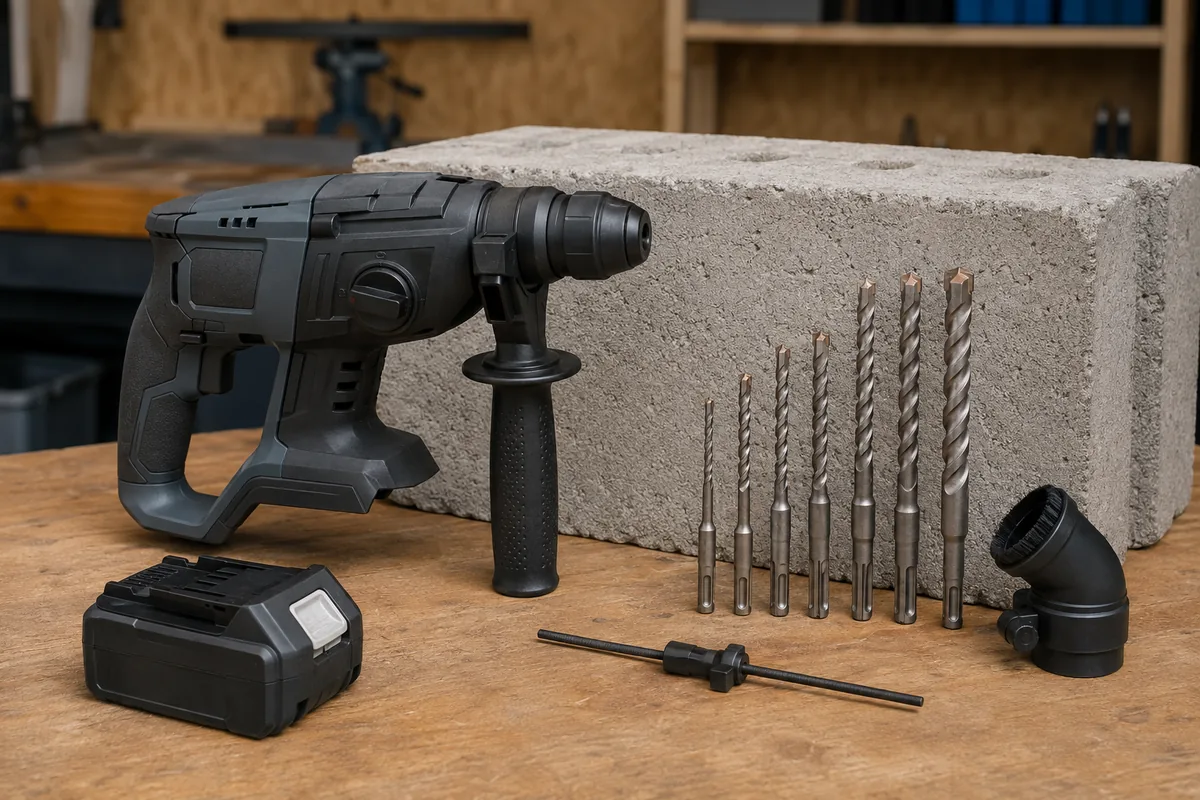
Drilling concrete overhead puts more demand on a rotary hammer than drilling a few holes into a wall. The tool’s weight hangs from your arms, dust falls toward your face, and a dull bit or awkward stance can turn a straightforward anchor job into a tiring one. For most overhead work, a compact SDS-plus rotary hammer is easier to control than a heavier SDS-max model. Choose by hole size, battery platform, and tool weight—not by impact-energy figures alone.
As an Amazon Associate we earn from qualifying purchases at no extra cost to you.

What matters when drilling overhead
For common 1/4- to 1/2-inch holes for concrete screws and light anchors, an SDS-plus hammer is usually the practical choice. Many models are rated for holes up to about 1 inch, but that does not mean they are equally comfortable or fast at that diameter. Check the maker’s recommended drilling range and the tool’s weight with the battery installed. A bare-tool weight of 5 to 7 pounds can become roughly 7 to 10 pounds with a large battery.
Impact energy matters, but higher energy generally comes with more weight and vibration. For repeated small holes overhead, a lighter tool with adequate capacity can be less tiring than a stronger, heavier one. A side handle that can be positioned securely is essential. A depth stop helps keep anchor holes consistent, while a rotation-only mode can handle occasional masonry drilling with the right bit, though it is slower than hammer drilling.
Use an SDS-plus bit matched to the hole diameter and anchor instructions. A worn bit cuts slowly, wanders, and makes the tool work harder. Clear dust from the hole as directed by the anchor maker; dust left at the bottom can interfere with seating or reduce holding performance.
Cordless rotary hammer types compared
| Type | Best fit | Trade-off overhead |
|---|---|---|
| Compact SDS-plus | Scattered small anchor holes and light-duty work | Lower weight; slower in large or deep holes |
| Full-size SDS-plus | Repeated holes and a wider range of bit sizes | More capacity, but more tiring with a large battery |
| SDS-max | Large holes, chiseling, and demanding work | Usually too heavy and cumbersome for routine overhead anchors |
Choose the platform before the tool
If you already own cordless tools, staying on that battery platform is often the better buy. Compare the bare tool with the cost of a kit, including charger and batteries. A kit may be worthwhile if it includes batteries you will use on other tools; it is poor value if it leaves you with a second charger and an unfamiliar battery system for one occasional job.
Battery size is a real trade-off. A higher-capacity pack can extend runtime, but it adds weight at the handle and can make overhead positioning harder. For short runs of small holes, a compact pack may be enough. For many holes or larger diameters, carry a spare charged battery rather than assuming the biggest pack is always the best choice. Cold temperatures, old batteries, and hard aggregate can all reduce the number of holes per charge, so advertised runtime is not a dependable job estimate.
Compare cordless SDS-plus rotary hammers on the battery platform you already use. Check whether the listed weight includes a battery, and confirm that the included handle and depth stop suit overhead drilling.
Which one should you buy?
For occasional holes up to about 1/2 inch, a compact SDS-plus model is a sensible choice. It is easier to hold in place, and the cheaper option is fine if it meets the maker’s recommended range for your bit sizes. Do not buy a premium heavy-duty hammer just because its maximum drilling diameter is larger than you need.
For regular installation work, choose a full-size SDS-plus hammer with a comfortable grip, accessible mode selector, and effective vibration control. Compare the complete tool-and-battery weight in a store if possible. If you are drilling mostly large holes or doing sustained chipping, SDS-max can make sense—but plan to support and control the tool carefully. It is rarely the right answer for a few overhead anchors.
A compact SDS-plus rotary hammer kit can be convenient if you have no compatible batteries. If you do, a bare-tool version often avoids paying for duplicate batteries and a charger.
Make overhead drilling safer and cleaner
Before drilling, check for concealed wiring, plumbing, and other services. Use eye protection and hearing protection, and wear a suitable respirator for concrete dust. Overhead dust falls directly into your face; a shroud connected to a compatible dust extractor is much more effective than trying to brush dust away while drilling. Follow local rules and the tool and extractor makers’ instructions for silica dust control.
Brace your stance, hold the tool with both hands, and keep the side handle fitted. Start the bit square to the surface and apply steady pressure—leaning your body weight into the tool can reduce control and will not fix a blunt bit. If the bit stops advancing, stop and check for a worn bit, packed dust, or hard aggregate. Forcing it can overheat the bit, strain the tool, or make the hammer twist unexpectedly if the bit binds.
Use a depth stop or mark the bit so you do not drill deeper than the anchor requires. Let the hammer do the work, and pause if the tool or battery becomes unusually hot. If the hole is above shoulder height, very large, or part of a long production run, reassess whether a lighter drilling setup, a proper work platform, or a different method is safer than holding a heavy hammer overhead.
FAQ
Which one should you buy?
Related guides
- Longest Lasting Lawn Mower Battery: AGM vs Lithium vs Flooded Lifespan and Cost per Season
- Duralast Gold Lawn Mower Battery Review: U1 Fit, CCA and When to Pay for AGM
- Greenworks Pro 80V 21-Inch Mower Review: Runtime Math, Push vs Self-Propelled and Yard Fit
- Bosch High Pressure Washer Gun Replacement: Fittings, Adapters and What Fits Your Model