What's inside
As an Amazon Associate I earn from qualifying purchases. This post may contain affiliate links at no extra cost to you.
Choosing a cordless drain cleaner
A cordless drain cleaner makes sense when you regularly clear sink, tub, shower, or laundry drains and want to avoid setting up a corded machine. It is not a substitute for every drain tool: a hand-crank snake is cheaper for occasional clogs, while main-line blockages and heavy roots may call for a larger sectional machine or a plumber.
Start with the drain, not the battery platform. Check the cable diameter and length, the machine’s supported cable types, and whether its drum or feed mechanism can pass through the bends in the target fixture. A compact machine with a short cable is convenient indoors but may not reach a distant blockage. A longer cable can reach farther, yet is heavier and harder to control in a small bathroom.
As an Amazon Associate we earn from qualifying purchases at no extra cost to you.


Cordless options at a glance
| Type | Best fit | Trade-off |
|---|---|---|
| Hand-crank drum auger | Occasional sink or tub clogs | Low cost and no battery, but slow and tiring |
| Compact cordless drum machine | Routine fixture-drain service | Portable, but cable length and capacity are limited |
| Professional cordless drain machine | Frequent service calls and longer runs | Higher cost and weight; requires careful cable handling |
| Large sectional or main-line machine | Large drains, long runs, or tough obstructions | More capable, but often excessive for indoor fixture drains |
For a homeowner or occasional maintenance job, a hand-crank drain snake is often enough. Choose a cordless machine when you expect repeated use, need faster cable feed, or already own compatible batteries and chargers.
What to check before buying
Cable size and reach: Match the cable to the drain and the machine’s stated capacity. Smaller fixture drains need a cable that can negotiate tight bends; a cable that is too stiff can damage a trap or fail to turn through it. Measure the likely route, including the distance from the cleanout to the blockage. Do not assume the advertised cable length is all usable inside a drain.
Feed and retrieval: A powered feed can save time, but it does not make the job hands-free. You still need to control the cable, keep it from whipping, and retrieve it without splashing dirty water. Look for a drum or housing that contains the cable and is straightforward to clean. A clogged, greasy cable left inside a tool can corrode or smell between jobs.
Battery ecosystem: If you already use a compatible cordless platform, a bare tool can lower the cost. Check whether the cleaner is sold without a battery, whether your existing pack is supported, and whether the tool’s runtime suits your work. A spare charged battery is useful on back-to-back jobs. Buying into a new platform solely for an occasional drain is harder to justify because the battery and charger add cost.
Handling and protection: Compare tool weight with the battery installed, not just the bare-tool figure. A heavy machine is awkward under a sink or while reaching a tub cleanout. Gloves and eye protection are essential; so are towels and a bucket. If the product instructions call for a ground-fault-protected power source for charging, follow them, and keep the charger away from wet work areas.
Choose by the job
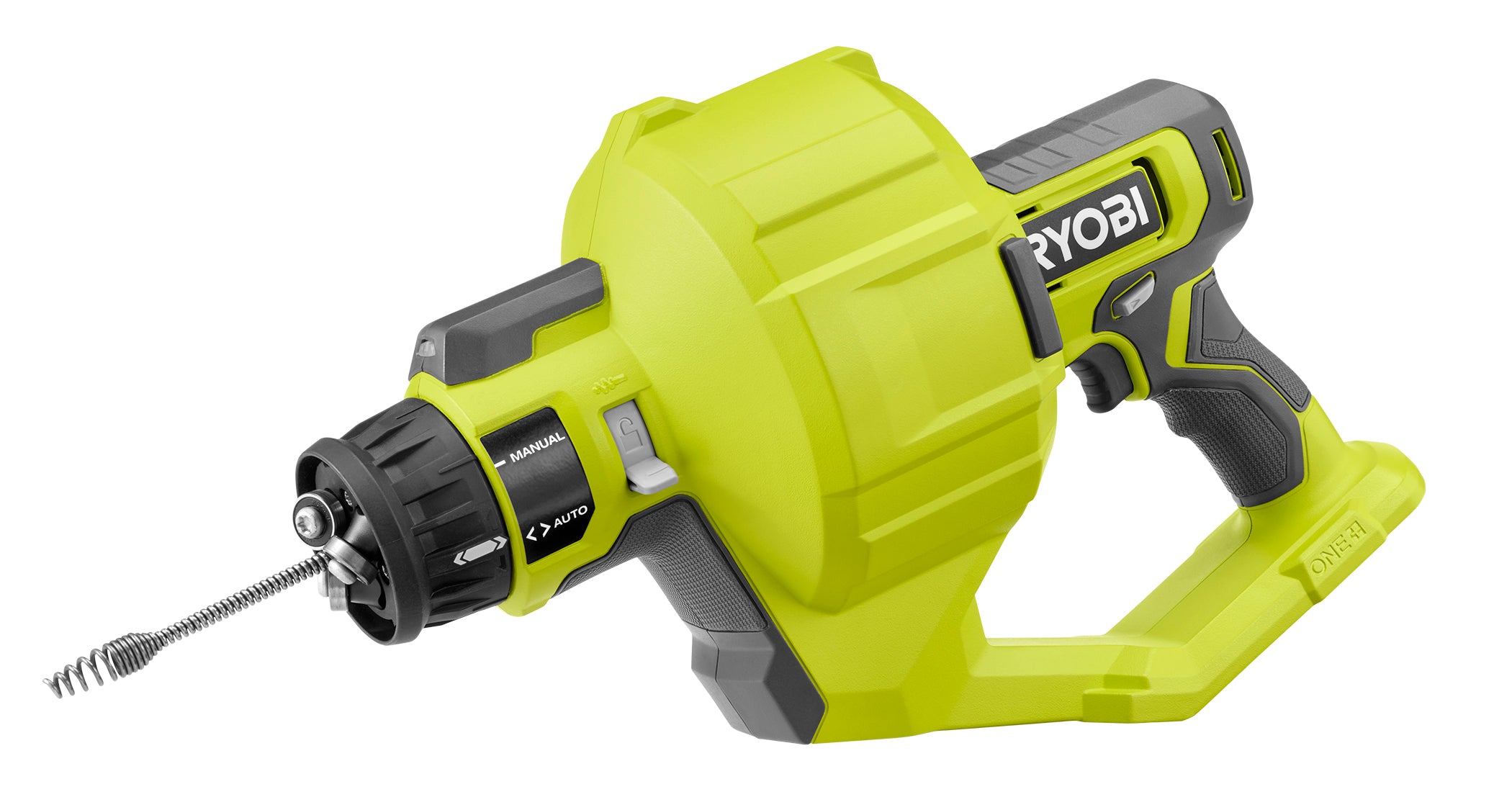
For routine sink and tub maintenance, a compact cordless drum cleaner is a practical middle ground. Browse cordless drum drain cleaners and compare cable compatibility, included attachments, and replacement-cable availability. A tool with a supported cable supply is more useful over time than one that looks capable but has hard-to-find consumables.
For frequent indoor service, prioritize a professional machine with robust cable control, clear operating instructions, and a serviceable drum or feed system. A larger battery may extend work time, but it also adds bulk; runtime claims vary with load and are not a reliable substitute for checking the machine’s intended duty. If the blockage is in a main line, the cable is repeatedly kinking, or the tool cannot reach the obstruction, stop rather than forcing it.
Safe use and common failures
Before snaking, identify the fixture and access point, remove standing water where practical, and protect finished surfaces. Feed the cable slowly and let the cutter work. Forcing a rotating cable around a tight bend can kink it, damage a trap, or cause it to bind. Keep hands clear of the rotating cable and follow the tool maker’s rules for gloves; loose gloves can catch in moving parts.
A cable that comes back clean may have missed the clog. If water still drains slowly, try again with an appropriate head or check another likely access point. Hair and soap buildup can cling to a cable without clearing the full passage; grease may collect farther along the pipe and return as a recurring blockage. Chemical drain cleaners can create a splash hazard during snaking, so do not use them beforehand unless the product labels and tool instructions explicitly allow it.
Stop if the cable jams, repeatedly kinks, or encounters an obstruction that does not yield with controlled pressure. For toilets, use a closet auger designed to protect the porcelain rather than a general-purpose drain machine. For repeated backups, multiple fixtures draining slowly, sewage odors, or signs of a damaged pipe, the problem may be beyond a handheld cleaner. A camera inspection or licensed plumber can be cheaper than breaking a cable or worsening a pipe problem.
The sensible buy
Buy a cordless drain cleaner when drain work is frequent enough to justify the tool and you can match its cable and reach to the plumbing you service. For an occasional bathroom sink clog, a manual snake is usually the better value. For steady indoor service, choose a compact machine with available replacement cables and a battery you already own; step up to a professional unit only when the workload, run length, and obstruction type warrant the added cost and weight.
Related guides
- Longest Lasting Lawn Mower Battery: AGM vs Lithium vs Flooded Lifespan and Cost per Season
- Duralast Gold Lawn Mower Battery Review: U1 Fit, CCA and When to Pay for AGM
- Greenworks Pro 80V 21-Inch Mower Review: Runtime Math, Push vs Self-Propelled and Yard Fit
- Bosch High Pressure Washer Gun Replacement: Fittings, Adapters and What Fits Your Model