
What's inside
- What Does 1/2 Inch Mean on a Makita Impact Wrench?
- How Does a Makita 1/2-Inch Impact Wrench Work?
- Popular Makita 1/2-Inch Impact Wrench Models
- How to Choose the Right Makita 1/2 Impact Wrench
- What Accessories Do You Need for a Makita 1/2 Impact Wrench?
- How to Use a Makita 1/2 Impact Wrench Safely
- Common Mistakes When Buying a Makita 1/2-Inch Impact Wrench
- Frequently Asked Questions
- Final Thoughts
As an Amazon Associate I earn from qualifying purchases. This post may contain affiliate links at no extra cost to you.
A Makita impact wrench with a 1/2-inch drive is a popular choice for automotive maintenance, equipment repairs, construction fastening, and workshop applications. However, the 1/2-inch measurement does not describe the tool’s power, maximum bolt size, or torque. It refers to the square drive that connects the wrench to an impact socket.
Understanding this distinction is important before buying a Makita impact wrench 1/2 because different models can share the same drive size while offering substantially different torque, speed, weight, and control features.
Makita offers several 1/2-inch impact wrenches across its 18V LXT cordless platform, including compact mid-torque options and more powerful high-torque machines. The right choice depends on the fasteners you work with, how frequently you use the tool, and whether portability or maximum loosening capability matters more.
This guide explains what a 1/2-inch Makita impact wrench does, which specifications matter, how to choose between popular models, and what to consider before using one.
What Does 1/2 Inch Mean on a Makita Impact Wrench?
The 1/2-inch measurement describes the size of the square drive, also called the anvil. This is the metal connection at the front of the impact wrench where an impact socket attaches.
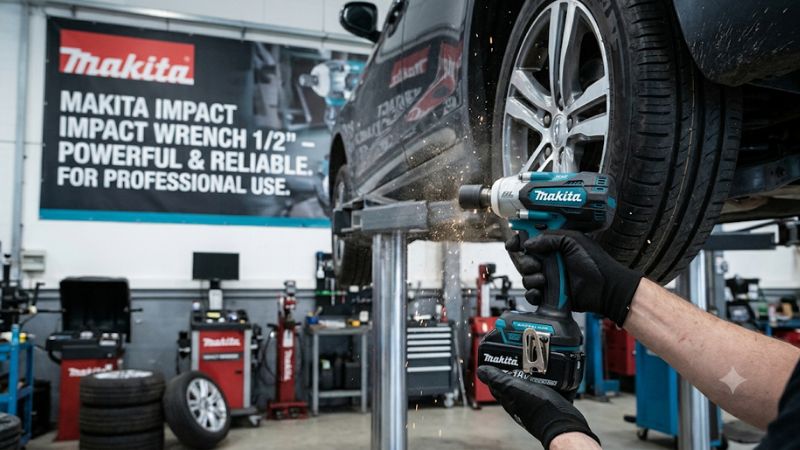
A 1/2-inch square drive measures approximately 12.7 mm across. It is commonly used with automotive impact sockets and other heavy-duty fastening accessories.
It is important not to confuse three different measurements:
- Drive size: The square connection between the wrench and socket.
- Socket size: The measurement across the socket opening, which determines which nut or bolt head it fits.
- Bolt diameter: The nominal diameter of the threaded fastener, such as an M12 or M16 bolt.
For example, a Makita 1/2-inch impact wrench can use a compatible 19 mm impact socket to work with a suitable hexagonal fastener. The 19 mm measurement describes the socket opening, not the wrench’s square drive.
Why Is 1/2 Inch a Popular Drive Size?
A 1/2-inch drive provides a practical balance between socket availability, strength, and tool versatility.
It is commonly used for:
- Removing and installing automotive wheel nuts.
- Working on suspension and steering components.
- Maintaining agricultural machinery.
- Tightening structural bolts within the tool’s rated capacity.
- Repairing workshop equipment.
- Removing moderately sized industrial fasteners.
A 1/2-inch wrench also offers access to a broad selection of impact-rated sockets, extensions, and adapters.
However, the drive size alone does not determine how much force the tool can deliver. A compact 1/2-inch impact wrench may produce considerably less torque than a high-torque model with exactly the same connection.
How Does a Makita 1/2-Inch Impact Wrench Work?
A cordless impact wrench uses an electric motor connected to a hammer-and-anvil mechanism.
When the trigger is pressed, the motor rotates an internal mechanism. As resistance increases, the hammer repeatedly strikes the anvil, producing rotational impacts that help turn the socket.
This mechanism makes an impact wrench particularly useful for fasteners that require substantial loosening or tightening force.
Unlike a conventional drill or driver, an impact wrench delivers its power through repeated rotational impacts rather than relying entirely on continuous motor rotation.
Understanding the Main Performance Specifications
Before choosing a Makita model, understand the specifications that describe its performance.
Fastening torque
Fastening torque describes the manufacturer’s stated tightening capability under specified conditions. It is commonly expressed in Newton-meters (N·m) or foot-pounds (ft-lbs).
Higher fastening torque generally indicates greater potential tightening capability, but it does not mean every fastener should receive that amount of force.
Nut-busting torque
Nut-busting torque is a manufacturer’s measure of the tool’s ability to loosen a fastener under defined test conditions.
It is not necessarily interchangeable with fastening torque or a guaranteed real-world loosening result.
A model advertising 1,000 N·m of nut-busting torque does not automatically tighten fasteners to 1,000 N·m.
No-load speed (RPM)
RPM measures how quickly the output rotates without a loaded fastening task.
Higher RPM can help complete fastening operations faster, but actual performance depends on resistance, battery condition, fastener characteristics, and the selected operating mode.
Impacts per minute (IPM)
IPM measures how many rotational impacts the mechanism delivers per minute.
A higher impact rate does not independently establish that one wrench is more powerful than another. Torque, impact mechanism design, speed, and operating conditions must also be considered.
Voltage
Voltage identifies the battery platform. Many Makita cordless 1/2-inch impact wrenches use the 18V LXT system.
Voltage should not be confused with torque or battery capacity. An 18V tool does not automatically produce more torque than every other 18V model.
Popular Makita 1/2-Inch Impact Wrench Models
Makita’s product range includes several 18V LXT models designed for different workloads.
The following examples illustrate how two wrenches with the same 1/2-inch square drive can serve very different users.
| Model | Drive | Advertised fastening torque | Intended application |
| DTW181 | 1/2 inch | 210 N·m | General maintenance |
| DTW300 | 1/2 inch | 330 N·m | Automotive and workshop work |
| DTW700 | 1/2 inch | 700 N·m | Heavy-duty fastening |
| XWT17Z | 1/2 inch | 700 N·m | Mid-torque professional applications |
| XWT08Z | 1/2 inch | 1,000 N·m | High-torque applications |
These are manufacturer-published figures from different regional product ranges. They should not be treated as directly comparable independent test results. Availability, specifications, and model configurations can vary by market.
Makita DTW181: For Everyday Maintenance
The DTW181 is a compact 18V LXT impact wrench with a 1/2-inch square drive and a maximum fastening torque of 210 N·m.
Its smaller torque rating makes it relevant to users who need an impact wrench for routine maintenance rather than demanding heavy-duty fastening.
Typical applications include suitable automotive repairs, equipment maintenance, and general workshop fastening.
The model also features reverse-rotation automatic stop functionality, which helps prevent unnecessary operation after a loosened fastener reaches the tool’s configured stopping condition.
Its main limitation is its lower torque capability compared with Makita’s larger mid-torque and high-torque models.
Choose it when portability and everyday fastening are more important than maximum loosening power.
Makita DTW300: A Versatile Mid-Torque Option
The DTW300 is an 18V LXT brushless impact wrench with a 1/2-inch square drive and a maximum fastening torque of 330 N·m.
It offers four electronic speed and impact settings, giving users more control over different fastening applications.
The manufacturer specifies:
- Maximum fastening torque: 330 N·m.
- No-load speed: Up to 3,200 RPM.
- Impact rate: Up to 4,000 IPM.
- Standard bolt capacity: M10–M20.
- High-strength bolt capacity: M10–M16.
The DTW300 is suitable for automotive maintenance, mechanical repairs, and general workshop applications within its specified fastening capacity.
Its four operating levels are useful when working with different fastener sizes and materials.
However, it is not a replacement for a high-torque impact wrench when dealing with particularly demanding industrial fasteners.
Makita DTW700: For More Demanding Fastening Jobs
The DTW700 provides a substantial increase in torque compared with the DTW300.
This 18V LXT brushless impact wrench features a 1/2-inch square drive and a manufacturer-rated maximum fastening torque of 700 N·m.
Its main specifications include:
- Maximum fastening torque: 700 N·m.
- Maximum no-load speed: 2,200 RPM.
- Maximum impact rate: 2,700 IPM.
- Standard bolt capacity: M10–M24.
- High-strength bolt capacity: M10–M16.
The electronic four-stage impact power selection helps users adjust the tool to different applications.
Makita also offers the DTW701, which uses a pin-detent socket retention system instead of the C-ring arrangement found on the DTW700.
The DTW700 is worth considering for mechanics, equipment technicians, and professionals who regularly encounter more demanding fasteners.
Its higher torque also means users need to pay closer attention to fastening procedures and manufacturer specifications.
Makita XWT17Z: Mid-Torque Performance With Advanced Control
The XWT17Z is an 18V LXT brushless cordless impact wrench sold in the US market.
It has a 1/2-inch square drive and four selectable operating speeds.
Makita specifies:
- Fastening torque: 700 N·m.
- Nut-busting torque: 1,000 N·m.
- Maximum speed: 2,200 RPM.
- Maximum impact rate: 2,700 IPM.
- Tool weight: Approximately 6.0 lbs with battery.
The XWT17Z also includes three forward and three reverse automatic-stop modes.
These features make it useful for automotive, installation, and fabrication work where controlling fastening behavior matters.
One important purchasing detail is its anvil design. The XWT17Z uses a friction-ring anvil, while the closely related XWT18Z uses a pin-detent arrangement.
Both have a 1/2-inch drive, but their socket-retention mechanisms differ.
The XWT17Z is a tool-only package, so the battery and charger must be purchased separately unless included in another kit configuration.
Makita XWT08Z: A High-Torque Choice
The XWT08Z is designed for applications requiring substantially greater loosening and fastening capability.
It is an 18V LXT brushless impact wrench with a 1/2-inch square drive.
Makita lists:
- Fastening torque: 1,000 N·m.
- Nut-busting torque: 1,600 N·m.
- Maximum no-load speed: 1,800 RPM.
- Maximum impact rate: 2,200 IPM.
- Weight: Approximately 8 lbs with battery.
This model is more appropriate for demanding mechanical and industrial applications than routine household maintenance.
Its high torque can be useful when working with larger fasteners, but the additional capability comes with greater tool size and weight.
It may be unnecessary for someone who primarily changes passenger-car wheels or performs occasional household repairs.
How to Choose the Right Makita 1/2 Impact Wrench
Choosing an impact wrench should begin with the actual fasteners and workload rather than the largest torque number advertised.
1. Identify Your Typical Applications
Different jobs require different levels of torque.
For example:
| Application | What to prioritize |
| Occasional automotive maintenance | Compact size and manageable torque |
| Passenger-car wheel service | Suitable fastening capacity and control |
| Suspension repairs | Appropriate loosening capability |
| Agricultural equipment | Higher torque and durability |
| Heavy mechanical maintenance | High-torque performance and suitable accessories |
| Construction fastening | Bolt compatibility and controlled tightening |
For occasional maintenance, a compact model may be more practical than a large high-torque wrench.
For demanding mechanical work, a stronger model may reduce the effort required to remove stubborn fasteners.
2. Check the Battery Platform
Makita 18V LXT impact wrenches use compatible batteries from the 18V LXT platform, subject to the exact model’s battery requirements.
However, not every Makita battery is automatically compatible with every tool.
Check the manufacturer’s compatibility information, including battery identification markings and any stated restrictions.
Also consider battery capacity.
A 5.0Ah battery stores more energy than a 2.0Ah battery under comparable conditions, potentially supporting longer operating time. Actual runtime depends on the workload, battery condition, temperature, and tool settings.
A higher-capacity battery can also increase overall tool weight.
3. Choose the Right Socket Retention System
Makita 1/2-inch impact wrenches can use different socket-retention mechanisms.
The two common designs are:
Friction ring (C-ring)
This system uses a retaining ring to hold the socket on the square anvil.
It is convenient when frequently changing sockets during automotive or workshop work.
Pin detent
This design uses a spring-loaded retaining pin that engages with a corresponding hole in the socket.
It provides positive retention and can be useful when sockets need to remain securely attached during certain applications.
Neither system changes the nominal 1/2-inch drive size. However, sockets must be compatible with the specific retention arrangement.
4. Consider Brushless Motor Technology
Many modern Makita 18V LXT impact wrenches feature brushless motors.
Brushless motors use electronic control instead of traditional carbon brushes.
Potential benefits include:
- Reduced brush-related maintenance.
- Improved energy efficiency.
- Better electronic speed control.
- Less heat associated with brush friction.
- Longer operating time under certain comparable conditions.
However, brushless technology does not automatically make every tool more powerful than every brushed model.
The complete motor, electronics, impact mechanism, and battery configuration determine actual performance.
5. Evaluate Weight and Ergonomics
An impact wrench can feel manageable during short fastening operations but become tiring during extended overhead or awkward-position work.
Consider the complete working weight rather than the bare-tool specification.
A larger battery may improve operating time but make the wrench heavier.
Also consider:
- Handle grip and diameter.
- Trigger positioning.
- Overall tool length.
- Balance with the installed battery.
- Access to fasteners in confined spaces.
- Built-in work lighting.
For frequent automotive maintenance, these details can matter as much as the maximum torque rating.
What Accessories Do You Need for a Makita 1/2 Impact Wrench?
A compatible socket is essential, but choosing the correct accessory is equally important.
Impact-Rated Sockets
Use sockets specifically designed for impact wrenches.
Impact sockets are engineered for repeated impact loading and are generally made from materials and constructions appropriate for this application.
Standard chrome hand sockets should not be assumed suitable for impact-wrench operation.
Choose the correct socket opening for the fastener and confirm that the socket’s drive connection matches the wrench.
Extensions and Adapters
Impact-rated extensions can help reach recessed fasteners.
However, extensions and adapters can change the tool’s effective behavior and introduce additional mechanical considerations.
Use accessories with suitable impact ratings and compatible dimensions.
Avoid stacking unnecessary adapters because every additional connection can increase wear and reduce control.
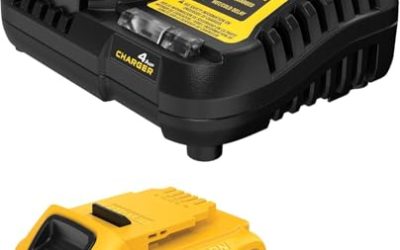
Battery and Charger
If purchasing a tool-only model, remember that the battery and charger may not be included.
Check the exact package contents before ordering.
For users already operating compatible Makita 18V LXT tools, an additional bare tool may be a more economical option.
For first-time buyers, a kit containing the tool, battery, charger, and case may offer better overall value.
How to Use a Makita 1/2 Impact Wrench Safely
An impact wrench can apply substantial rotational force. Incorrect operation may damage fasteners, sockets, components, or the tool itself.
Follow these basic precautions.
- Inspect the tool and accessories. Check the anvil, socket, battery, and housing for visible damage. Do not use cracked or damaged impact sockets.
- Select the correct socket. Confirm that the socket is impact-rated and matches both the square drive and fastener.
- Secure the workpiece. Stabilize the component whenever possible and maintain a balanced working position.
- Select an appropriate operating mode. Begin with a lower setting when the required fastening force is uncertain. Follow the tool manual and fastener manufacturer’s instructions.
- Keep the socket aligned. Position it squarely over the fastener to reduce the risk of slipping or damaging the fastener head.
- Control trigger operation. Avoid unnecessarily prolonged impact operation. Stop when the task is complete.
- Verify final tightening separately. When a specific torque is required, use an appropriate calibrated torque wrench and the manufacturer’s prescribed tightening procedure.
For automotive wheel nuts, do not rely on the impact wrench’s advertised maximum torque to establish the correct final tightening force. Vehicle manufacturers specify wheel-fastener torque requirements, and those values should be followed.
Wear appropriate eye protection and hearing protection. Gloves may also be appropriate depending on the task and the tool manufacturer’s instructions.
Remove the battery before cleaning, inspecting, or changing accessories. Never bypass safety features or continue operating a tool that shows signs of mechanical or electrical damage.
Common Mistakes When Buying a Makita 1/2-Inch Impact Wrench
Even experienced DIY users can make purchasing mistakes when comparing impact wrenches.
Confusing drive size with torque: A 1/2-inch drive does not mean the tool produces a particular torque value. Always check the model’s specifications.
Buying the highest-torque model unnecessarily: A high-torque wrench can be heavier and more expensive. A compact mid-torque model may be more appropriate for routine maintenance.
Ignoring battery compatibility: Makita offers different battery platforms and voltage families. Check the exact model before purchasing batteries.
Using ordinary sockets: Standard hand sockets are not necessarily designed for impact loading.
Ignoring package contents: A model ending in a tool-only configuration may not include batteries or a charger.
Treating nut-busting torque as tightening torque: These are different performance measurements and should never be used interchangeably.
Using an impact wrench as a torque wrench: An impact wrench is designed for powered fastening and loosening, not precise final torque verification.
Frequently Asked Questions
Is a Makita 1/2-inch impact wrench suitable for changing car tires?
Yes. A suitable Makita 1/2-inch impact wrench can help remove and install automotive wheel nuts when used with the correct impact-rated socket. However, final tightening must follow the vehicle manufacturer’s specified torque using an appropriate torque wrench.
What is the difference between a Makita 1/2-inch and 3/8-inch impact wrench?
The main difference is the square drive size. A 1/2-inch drive measures 12.7 mm, while a 3/8-inch drive measures 9.5 mm. The 1/2-inch format is commonly used for larger automotive and mechanical applications, while 3/8-inch models are often selected for more compact work. Neither drive size automatically determines torque output.
Can I use any Makita 18V battery with a 1/2-inch impact wrench?
No. You should verify compatibility with the exact impact wrench model and its manufacturer’s battery requirements. Makita 18V LXT tools are designed for compatible LXT batteries, but other Makita battery platforms should not be assumed interchangeable.
Is higher torque always better when buying a Makita impact wrench?
No. Higher torque is useful for demanding fastening and loosening jobs, but it can be unnecessary for routine maintenance. The best model provides sufficient capability for your workload while remaining comfortable, controllable, and compatible with your existing accessories.
Final Thoughts
A Makita 1/2-inch impact wrench is a versatile fastening tool for automotive maintenance, mechanical repairs, and demanding workshop applications. Its 1/2-inch specification identifies the square drive connection, not the amount of torque the tool produces.
For everyday maintenance, the DTW181 offers a compact option, while the DTW300 provides greater fastening capability and four electronic operating levels. The DTW700 and XWT17Z offer substantially higher torque for more demanding applications, while the XWT08Z targets users who need high-torque performance.
Before choosing, compare fastening torque, nut-busting torque, battery compatibility, socket retention, tool weight, and package contents.
Related guides
More from Amazon
Programs that pair well with the guide above. Offers and eligibility are set by Amazon and may change.
A free business account with business pricing and bulk-buying tools for work, shop or home office.
Create a business accountFree shipping on eligible items, Prime Video and more. Eligible new members can start with a free trial.
Start a Prime free trialAudiobooks and podcasts to listen to on the go. Eligible new members can start with a free trial.
Try Audible freeAd-free music streaming. Eligible new subscribers can start with a free trial.
Try Music Unlimited freeAs an Amazon Associate we earn from qualifying purchases.


Write Your Review
No reviews yet. Be the first to share your experience!