What's inside
As an Amazon Associate I earn from qualifying purchases. This post may contain affiliate links at no extra cost to you.
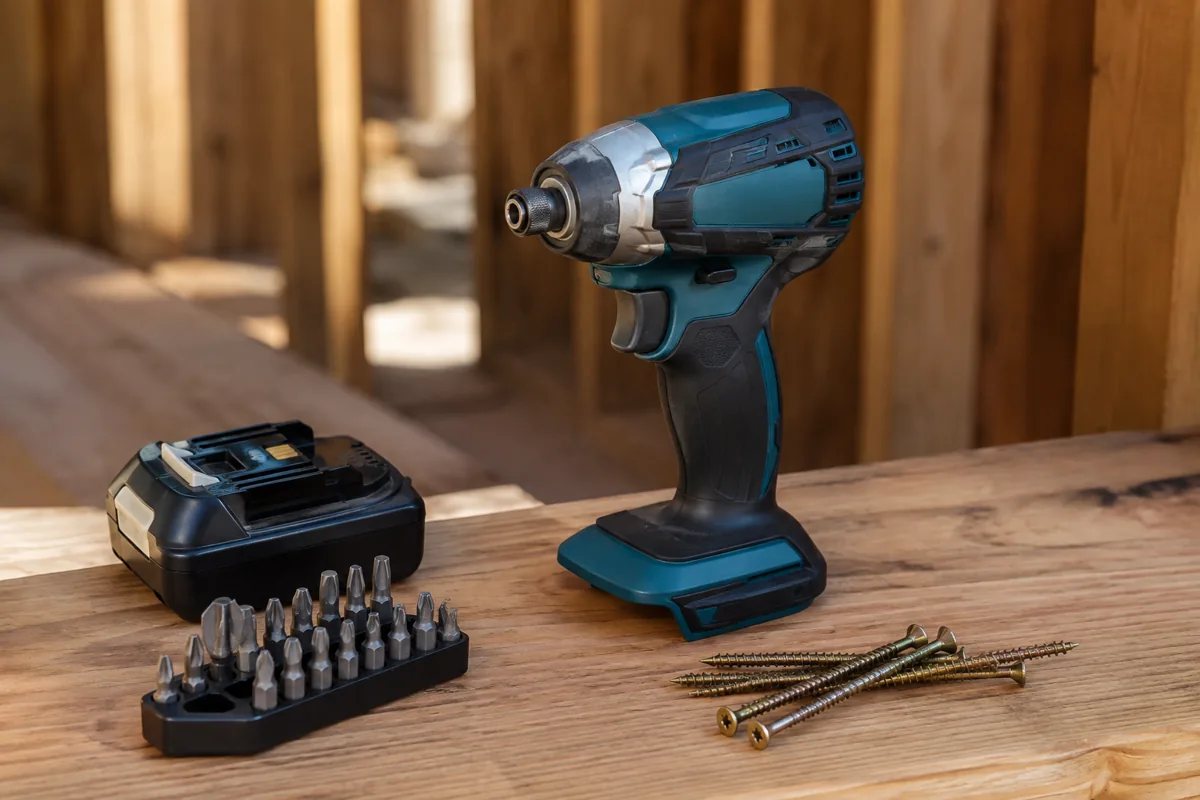
Cabinet fastening is repetitive, but it is not a job for maximum torque. A driver that buries screws too fast can split a face frame, strip a hinge screw, or pull a cabinet out of alignment. For most installers, the best cordless impact driver is compact, has a controllable trigger, and belongs to a battery platform they already own.
Impacts excel at driving long cabinet screws into studs and fastening cabinets together. They are less suitable for delicate hinge adjustment or small screws in particleboard. Keep a drill-driver or hand screwdriver nearby for those tasks, and use a clutch or a careful trigger finger rather than relying on the impact mechanism to stop at the right depth.
As an Amazon Associate we earn from qualifying purchases at no extra cost to you.


What matters for cabinet work
Control beats peak torque. Published torque figures are not a useful way to choose between drivers for this job. Cabinet screws and materials vary, and even a powerful driver can be gentle if its trigger and speed modes are easy to manage. A low-speed mode helps, but it does not replace a test drive in scrap material.
Size and weight matter over a full installation. A shorter head fits more easily inside cabinets and between framing. A bare tool around 2 to 3 pounds is comfortable for many users; battery weight adds to that. A compact 2.0Ah battery usually balances better than a large high-capacity pack, while still providing ample runtime for ordinary cabinet installation.
Use the right bit. Cabinet hardware may use square-drive, Phillips, Torx, or specialty screws. A quality bit that fits fully reduces cam-out and damaged screw heads. For long structural screws, follow the screw maker’s guidance on pilot holes and approved driver type. Avoid using an impact driver on fragile hardware simply because the bit fits.
Quick comparison
| Option | Best fit | Main trade-off |
|---|---|---|
| Compact 18V/20V impact driver | Regular installation and long screws | More power than small hardware needs |
| Compact 12V impact driver | Cabinet interiors, lighter fastening | Less reserve for large screws or heavy use |
| Drill-driver with clutch | Hinges, small screws, controlled fastening | Slower on long screws; can stall under load |
| Existing-platform bare tool | Occasional work when batteries are already owned | Only a bargain if the battery system fits your needs |
Best for most installers: a compact 18V/20V driver
A compact driver on a full-size cordless platform is the practical all-round choice if you install kitchens regularly or already own that brand’s batteries. It has enough reserve for cabinet-to-stud screws and can also handle general fastening around a remodel. Choose a model with at least two speed settings or a selectable assist mode, a short head, and a comfortable trigger.
Use a compact 18V cordless impact driver for structural fastening, but start slowly and stop before the screw head pulls through the cabinet rail. If a driver’s lowest mode still feels abrupt, reduce pressure on the trigger or use the drill-driver for the final seating. A tool with several modes is not automatically better if the mode controls are awkward to reach or easy to bump.
For an existing battery platform, a bare tool can be the sensible buy. Check that it is the same voltage and battery generation as your packs; similarly named platforms are not always interchangeable. If you need batteries and a charger too, compare kit pricing rather than assuming the bare tool is cheaper overall.
Best for tight spaces: a 12V impact driver
A compact 12V driver is easier to handle inside a cabinet and usually less tiring overhead. It is a good fit for face-frame screws, cabinet connector hardware, and moderate installation work. Its limitation shows up with long, thick screws, dense framing, or sustained daily use, where it may slow down or require more pauses than a larger platform.
Consider a 12V impact driver kit if you do occasional installations and want a lighter system. The kit cost can be worthwhile when you do not own compatible batteries. If you already have a capable 18V platform, buying into another battery ecosystem just for a modest size reduction is harder to justify.
When a drill-driver is the better tool
Impacts deliver rotational blows as resistance rises. That helps drive long screws, but makes the tool less predictable near the end of a small fastener. For hinge screws, drawer hardware, and screws going into particleboard, a drill-driver’s adjustable clutch is usually safer. Set the clutch low, test on scrap, and increase it only if the screw will not seat.
A drill-driver is also the cheaper option if cabinet work is occasional and you already own one. It can drive installation screws with a pilot hole, though it may be slower and more likely to stall on a long screw. Do not compensate for stalling by forcing the tool: back out, check alignment, and drill a suitable pilot hole if the screw and material call for one.
A repeatable fastening routine
Clamp cabinets flush before fastening them together, check the run for level and plumb, and use a spacer or straightedge to keep face frames aligned. For cabinet-to-wall connections, locate framing and use the specified cabinet screws rather than drywall screws. A screw that misses the stud can feel tight in drywall while providing little real support.
Drive one screw at a time, keeping the bit square to the head. Make a test fastening in offcut material or an inconspicuous area, then inspect for a proud head, stripped drive, or crushed surface. Stop when the head is seated; continued driving can strip the wood or pull the cabinet rail inward. If a screw spins without tightening, remove it and reassess the hole rather than trying a larger impact setting.
Make the platform decision first
For frequent cabinet installation, buy a compact full-size-platform driver with useful low-speed control. For lighter work and tight interiors, a 12V tool is a sound choice if its battery system will see other use. For occasional fastening, the drill-driver you own may already be the best value. In every case, matching the tool to the screw and slowing down for the final turns will prevent more cabinet damage than buying the driver with the highest advertised torque.
Related guides
- Longest Lasting Lawn Mower Battery: AGM vs Lithium vs Flooded Lifespan and Cost per Season
- Duralast Gold Lawn Mower Battery Review: U1 Fit, CCA and When to Pay for AGM
- Greenworks Pro 80V 21-Inch Mower Review: Runtime Math, Push vs Self-Propelled and Yard Fit
- Bosch High Pressure Washer Gun Replacement: Fittings, Adapters and What Fits Your Model