What's inside
As an Amazon Associate I earn from qualifying purchases. This post may contain affiliate links at no extra cost to you.
Where a 12V impact wrench fits
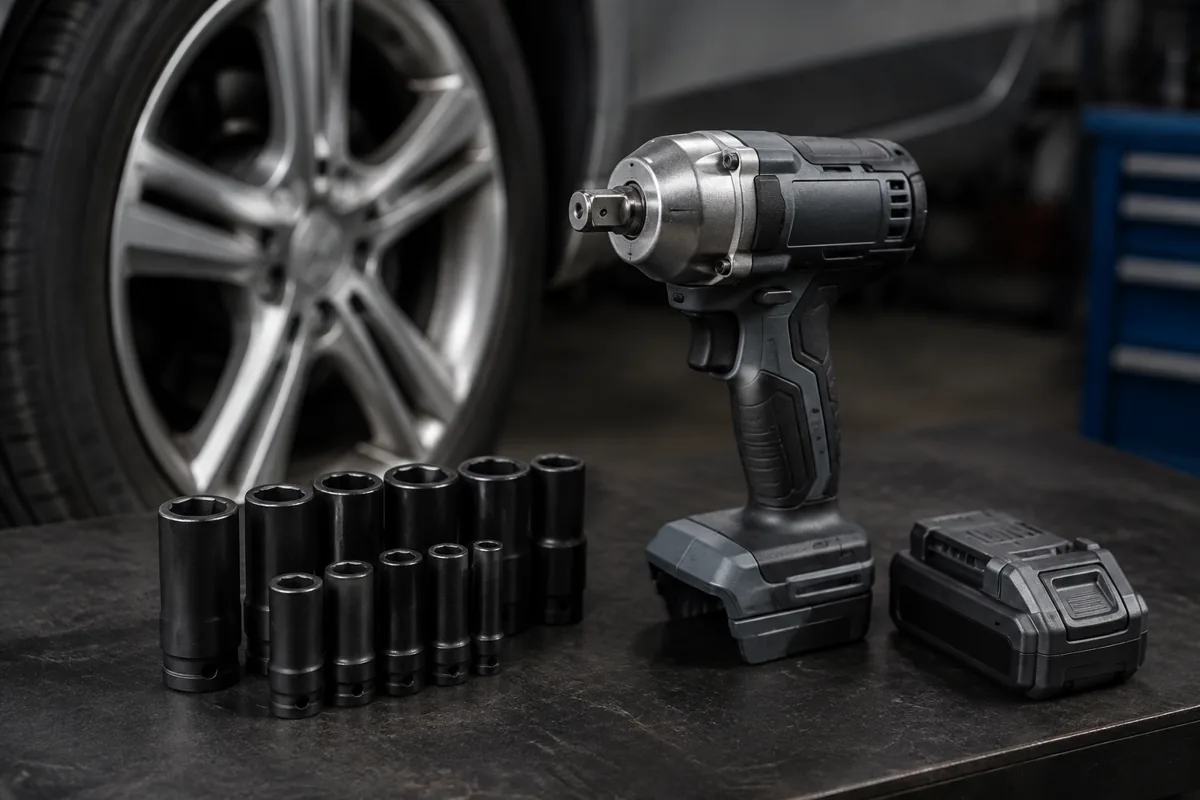
A 12V cordless impact wrench is for fasteners that need more than a hand ratchet but do not call for a full-size wrench. It can be a good fit for interior work, small brackets, battery trays, and light under-hood service. With the right socket and a charged battery, some compact models can also handle lug nuts—but that is where the limits matter most.
Do not confuse an impact wrench with an impact driver. A wrench has a square drive for sockets, usually 3/8 inch or 1/2 inch. An impact driver has a hex collet and is intended mainly for screws and hex-shank bits. For automotive service, look for a wrench with a clearly stated breakaway or loosening torque, variable-speed trigger, and forward/reverse control. A bare torque figure does not tell you how reliably it will remove an old, corroded fastener.
As an Amazon Associate we earn from qualifying purchases at no extra cost to you.


The short list: choose by the work
There is no single best 12V wrench for every car job. Compare tools within the same drive size and battery platform, and check the manufacturer’s current specifications: model names, kits, and ratings can vary by market.
| Use | What to look for | Main trade-off |
|---|---|---|
| Small fasteners and tight access | Compact 3/8-inch wrench, variable speed, short head | Less capacity for stubborn bolts |
| Mixed light service | 3/8-inch wrench with a good breakaway rating and batteries you already own | May be bulkier than a specialist compact tool |
| Occasional lug nuts | 12V wrench with verified loosening performance, plus a manual torque wrench | Results vary with rust, joint condition, and battery charge |
| Frequent wheel work or seized hardware | Consider an 18V/20V-class wrench instead | More size, weight, and platform cost |
For a general-purpose 12V pick, start with a 12V 3/8-inch cordless impact wrench. If you regularly work in narrow spaces, compare compact-head options on the battery platform you already use. Buying a bare tool can save money when you own compatible batteries; starting a new platform means pricing the battery and charger too.
Torque ratings and lug nuts
Manufacturers may advertise fastening torque, breakaway torque, or both. These are not interchangeable, and test methods differ. A wrench can loosen a nut at a certain measured torque in a test but fail on a wheel nut that has rusted, been overtightened, or sat through several winters. Cold batteries and small, partly discharged packs can also reduce performance.
For a wheel change, use the wrench to remove nuts or run them down gently, not as your final tightening method. Fit the correct impact-rated socket, keep it square on the nut, and stop before the wheel seats fully if you are installing. Tighten in the vehicle maker’s specified pattern and torque with a calibrated manual torque wrench. Passenger-car lug torque is often roughly 80–120 lb-ft, but the correct figure is vehicle-specific; check the owner’s manual or service information. Never assume the impact wrench’s setting or claimed torque is accurate enough for final tightening.
If the tool struggles, stop rather than holding the trigger until the battery fades. A longer tool session can heat the motor and battery, while repeated impacts can round a damaged nut. Use penetrating oil where appropriate, allow it time to work, and switch to a breaker bar or a higher-capacity wrench if the fastener remains stuck.
Battery platform, runtime, and kit cost
Battery compatibility is one of the strongest reasons to choose a particular 12V wrench. A bare tool is economical only if your existing batteries actually fit that brand’s 12V system; batteries from a brand’s larger platform usually do not cross over. Check voltage, pack shape, and charger compatibility before ordering. If you are buying into a platform, compare the kit price with the cost of a battery and charger purchased separately.
Compact packs keep the wrench lighter and easier to fit between components, but they may sag more under sustained load than higher-capacity packs. A larger pack can improve runtime and sometimes help the tool maintain output, though it adds bulk at the grip. For occasional brake or interior work, one small pack may be enough. For a full set of wheels or repeated shop use, having a charged spare avoids waiting and reduces the temptation to overwork a nearly empty battery.
Check whether the kit includes a belt hook, case, and charger if those matter to you. A charger’s compatibility and charging time are more useful buying details than a long list of included accessories you will not use. If you already own a matching pack and charger, spending extra for another battery may make little sense.
Drive size, sockets, and access
Most light-service buyers should compare 3/8-inch models first. They suit common small and medium sockets and are generally easier to handle around brackets and engine-bay hardware. A 1/2-inch drive is useful if your socket set is built around it, but on a small 12V wrench it does not automatically mean more power. The motor and impact mechanism determine performance.
Measure the tool’s head length and height if you have a specific tight spot in mind. A short body can reach where a larger wrench cannot, but a stubby tool may have less leverage for your hand when positioning the socket. Use impact-rated sockets, not thin chrome hand sockets; chrome sockets can crack under repeated impact loading. Keep sockets clean and fully seated, and do not use an extension unless the job requires one, since it can change how impacts reach the fastener.
When to step up from 12V
A 12V wrench is a sensible choice when compactness matters more than raw output and most fasteners are in good condition. It is also a good value if you already own the battery system. Choose a higher-voltage automotive impact wrench instead if you often remove rusty suspension hardware, service several vehicles, or need dependable wheel-nut removal. It will usually weigh more and cost more, but repeated stalls and slow removal are their own costs.
For occasional home use, the cheaper 12V option is fine if you accept that some fasteners will need a hand tool. Buy for the work you do most, not the toughest bolt you might encounter once. Before using any impact wrench, support the vehicle on rated jack stands where required, use eye protection, and keep hands clear of pinch points.
Related guides
- Longest Lasting Lawn Mower Battery: AGM vs Lithium vs Flooded Lifespan and Cost per Season
- Duralast Gold Lawn Mower Battery Review: U1 Fit, CCA and When to Pay for AGM
- Greenworks Pro 80V 21-Inch Mower Review: Runtime Math, Push vs Self-Propelled and Yard Fit
- Bosch High Pressure Washer Gun Replacement: Fittings, Adapters and What Fits Your Model