What's inside
As an Amazon Associate I earn from qualifying purchases. This post may contain affiliate links at no extra cost to you.
For thin sheet metal, the right cordless shears depend less on headline cutting capacity than on the material, the shape of the cut, and the battery platform you already own. A nibbler is usually the safer choice for tight curves and corrugated stock; double-cut shears make cleaner, faster straight cuts but leave a narrow strip of waste. For occasional straight cuts in thin flat sheet, a lower-cost attachment or corded tool may be better value than buying another cordless platform.
As an Amazon Associate we earn from qualifying purchases at no extra cost to you.


Choose by the cut, not just the thickness
Most cordless metal shears are intended for light-gauge sheet, but published capacity varies by tool and material. As a practical starting point, check the manufacturer’s rating for the exact metal: a tool rated for 18-gauge mild steel may have a lower limit for stainless steel. Aluminum is softer, but its thickness rating is not interchangeable with steel. Do not assume that a tool advertised for “metal” will handle every sheet in a stack.
For straight cuts on flat sheet, double-cut shears are efficient and leave both sides of the cut relatively smooth. They remove a thin ribbon of metal between the blades, so the cut width is not zero. That can matter when trimming a finished panel to a precise dimension. Single-cut shears make a more conventional cut but can distort one side of thin sheet. A nibbler punches out small chips instead of shearing a continuous strip; it handles curves and corrugated profiles well, at the cost of more noise, chips, and cleanup.
| Tool type | Best for | Main trade-off |
|---|---|---|
| Double-cut shear | Long, straight cuts in flat sheet | Leaves a narrow waste strip; awkward in tight curves |
| Single-cut shear | General straight cutting | Can curl or distort the offcut |
| Nibbler | Curves, cutouts, and corrugated sheet | Produces chips and usually cuts more slowly |
| Manual snips | Short cuts and occasional thin-sheet work | More hand effort; long cuts can wander |
What to buy
If you already own compatible batteries, start by comparing a bare tool in that platform. A bare tool is often the economical option when your charger and batteries are in good condition. Match the tool’s voltage and battery interface exactly; batteries from different brands, or even different voltage families within one brand, are not automatically compatible. A compact battery can keep the tool lighter, while a higher-capacity pack may last longer but add weight and make overhead work tiring.
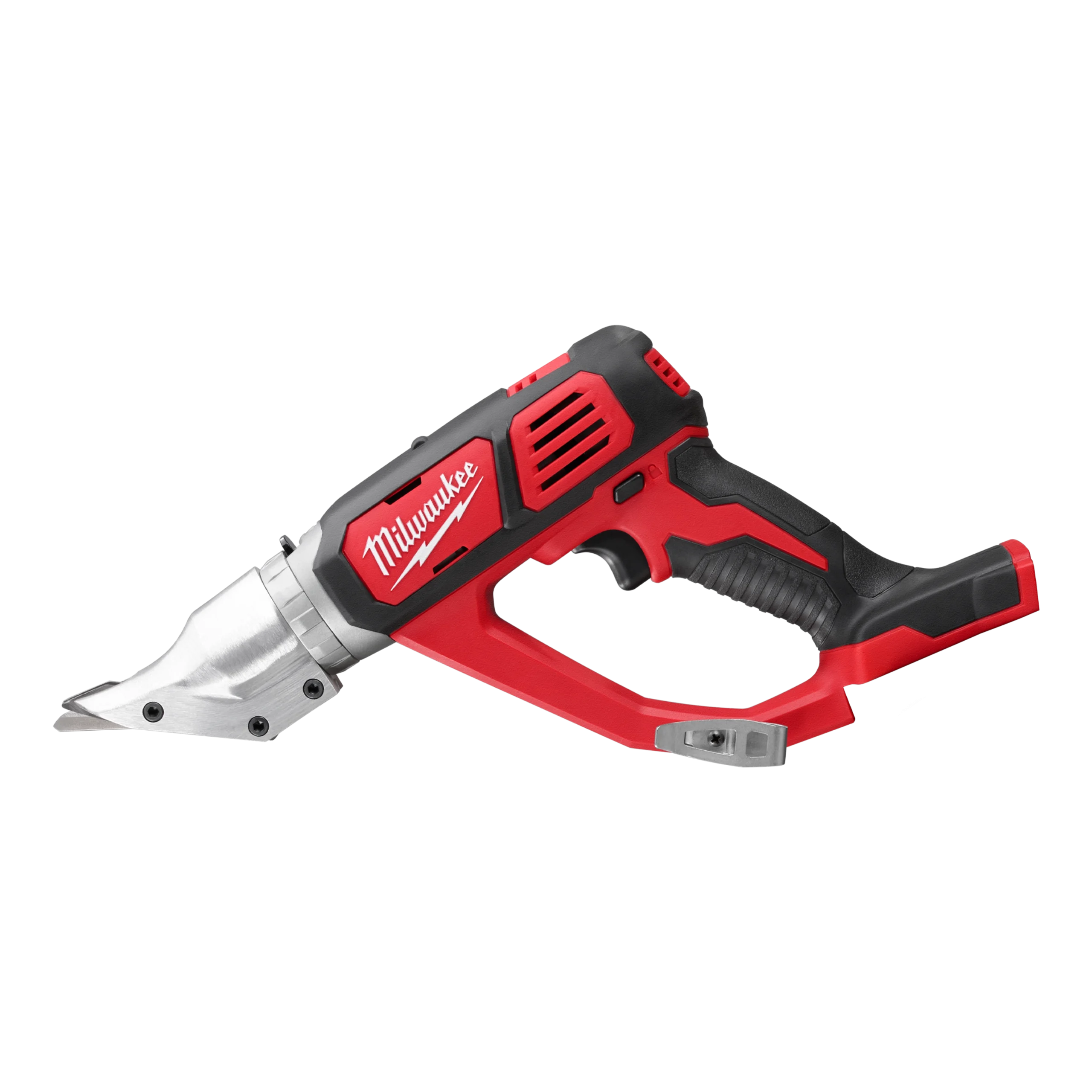
For repeat work on flat roofing panels, ductwork, or appliance sheet, look for cordless double-cut shears with published material-specific capacity and replaceable blades. Browse cordless double-cut metal shears in the battery system you already use. Check whether the listing is tool-only, whether the blades are stocked separately, and whether the package includes a battery and charger before comparing prices.
For curved cuts or corrugated metal, a cordless nibbler is more suitable. It is also easier to steer around a marked opening than a long shear. Search cordless metal nibblers, then verify the cutting capacity and minimum curve radius in the manufacturer’s specifications. A nibbler can leave a cleaner path through a profile, but its chips are sharp and can scatter into machinery or finished surfaces.
If the job is only a few short cuts in thin flashing, buying a dedicated cordless tool may not pay off. Quality aviation snips are inexpensive, need no charging, and are precise on short cuts. For occasional straight cuts in flat sheet, consider drill-powered metal shear attachments only if the attachment is rated for your material and your drill has enough control. They can be a budget compromise, but tend to feel less balanced than a purpose-built shear.
Battery and platform considerations
Cutting sheet metal is a sustained load, especially when the blades are dull or the stock is near the tool’s capacity. A small battery may be lighter but can run down sooner. For a day of repeated cuts, a second compatible pack avoids waiting at the charger; for a one-off repair, buying a larger battery may be unnecessary. Use the charger specified for the platform and avoid mixing damaged or mismatched packs.
Do not choose by battery voltage alone. A higher-voltage tool is not automatically the better shear for thin stock: blade geometry, speed control, tool balance, and serviceable cutting parts matter more for clean work. If you own several tools on one platform, keeping the shears within that ecosystem often saves money and simplifies charging. If you own no batteries, compare the full kit price—including charger and pack—against a corded shear or manual snips.
Cutting safely and avoiding bad cuts
Wear safety glasses and gloves suitable for sharp sheet edges; loose gloves or clothing can catch in moving tools, so follow the tool manual’s instructions. Clamp the sheet securely, support the offcut so it cannot twist into the blades, and keep hands clear of the cutting path. A nibbler’s punched chips are particularly sharp. Sweep them up rather than brushing them aside with bare hands.
Mark the line clearly and test the tool on a scrap of the same material and thickness. If the tool slows, chatters, or leaves a heavily burred edge, stop: the sheet may exceed the tool’s capacity, the blades may be worn, or the cut may be binding. Forcing it can damage the blades and distort the workpiece. Keep the tool square to the sheet when the design calls for a straight cut, and allow for the width of the waste strip on double-cut models.
Finally, protect the finished surface. Metal chips and the edge of the offcut can scratch painted panels. Put a sacrificial board beneath the sheet where practical, and deburr the finished edge with a suitable file or deburring tool. That small cleanup step is often the difference between a fast cut and a cut that is ready to handle.
Related guides
- Longest Lasting Lawn Mower Battery: AGM vs Lithium vs Flooded Lifespan and Cost per Season
- Duralast Gold Lawn Mower Battery Review: U1 Fit, CCA and When to Pay for AGM
- Greenworks Pro 80V 21-Inch Mower Review: Runtime Math, Push vs Self-Propelled and Yard Fit
- Bosch High Pressure Washer Gun Replacement: Fittings, Adapters and What Fits Your Model