
What's inside
As an Amazon Associate I earn from qualifying purchases. This post may contain affiliate links at no extra cost to you.
What to expect from a tool-battery vacuum
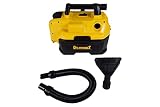
A cordless handheld vacuum that uses a power-tool battery can be a sensible shop or vehicle cleanup tool, especially if you already own batteries and a charger on that platform. The trade-off is size: most are bulkier and heavier than a small household handheld, and many are designed for dust and debris rather than deep cleaning upholstery or carpet.
Check the maker’s intended use before buying. A dry-only vacuum should not be used for spills, and fine dust can overwhelm a basic filter if the vacuum is not rated for it. Don’t assume a tool battery makes a vacuum suitable for drywall dust, ash, or liquid pickup. Follow the manual, use the specified filter, and empty the bin before debris reaches the filter or airflow falls off.
As an Amazon Associate we earn from qualifying purchases at no extra cost to you.


Compare by battery platform and job
Most choices are bare tools, so the real cost depends on whether you already own compatible batteries. These are practical differences to weigh; exact runtime and capacity vary by model, battery size, filter condition, and debris.
| Option | Best fit | Main trade-off |
|---|---|---|
| Vacuum for a battery platform you already own | Garage, vehicle, and quick jobsite cleanup | Lowest added cost if you have batteries; may be heavy with a large pack |
| Compact handheld on a smaller battery | Short cleanup jobs and tight spaces | Lighter, but may run for less time or lose suction sooner under heavy use |
| Higher-capacity battery with a tool vacuum | Longer cleanup sessions or larger debris loads | More runtime, but adds weight and cost |
| Small household handheld | Car interiors and light domestic messes | Often easier to handle, but requires a separate battery and charger ecosystem |
Start with the battery you own
Battery compatibility is the first filter, not an afterthought. A vacuum must be made for the exact tool platform and battery family; matching voltage alone does not make packs interchangeable. Check the tool’s product page for supported battery types, whether a battery and charger are included, and whether older packs are supported.
If you already have a few batteries, a bare tool is usually the cheaper route. If you have no batteries on that platform, add the cost of a pack and charger before comparing prices. Buying into a new ecosystem for a vacuum alone rarely makes sense unless you also expect to buy other tools.
For an existing platform, browse cordless handheld vacuums sold as bare tools. Check the listing carefully: product photos may show a battery that is not included.
Runtime, weight, and handling
Runtime is difficult to compare unless the manufacturer gives a test method. High suction, a clogged filter, dense debris, and a small battery all shorten a run. For intermittent cleanup, a compact pack may be enough; for a larger shop or vehicle, a second charged pack can be more practical than relying on one long session.
Consider the battery’s position and the vacuum’s balance. A tool can feel manageable when held low but tiring overhead or at arm’s length. A larger pack can extend runtime while making the vacuum noticeably heavier. If you can, handle the tool with the battery installed before buying.
Attachments also affect usefulness. A crevice nozzle helps with seat rails and bench gaps; a brush can loosen dust from mats and tool cases. A narrow nozzle may concentrate suction but is slower over broad areas. Don’t expect a compact dry vacuum to replace an extractor or a full-size shop vacuum for wet messes and large piles.
Filters, dust, and common failures
Filter upkeep often matters more than the battery. Fine dust loads a filter quickly, reducing airflow and making the motor work harder. Empty the bin outdoors if the debris is dusty, and clean or replace the filter only as the manual allows. A washable filter must be completely dry before reinstalling.
Watch for a drop in suction, a rising motor pitch, or dust escaping around the exhaust. Stop and inspect the bin, filter, seals, and hose or nozzle for blockage. Continuing to run a clogged vacuum is not a good way to get more runtime. Never vacuum hot ash, liquid, or combustible dust unless the specific tool is explicitly designed and rated for it.
Which type should you buy?
For sawdust, wood chips, and general dry cleanup around a workshop, a tool-platform vacuum is convenient because it shares batteries with the rest of your kit. Compare the maker’s stated filtration and intended materials before using one for fine dust. If you need repeated cleanup of drywall dust or other very fine material, use equipment intended for that work rather than choosing by battery compatibility alone.
For cleaning a car, a compact handheld may be easier to maneuver than a jobsite-style unit. If you already own a tool battery system and prioritize convenience over low weight, compare bare-tool handheld shop vacuums on nozzle options, filter access, and bin capacity. If you want a lighter option and don’t need long runtime, a small household model can be the better buy.
For occasional crumbs or a few minutes of cleanup, the cheapest compatible vacuum may be fine. Spend more only for a reason you can name: better handling, a useful attachment set, easier filter service, or a platform you already own. Before ordering, verify battery compatibility, included accessories, dry-versus-wet limits, and replacement-filter availability.
FAQ
Which type should you buy?
Related guides
- Longest Lasting Lawn Mower Battery: AGM vs Lithium vs Flooded Lifespan and Cost per Season
- Duralast Gold Lawn Mower Battery Review: U1 Fit, CCA and When to Pay for AGM
- Greenworks Pro 80V 21-Inch Mower Review: Runtime Math, Push vs Self-Propelled and Yard Fit
- Bosch High Pressure Washer Gun Replacement: Fittings, Adapters and What Fits Your Model