
What's inside
- What Is a Battery Powered Pressure Washer?
- How Does a Battery Powered Pressure Washer Work?
- Understanding PSI and GPM on Battery Pressure Washers
- How Long Does a Battery Powered Pressure Washer Run?
- Where Can You Use a Cordless Pressure Washer?
- Can a Battery Powered Pressure Washer Draw Water From a Bucket?
- What to Look for When Buying a Battery Powered Pressure Washer
- Battery Powered vs. Corded Electric vs. Gas Pressure Washers
- Safety and Maintenance Tips for Battery Pressure Washers
- Frequently Asked Questions
- Final Thoughts
As an Amazon Associate I earn from qualifying purchases. This post may contain affiliate links at no extra cost to you.
A battery powered pressure washer provides portable cleaning power without requiring a nearby electrical outlet or a gas engine. It is particularly useful for washing vehicles, bicycles, outdoor furniture, garden equipment, and lightly soiled outdoor surfaces. However, cordless models vary considerably in pressure, water flow, battery runtime, and water supply requirements.
The most important distinction is that not every battery powered pressure washer is designed for heavy-duty cleaning. Some compact models are better described as cordless power cleaners, delivering enough pressure for everyday rinsing but not necessarily enough water flow or cleaning performance for large concrete surfaces.
Understanding PSI, GPM, battery capacity, water intake systems, and accessory compatibility will help you choose the right machine. This guide explains how these tools work, where they perform best, their limitations, and what to consider before purchasing one.
As an Amazon Associate we earn from qualifying purchases at no extra cost to you.


Our Top Picks

What Is a Battery Powered Pressure Washer?
A battery powered pressure washer is a portable cleaning machine that uses rechargeable lithium-ion batteries to operate an electric motor and water pump. Instead of connecting the motor to a household electrical outlet, the machine draws energy from its battery pack.
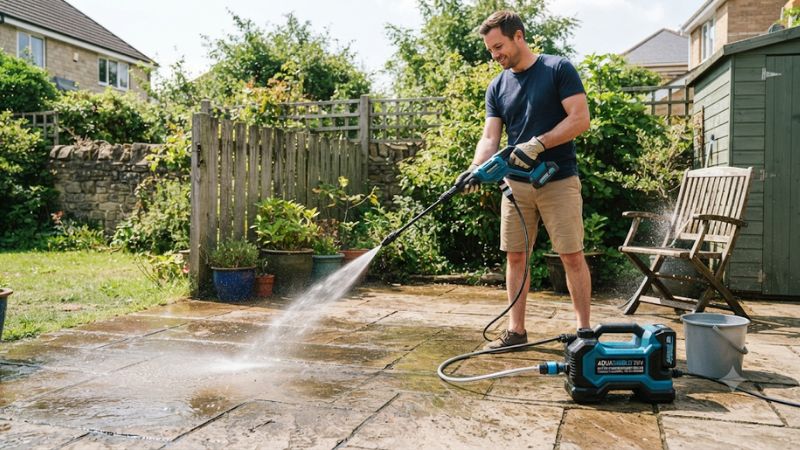
The motor drives the pump, which pressurizes incoming water and sends it through a high-pressure hose, spray gun, and nozzle. The nozzle controls the shape and concentration of the water stream.
Unlike conventional gas-powered pressure washers, cordless models do not require gasoline, engine oil, or combustion-related maintenance. They also eliminate the need to manage a power cord while cleaning.
Most battery-powered options fall into two categories.
Cordless Power Cleaners
These compact machines prioritize portability and convenience over maximum cleaning power.
Typical applications include:
- Rinsing bicycles, motorcycles, and outdoor equipment.
- Removing loose dirt from vehicles.
- Cleaning garden furniture and plastic containers.
- Washing muddy boots and tools.
- Rinsing camping equipment.
- Removing light dirt from small outdoor surfaces.
For example, the DEWALT DCPW550 is a 20V MAX cordless power cleaner rated at up to 550 PSI and 1.0 GPM under the manufacturer’s specified conditions.
This illustrates why buyers should not assume that every product marketed as a pressure washer has the performance of a conventional full-size machine.
Full-Size Battery Pressure Washers
Larger cordless pressure washers use more substantial pumps, batteries, and machine housings.
They may provide higher pressure and greater water flow than handheld power cleaners, making them more appropriate for regular household cleaning.
Depending on their specifications, they can handle:
- Patios and walkways.
- Outdoor steps.
- Fences and garden structures.
- Larger vehicles.
- Outdoor furniture.
- General residential surface maintenance.
However, even a powerful battery model has limitations. Large driveways, heavily stained concrete, and extensive restoration projects may require a corded electric or gas-powered pressure washer.
How Does a Battery Powered Pressure Washer Work?
The operating principle is similar to that of a conventional electric pressure washer. The primary difference is where the machine gets its electricity.
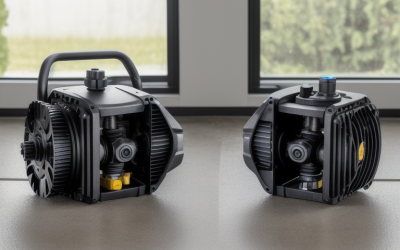
A typical cordless pressure washer contains several important components.
- Lithium-ion battery: Supplies electrical energy to the motor. Battery voltage and capacity influence the available power and potential operating time.
- Electric motor: Converts electrical energy into mechanical rotation to drive the pump.
- Water pump: Draws water from an approved supply and increases its pressure.
- Water inlet system: Connects the machine to a garden hose or compatible suction hose, depending on the design.
- High-pressure hose: Carries pressurized water from the pump to the spray gun.
- Spray gun and nozzle: Control water delivery and determine the spray pattern.
When the operator activates the trigger, water passes through the nozzle at the pressure generated by the pump. Releasing the trigger stops the spray, although the exact pump behavior depends on the machine’s control system.
Some cordless models also include adjustable power modes. A lower setting can reduce cleaning intensity and help conserve battery energy, while a higher setting provides more aggressive cleaning when the surface and manufacturer’s instructions permit it.
Understanding PSI and GPM on Battery Pressure Washers
Two specifications deserve particular attention when comparing cordless pressure washers: PSI and GPM.
They describe different aspects of cleaning performance, and neither should be considered independently.
What Does PSI Mean?
PSI stands for pounds per square inch. It measures water pressure.
A higher PSI generally provides greater force at the spray nozzle, which can help loosen stubborn dirt and deposits.
However, maximum advertised PSI does not automatically mean a machine will clean faster or perform better in every situation.
For example, a compact cordless cleaner rated at 550 PSI may be suitable for rinsing a bicycle or removing loose dirt from outdoor furniture. It should not automatically be considered an appropriate replacement for a higher-output machine designed for cleaning large concrete areas.
Also, check how the manufacturer measures maximum pressure. Some specifications apply only when using a particular nozzle or operating configuration.
What Does GPM Mean?
GPM stands for gallons per minute. It measures the volume of water delivered by the machine.
Water flow is important because cleaning involves more than loosening dirt. The machine must also move contaminated water and debris away from the surface.
A machine with relatively high pressure but limited flow may loosen dirt effectively while taking longer to rinse larger areas.
When evaluating a battery powered pressure washer, consider both specifications:
| Specification | What It Measures | Why It Matters |
| PSI | Water pressure | Helps loosen dirt and deposits |
| GPM | Water flow | Determines how much water reaches the surface |
| Battery voltage | Electrical platform voltage | Identifies the compatible battery family |
| Ah | Battery capacity | Helps estimate available energy |
| Wh | Battery energy | Provides a more useful basis for comparing battery capacity |
| Runtime | Operating duration | Determines how much work can be completed per charge |
Why PSI and GPM Should Be Considered Together
Imagine two cordless pressure washers with different pressure and water-flow ratings.
The first produces stronger pressure but delivers less water. The second provides lower pressure with greater water flow.
The first may be more effective at loosening certain deposits, while the second may rinse a larger surface more efficiently.
Neither is automatically better. The correct choice depends on the material, cleaning method, and type of dirt.
How Long Does a Battery Powered Pressure Washer Run?
Battery runtime depends on several factors, including battery capacity, motor load, pressure setting, water flow, and operating conditions.
A larger battery generally stores more energy, but it does not guarantee a particular operating time.
For example, a 20V battery rated at 5Ah has a nominal energy rating of approximately 100Wh:
20V × 5Ah = 100Wh
This provides a useful starting point when comparing battery capacity.
However, actual usable energy and operating time depend on the electrical system, discharge characteristics, temperature, and workload.
Factors That Affect Runtime
Pressure setting: Operating at a higher power setting can increase energy consumption.
Water flow: Higher water delivery can require more work from the pump.
Battery capacity: A larger Ah rating generally provides more stored energy within the same compatible voltage platform.
Battery condition: Older or damaged batteries may deliver less usable capacity.
Temperature: Very hot or cold conditions can affect lithium-ion battery performance.
Cleaning workload: Continuous operation under demanding conditions can consume energy faster than intermittent rinsing.
One important consideration is that manufacturer runtime claims may use specific operating conditions. A claimed maximum runtime should not be interpreted as guaranteed continuous operation at maximum pressure.
For larger cleaning projects, consider purchasing a compatible spare battery if the manufacturer supports battery swapping during operation.
Where Can You Use a Cordless Pressure Washer?
Battery powered pressure washers are most useful when portability is more important than maximum cleaning performance.
1. Washing Cars and Motorcycles
Cordless models can help remove loose road dirt, dust, and mud from vehicle surfaces.
They are particularly convenient when washing a vehicle in an area without an accessible electrical outlet.
However, use an appropriate nozzle, maintain a safe distance, and follow the vehicle manufacturer’s cleaning recommendations.
Avoid directing concentrated high-pressure water toward electrical connectors, damaged paint, seals, or sensitive components.
For tires and valves, follow the pressure washer manual’s specific distance requirements.
2. Cleaning Bicycles and Outdoor Equipment
Bicycles, lawn equipment, wheelbarrows, and garden tools frequently accumulate mud and loose debris.
A cordless power cleaner can simplify rinsing these items without transporting a large pressure washer.
Use caution around bearings, electrical components, lubrication points, and other areas where water penetration could cause damage.
3. Cleaning Patio Furniture
Plastic chairs, outdoor tables, and weather-resistant furniture can often be cleaned using an appropriate spray pattern.
Start with a wider spray and lower pressure, then increase cleaning intensity only when the material and manufacturer instructions allow it.
4. Washing Small Outdoor Surfaces
Some higher-output battery pressure washers can handle light cleaning on small patios, outdoor steps, and fences.
However, results depend on the actual pressure, water flow, surface condition, and cleaning accessory.
A compact power cleaner may remove loose dirt but struggle with deeply embedded algae, old stains, or extensive concrete contamination.
Can a Battery Powered Pressure Washer Draw Water From a Bucket?
Yes, but only if the specific machine supports suction-based water intake.
This feature is particularly useful for portable cleaning because it reduces dependence on a fixed garden hose connection.
Some cordless models include a suction hose with a filter that allows the pump to draw water from a bucket or another approved fresh-water source.
For example, the DEWALT DCPW550 supports both garden-hose and suction-hose connections when used with its specified adapters.
However, not every battery powered pressure washer supports this arrangement.
Garden Hose vs. Bucket Water Supply
| Water Supply | Advantages | Limitations |
| Garden hose | Convenient continuous water supply | Requires an accessible connection |
| Water bucket | Portable and useful away from a faucet | Limited water capacity |
| Approved water container | Useful for mobile cleaning | Requires compatible suction equipment |
| Natural water source | May offer convenient access | Only use when explicitly permitted by the manufacturer |
When using a suction hose, make sure its filter remains submerged and the water supply is sufficient.
Never operate the pump without water unless the manufacturer explicitly permits the operating condition.
Dirty water, sand, and other particles can damage pump components. Use clean water and the supplied filtration system.
Also, do not assume that a pressure washer can draw water from every pond, river, or storage container. Follow the manufacturer’s restrictions on water quality and permitted sources.
What to Look for When Buying a Battery Powered Pressure Washer
Choosing the right cordless pressure washer involves more than comparing advertised PSI ratings.
Consider the following factors before making a purchase.
1. Choose the Right Battery Platform
If you already own cordless tools, check whether the pressure washer uses a battery platform you currently have.
Common battery ecosystems include DEWALT 20V MAX, Milwaukee M18, Ryobi ONE+, and other manufacturer-specific systems.
However, battery compatibility must be confirmed using the exact tool and battery model.
A battery that physically fits does not necessarily guarantee electrical compatibility.
Also check whether the pressure washer is sold as a bare tool or a complete kit.
A bare-tool package typically excludes the battery and charger, while a kit may include one or more batteries and a compatible charger.
2. Compare Battery Capacity
Battery capacity is measured in amp-hours (Ah).
A higher Ah rating generally means more stored energy within the same voltage platform.
For occasional cleaning, a smaller battery may be sufficient. For larger jobs, a higher-capacity compatible battery can reduce interruptions for charging.
Remember that larger batteries may also increase the machine’s total weight.
3. Check Pressure and Water Flow
Match PSI and GPM to your intended workload.
For light rinsing, portability and manageable water delivery may matter more than maximum pressure.
For cleaning larger outdoor surfaces, look for a machine with sufficient pressure and water flow for the manufacturer’s stated applications.
Do not select a model based on maximum PSI alone.
4. Examine Water Intake Options
If you regularly clean vehicles away from home, a suction hose can be particularly useful.
Check whether the package includes:
- A suction hose.
- An inlet filter.
- A garden-hose adapter.
- A compatible water connector.
- Any required priming equipment.
Confirm whether these accessories are included or sold separately.
5. Evaluate Nozzles and Accessories
Different nozzles produce different spray patterns.
Common options include:
- 0-degree nozzle: Concentrated stream with a high risk of surface damage and injury.
- 15-degree nozzle: Narrower spray for more concentrated cleaning.
- 25-degree nozzle: A broader spray for general cleaning.
- 40-degree nozzle: Wider coverage for gentler rinsing.
These descriptions are general. Always follow the nozzle selection and surface recommendations in the specific machine’s manual.
A foam bottle or detergent attachment can also be useful for vehicle washing, but only use cleaning products approved for the machine and intended surface.
6. Consider Weight and Portability
A handheld cordless cleaner may be easier to carry than a larger wheeled pressure washer.
Check the complete operating weight, including the battery, hose, spray gun, and accessories.
This matters when carrying the machine between locations or storing it in a vehicle.
7. Check Warranty and Replacement Parts
Before purchasing, review the manufacturer’s warranty for the exact regional model.
Pay particular attention to coverage for:
- The pressure washer itself.
- Battery packs.
- Chargers.
- Pumps and seals.
- Accessories.
Battery warranties may differ from tool warranties. Also check whether replacement hoses, filters, connectors, and nozzles are available.
Battery Powered vs. Corded Electric vs. Gas Pressure Washers
Each power source has different advantages.
| Feature | Battery Powered | Corded Electric | Gas Powered |
| Power source | Rechargeable battery | Electrical outlet | Gasoline |
| Portability | Excellent | Limited by power cord | Generally good |
| Runtime | Limited by battery capacity | Continuous while powered | Limited by fuel |
| Maintenance | Relatively low | Relatively low | Generally higher |
| Noise | Usually relatively low | Usually relatively low | Usually higher |
| Best application | Mobile, light-to-moderate cleaning | Regular household cleaning | Demanding outdoor cleaning |
A battery-powered machine is attractive when freedom from electrical outlets is important.
A corded electric model is often a better choice for longer household cleaning sessions because it does not require battery recharging.
A gas-powered machine may be more suitable for demanding jobs involving large surfaces and heavy contamination.
Consumer Reports’ 2026 pressure washer coverage also highlights an important trade-off: battery convenience does not eliminate the performance limitations that can make larger cleaning jobs take longer.
Safety and Maintenance Tips for Battery Pressure Washers
Although cordless pressure washers do not require a mains power connection during operation, their high-pressure water streams can still cause serious injuries.
Follow These Safety Practices
- Wear appropriate eye protection and closed-toe footwear.
- Never direct the spray toward people, animals, or exposed skin.
- Never use your hands to check for leaks in a pressurized hose or connection.
- Keep the spray away from electrical equipment and sensitive components.
- Never operate a damaged hose, gun, battery, or machine.
- Switch off the machine before changing nozzles or accessories.
- Relieve pressure according to the manufacturer’s shutdown procedure before disconnecting components.
- Keep children and bystanders away from the working area.
High-pressure water can penetrate skin and cause serious injection injuries. Even a small-looking wound requires immediate medical evaluation if a high-pressure stream has contacted the body.
Avoid using zero-degree nozzles unless the manufacturer specifically permits their use for a suitable application. Their concentrated streams can damage surfaces and increase injury risks.
Maintain the Battery and Pump
Proper maintenance helps preserve performance and reduce avoidable damage.
After each use:
- Switch off the machine and remove the battery when instructed by the manual.
- Disconnect the water supply.
- Release remaining system pressure using the manufacturer’s procedure.
- Clean the inlet filter if necessary.
- Inspect hoses, connectors, and spray accessories for damage.
- Store the equipment in a clean, dry location.
Do not immerse the battery or charger in water. Keep battery contacts clean and dry.
Store lithium-ion batteries within the manufacturer’s recommended temperature and charging conditions. Avoid leaving them in excessively hot vehicles or exposing them to moisture.
For long-term storage, follow the manufacturer’s recommendations for battery charge level, water drainage, and freeze protection.
Frequently Asked Questions
Is a battery powered pressure washer powerful enough to wash a car?
Yes. Many cordless power cleaners can remove loose dirt, mud, and road dust from vehicle surfaces. However, choose a suitable nozzle and maintain an appropriate distance to avoid damaging paint, trim, seals, or sensitive components.
Can a cordless pressure washer replace a gas pressure washer?
Generally, no. Battery-powered models prioritize portability and convenience, while gas machines are typically better suited to demanding cleaning workloads. Some larger battery models can handle substantial residential jobs, but performance depends on their actual pressure and water flow.
How long does a battery powered pressure washer last on one charge?
Runtime depends on battery capacity, pressure setting, water flow, workload, and battery condition. Check the manufacturer’s runtime information for the exact tool and battery configuration rather than relying on a general estimate.
Can I use a battery pressure washer without a garden hose?
Yes, if the machine supports suction-based water intake. Compatible models can draw water from an approved bucket or container using a suction hose and filter. Always verify the water-source requirements in the owner’s manual.
Final Thoughts
A battery powered pressure washer is a practical cleaning solution when portability, convenience, and freedom from electrical outlets are more important than maximum cleaning power.
For washing vehicles, bicycles, outdoor furniture, and garden equipment, a compact cordless power cleaner may provide all the performance needed. Larger battery-powered pressure washers can handle more demanding residential maintenance, provided their pressure and water-flow specifications match the job.
Before purchasing, compare PSI, GPM, battery capacity, water intake options, compatible accessories, and package contents. Pay particular attention to whether the battery and charger are included.
Ultimately, the best battery powered pressure washer is not necessarily the model with the highest advertised pressure. It is the one that delivers appropriate cleaning performance, sufficient runtime, and reliable portability for the work you actually need to complete.
Related guides
More from Amazon
Programs that pair well with the guide above. Offers and eligibility are set by Amazon and may change.
A free business account with business pricing and bulk-buying tools for work, shop or home office.
Create a business accountFree shipping on eligible items, Prime Video and more. Eligible new members can start with a free trial.
Start a Prime free trialAudiobooks and podcasts to listen to on the go. Eligible new members can start with a free trial.
Try Audible freeAd-free music streaming. Eligible new subscribers can start with a free trial.
Try Music Unlimited freeAs an Amazon Associate we earn from qualifying purchases.
Write Your Review
No reviews yet. Be the first to share your experience!