What's inside
As an Amazon Associate I earn from qualifying purchases. This post may contain affiliate links at no extra cost to you.
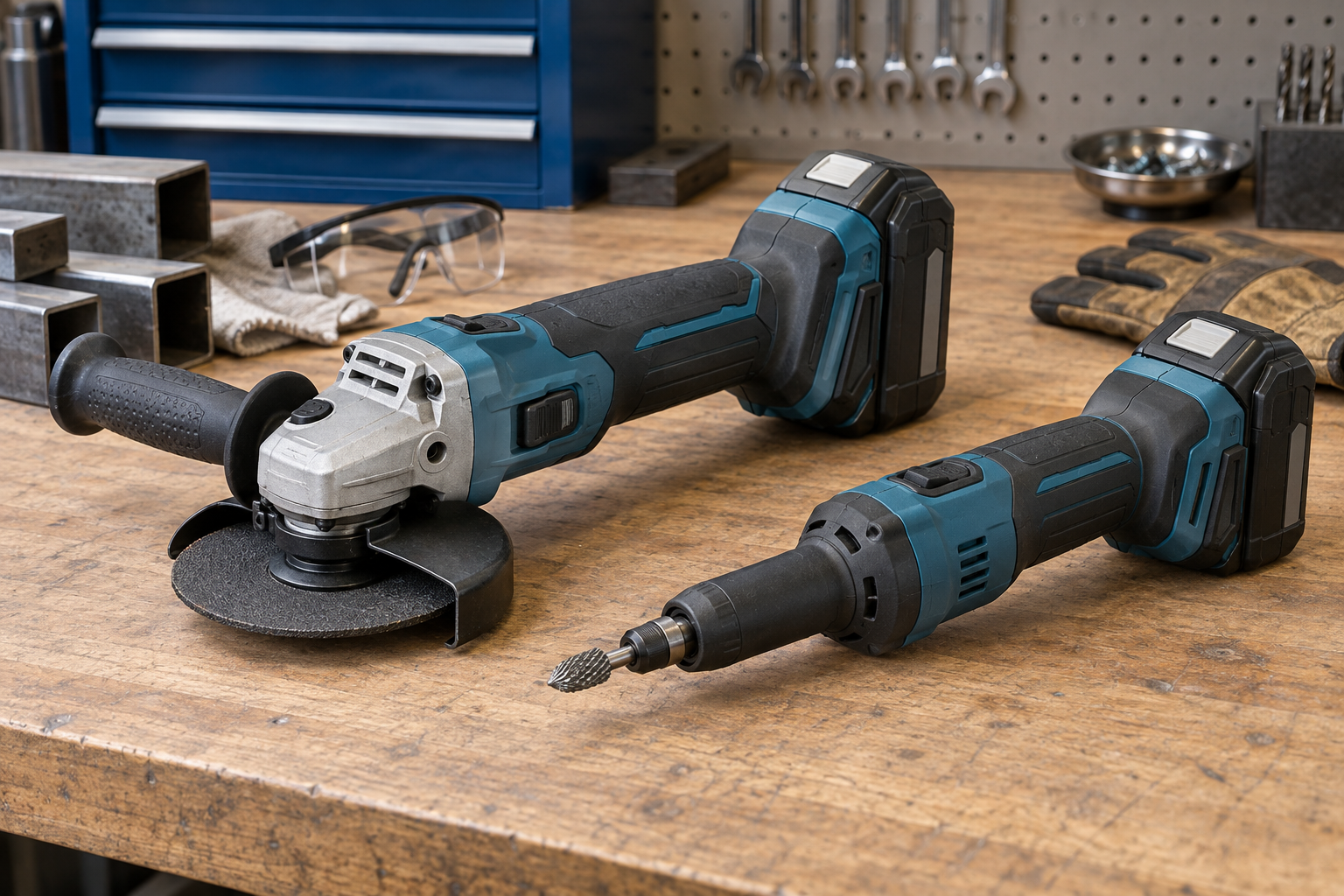
Grinding welds in a small shop is a job for a compact 4½-inch grinder, not a large 7-inch machine. A cordless model avoids dragging a lead around a bench, but it also puts a limit on how long you can grind before swapping batteries. For occasional cleanup, a midrange grinder and two batteries are often enough. For frequent weld dressing, the battery platform and the grinder’s control matter more than a headline maximum RPM.
As an Amazon Associate we earn from qualifying purchases at no extra cost to you.


What matters when grinding welds
Most small-shop weld cleanup involves knocking down a bead with a grinding wheel, then blending scratches with a flap disc. A 4½-inch wheel gives useful access around brackets and corners without removing material as aggressively as a larger wheel. Check that the grinder accepts the wheel sizes and guard configuration you need, and use a wheel rated for at least the grinder’s no-load speed.
Look for a paddle switch or a well-placed slide switch you can operate while wearing gloves, a tool-free guard, and a side handle that can be fitted on either side. A brake is useful when you need to set the grinder down quickly between welds, but it does not replace waiting for the wheel to stop before putting the tool away. Variable speed can help with flap discs and finishing, though it is not essential for basic weld grinding.
Weld dressing loads the motor hard. A small, low-capacity battery may run the grinder, but it is more likely to bog down or trigger a thermal shutdown during sustained pressure. Use a light touch: let the wheel cut instead of leaning on it. Heavy pressure slows the wheel, heats the workpiece, and drains the pack faster.
Cordless grinder options
| Option | Best fit | Trade-off |
|---|---|---|
| Compact 18V or 20V 4½-inch grinder | Occasional repairs and short welds | Can feel slow under sustained load; battery size matters |
| Full-size 18V or 20V 4½-inch grinder | Regular shop use with room for a larger pack | Heavier and often less comfortable in tight spaces |
| High-output battery grinder | Longer grinding sessions or demanding stock removal | Higher battery cost and more weight in the hand |
| Corded 4½-inch grinder | Long, continuous grinding at a fixed bench | Needs an outlet and a cord kept clear of sparks and wheels |
Choosing a grinder and battery
If you already own cordless tools, staying on that battery platform is usually the sensible choice. A bare grinder can cost less than starting over with a new ecosystem, and a spare battery may be more useful than a small upgrade in grinder features. Compare the bare-tool price with the cost of a kit; kits can be worthwhile if they include a higher-capacity pack and a charger you will use.
For a first purchase, look at a cordless 4½-inch angle grinder in the battery system you plan to keep. Do not choose solely by advertised voltage: 18V and 20V-max tools are broadly comparable categories, and real runtime depends on battery capacity, motor efficiency, wheel choice, and how hard you push the tool.
A 4.0Ah or 5.0Ah pack is a practical starting point for weld cleanup. A smaller pack keeps the tool lighter but may require frequent changes; a larger high-output pack can sustain work better, at the cost of extra weight. If you grind only a few short beads at a time, the cheaper standard pack is fine. If you regularly dress several welds in one session, budget for two compatible packs and a charger that can keep one ready while you work.
For frequent use, compare a high-output cordless grinder with the standard model in your platform. The more powerful option is not automatically better in a cramped shop: added weight and bulk can make overhead or inside-corner work tiring. Handle both if possible, with a battery attached. A few ounces at the tool can matter during repeated passes.
Working efficiently in a small shop
Use a grinding wheel for reducing a proud bead, then switch to a flap disc for blending. A 40- or 60-grit flap disc removes material quickly; 80 grit leaves a finer finish but takes longer. Do not use a grinding wheel’s edge for side grinding unless the wheel is specifically rated for it. Keep the guard in place and aim sparks away from batteries, cords, gas cylinders, and combustible dust.
Small shops often have limited ventilation and crowded benches. Clamp the work securely, keep the grinder’s air vents clear, and make sure sparks cannot reach oily rags or wood shavings. Wear safety glasses under a face shield, hearing protection, and suitable gloves. A face shield alone does not protect your eyes from fine particles.
Common problems are easy to misread. If the grinder stops under load, ease pressure first; if it keeps stopping, let the battery and tool cool and try a charged, higher-capacity pack. A hot battery should not be left in a charger until it cools. If the wheel chatters, check for a damaged disc, a loose flange, or a workpiece that is not clamped firmly. Replace cracked, chipped, or expired wheels rather than testing them on the tool.
When a corded grinder makes more sense
Battery grinders are convenient for moving around a small shop, but they are a poor bargain if you spend hours continuously grinding at one bench. A basic corded 4½-inch grinder is cheaper to buy and does not pause for battery changes. If that describes your work, keep a corded tool for long sessions and reserve the cordless grinder for quick jobs, fit-up, and cleanup away from an outlet. For intermittent weld dressing, one cordless grinder, two suitable batteries, and a flap-disc assortment make a practical setup without buying more tool than the work demands.
Related guides
- Longest Lasting Lawn Mower Battery: AGM vs Lithium vs Flooded Lifespan and Cost per Season
- Duralast Gold Lawn Mower Battery Review: U1 Fit, CCA and When to Pay for AGM
- Greenworks Pro 80V 21-Inch Mower Review: Runtime Math, Push vs Self-Propelled and Yard Fit
- Bosch High Pressure Washer Gun Replacement: Fittings, Adapters and What Fits Your Model