What's inside
As an Amazon Associate I earn from qualifying purchases. This post may contain affiliate links at no extra cost to you.
A cordless dust extractor is useful when the job moves faster than a corded vacuum can follow: drilling a few holes, cutting trim outdoors, or cleaning up a service call. The catch is that a vacuum can drain a tool battery quickly, and not every extractor on a platform is a good substitute for a shop vacuum. Choose by the work you actually do, not just by the battery logo.
As an Amazon Associate we earn from qualifying purchases at no extra cost to you.

What to look for
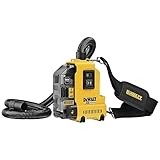
Check the extractor’s airflow, filtration, capacity, and tool-activation options. Airflow helps clear dust; a HEPA filter matters when fine dust is a health concern or required by the job. A small onboard unit is convenient for drilling and spot cleanup, but its bin fills quickly and it is not meant to replace a high-capacity jobsite vacuum. For sanding or cutting, confirm that the unit can connect to the tool and run continuously or start automatically.
Battery runtime is the main compromise. A vacuum pulls power steadily, so a compact battery that lasts through several screwdriving sessions may run flat much sooner under extraction. If you already own batteries, check the extractor’s voltage and platform compatibility, then consider whether your largest battery is available for the job. Do not assume that a higher-capacity battery will fit every tool in a brand family; platform generations and voltage classes can differ.
Compare the main types
| Type | Best for | Trade-off |
|---|---|---|
| Compact hand-tool extractor | Drilling, anchors, and small cleanup jobs | Limited bin size and runtime; often a poor choice for long sanding sessions |
| Portable jobsite extractor | Connecting to sanders, saws, or multiple tools | Bulkier to carry and typically needs larger batteries for useful runtime |
| Cordless wet/dry vacuum | General cleanup where there is no outlet | May lack fine-dust filtration or convenient automatic tool activation |
Choose the battery platform you already own
For most buyers, the best value is an extractor that uses batteries already in the kit. A dedicated vacuum battery adds cost, charger space, and another system to maintain. If you own tools from more than one brand, compare the cost of the bare extractor with the cost of a battery and charger bundle before switching platforms for one appliance.
Makita 18V LXT, Milwaukee M18, DeWalt 20V MAX, and Bosch 18V users can each find cordless extraction options within their platform. Availability, capacity, and tool-connection features vary by model and region, so verify those details before ordering. Start with an 18V LXT dust extractor search or a Milwaukee M18 extractor search if those are the batteries you already have.
On a job that needs continuous extraction, keep a spare charged battery nearby and plan for swaps. A single small pack may be enough for a few holes or a brief cleanup, but it can be frustrating for extended sanding or repeated cutting. Battery capacity is usually stated in amp-hours (Ah); a larger Ah pack generally stores more energy, but adds weight and does not turn a compact extractor into a high-airflow corded unit.
Match the extractor to the dust
For occasional drilling into masonry, a compact extractor can keep dust off the floor and out of the tool, but use the manufacturer’s recommended shroud or attachment. A loose nozzle held near the hole may miss much of the dust. For extended concrete work, silica exposure is a serious concern: use a suitable dust-control setup, appropriate filtration, and the controls required for the job. A small battery vacuum should not be treated as proof that a task is safe.
For sanding, check that the hose and adapter fit the sander’s dust port. A mismatch can leave a gap that leaks dust or restrict airflow enough to reduce collection. Bagged operation can make disposal cleaner, while a washable or reusable filter may cost less over time but needs careful cleaning. Never shake fine dust into the air or run a vacuum with a damaged, wet, or poorly seated filter unless it is explicitly designed for that use.
For general cleanup, a cheaper cordless wet/dry vacuum can be fine if you are collecting coarse debris and do not need automatic tool control or fine-dust filtration. It is a less suitable choice for long sanding sessions or regulated dust work. Check whether the specific unit supports wet pickup; many dust extractors are intended for dry dust only.
Before you order
Confirm that the listing is for the correct voltage platform and whether it includes a battery, charger, hose, adapter, and dust bag. Bare-tool pricing can look attractive until you discover that the connection needed for your sander is a separate accessory. Check the bin capacity and filter type, too: frequent emptying costs time, while a filter that clogs quickly can make the extractor feel weak even with a charged battery.
If you are comparing another common platform, browse a DeWalt 20V MAX extractor search and compare the bare-tool cost against the batteries you own. Buy the compact model for short, mobile tasks; step up to a larger portable extractor when tool-connected collection and longer sessions matter. If the work is mostly in one shop, a corded extractor is often the more practical choice: it avoids battery swaps and lets you spend the money on filtration, capacity, and a good hose instead.
Related guides
- Longest Lasting Lawn Mower Battery: AGM vs Lithium vs Flooded Lifespan and Cost per Season
- Duralast Gold Lawn Mower Battery Review: U1 Fit, CCA and When to Pay for AGM
- Greenworks Pro 80V 21-Inch Mower Review: Runtime Math, Push vs Self-Propelled and Yard Fit
- Bosch High Pressure Washer Gun Replacement: Fittings, Adapters and What Fits Your Model