What's inside
As an Amazon Associate I earn from qualifying purchases. This post may contain affiliate links at no extra cost to you.
Overhead concrete fastening is a poor place to improvise. A screw gun that is heavy, hard to control, or poorly matched to the anchor can turn a quick job into a dropped tool, a stripped head, or a loose attachment. For most one-off and occasional work, a cordless drill or impact driver with the correct concrete screw bit is enough. A dedicated fastening tool makes more sense when you are driving many screws and need consistent depth without tiring your wrist.
As an Amazon Associate we earn from qualifying purchases at no extra cost to you.


What counts as a concrete screw gun
Concrete screws cut or form threads in a correctly sized pilot hole in masonry. They are not the same as drywall screws, nor do they work like powder-actuated pins. A dedicated concrete screw installation tool is designed around a particular fastener system; many use a nosepiece or depth-setting feature to help seat screws consistently. Some tools marketed as screw guns are general-purpose drywall tools, which are not automatically suitable for concrete screws.
Check that the tool maker approves the fastener type and size you intend to use. Concrete screw manufacturers specify the pilot-hole diameter, depth, minimum embedment, edge distance, and installation method. Follow those instructions rather than relying on a tool’s advertised torque or speed alone.
Which tool to buy
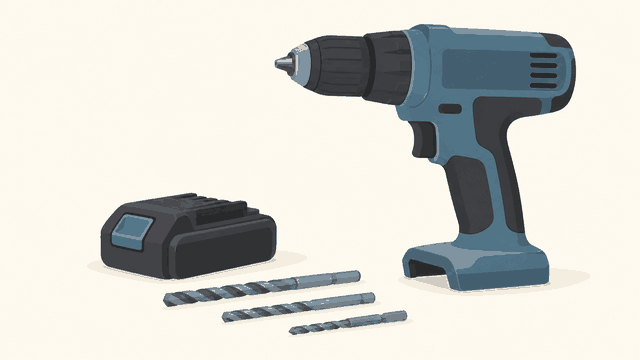
For a few holes, use a hammer drill to make the specified pilot holes, then drive the screws with a cordless drill or impact driver and the correct bit. This is the cheapest and most flexible setup if those tools are already in your kit. It is slower for repetitive work, and an impact driver can make it harder to feel when a screw is seated. Stop if the head begins to cam out or the fastener spins without tightening.
For repeated overhead installation, consider a cordless concrete screw installation tool that is explicitly compatible with your chosen fasteners. A purpose-built tool can reduce the effort of controlling each screw and may improve consistency, but it costs more and can lock you into a specific fastener system. Check whether the package includes a battery and charger; bare tools are useful only if you already own a compatible battery.
If the work is occasional but awkward, a compact drill and a good overhead support position are often a better buy than a specialty tool. If you are installing dozens or hundreds of fasteners, compare purpose-built options with the cost of spare batteries, bits, and the required screw system—not just the tool price.
Tool choices at a glance
| Setup | Best for | Trade-offs |
|---|---|---|
| Hammer drill plus drill or impact driver | Small jobs, mixed tasks, existing tool-platform owners | More tool changes; depth and seating depend on operator control |
| Dedicated cordless concrete screw tool | Repeated installation with a compatible screw system | Higher cost; check fastener compatibility, battery inclusion, and service support |
| Corded or rented specialty tool | Large jobs where runtime or purchase cost matters | Cord management overhead, or limited access and availability with rental |
What matters overhead
Weight and balance: A tool that feels manageable at waist height can become tiring above your head. Compare tool weight with the battery attached, not the bare-tool figure. A compact battery may reduce fatigue, while a larger pack can add runtime but shift the tool’s balance. If possible, hold the tool in the position you will actually use.
Depth control: Consistent seating matters more than maximum speed. A depth stop or compatible nosepiece can help prevent overdriving, but it does not replace a test fastening. Overdriving can damage the screw head or material; stopping too early can leave the fixture loose.
Battery platform: If you own cordless tools, staying within that brand’s battery system can save money and simplify charging. Compare the bare tool with a kit. For a single short job, a kit may cost more than buying or borrowing a suitable bare tool; for regular overhead work, a spare battery avoids waiting mid-task. Use only batteries and chargers approved for the platform, and inspect packs for damage before working above people or fragile surfaces.
Fastener and bit supply: Confirm that replacement bits and screws are readily available in the lengths you need. A concrete screw and masonry-bit selection can help you compare common head styles and accessory availability, but match the screw to the manufacturer’s installation instructions and the application. Do not substitute a similar-looking bit.
Avoid the common failures
Drill each pilot hole to the specified diameter and depth. Dust left in the hole can interfere with seating, so clear it using the method recommended by the fastener maker. If the hole is oversized, damaged, or drilled into weak or cracked concrete, do not expect a longer screw to fix it. Relocate the fastener or use an approved alternative.
Keep the tool square to the surface and support it with both hands when its design allows. Wear eye protection, and use appropriate dust control; overhead drilling sends debris toward your face. Keep other people out of the drop zone. Do not fasten into concrete until you have checked for embedded services and confirmed the substrate is suitable.
Test the setup on a representative spot before committing to a run. If a screw binds, strips, or refuses to reach the required seating depth, stop and diagnose the hole, bit, screw, and substrate. For structural, overhead life-safety, or code-regulated attachments, use an engineered fastening specification and the required inspection or testing; a convenient cordless tool is not a substitute for a rated connection.
Related guides
- Longest Lasting Lawn Mower Battery: AGM vs Lithium vs Flooded Lifespan and Cost per Season
- Duralast Gold Lawn Mower Battery Review: U1 Fit, CCA and When to Pay for AGM
- Greenworks Pro 80V 21-Inch Mower Review: Runtime Math, Push vs Self-Propelled and Yard Fit
- Bosch High Pressure Washer Gun Replacement: Fittings, Adapters and What Fits Your Model