Our Top Picks


What's inside
- 1. An 18-gauge brushless brad nailer on a flagship battery platform
- 2. The value-platform 18-gauge, if you are honest about volume
- 3. A 23-gauge pin nailer, but only as your second nailer
- 4. A 16-gauge straight finish nailer, when trim gets thick
- What to skip
- How to choose the best cordless brad nailer for your work
- FAQ
- 1. An 18-gauge brushless brad nailer on a flagship battery platform
- 2. The value-platform 18-gauge, if you are honest about volume
- 3. A 23-gauge pin nailer, but only as your second nailer
- 4. A 16-gauge straight finish nailer, when trim gets thick
- What to skip
- How to choose the best cordless brad nailer for your work
- FAQ
As an Amazon Associate I earn from qualifying purchases. This post may contain affiliate links at no extra cost to you.
Most people buy the wrong best cordless brad nailer because they shop on price and end up with a tool that leaves proud nails in poplar, dry-fires on the last two nails of a run, and needs a hex key every time it jams. A brad nailer is not a tool where the cheapest option quietly works. It either drives a 2-inch brad flush into a stud through pine casing, every time, or it wastes twenty minutes of your morning while you chase misfires around a door opening.
This is ranked by what to buy first, not by what costs least. The order assumes you are building out a trim kit from nothing, or replacing a hose-and-compressor setup that you are tired of dragging up stairs. Each entry states the job it unlocks, because that is the only reason to own a second nailer.
As an Amazon Associate we earn from qualifying purchases at no extra cost to you.




| Rank | Tool type | Job it unlocks | Who should skip it |
|---|---|---|---|
| 1 | 18ga cordless brad nailer, brushless, flagship platform | Baseboard, casing, shoe molding, cabinet face frames | Nobody building trim |
| 2 | 18ga cordless brad nailer, value platform | Same jobs, tighter budget, occasional use | Daily production trim carpenters |
| 3 | 23ga cordless pin nailer | Delicate returns, small profiles, glue-ups with no visible hole | Anyone who has not bought an 18ga yet |
| 4 | 16ga cordless straight finish nailer | Thick jambs, stair skirts, exterior trim, structural-ish trim | DIYers doing light interior work only |
| 5 | Pneumatic 18ga plus small compressor | High-volume shop work at a bench | Anyone working in occupied homes |
1. An 18-gauge brushless brad nailer on a flagship battery platform
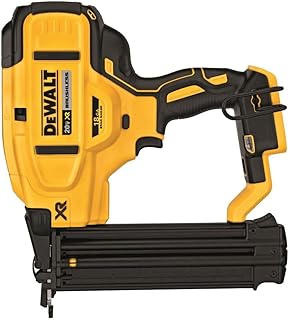
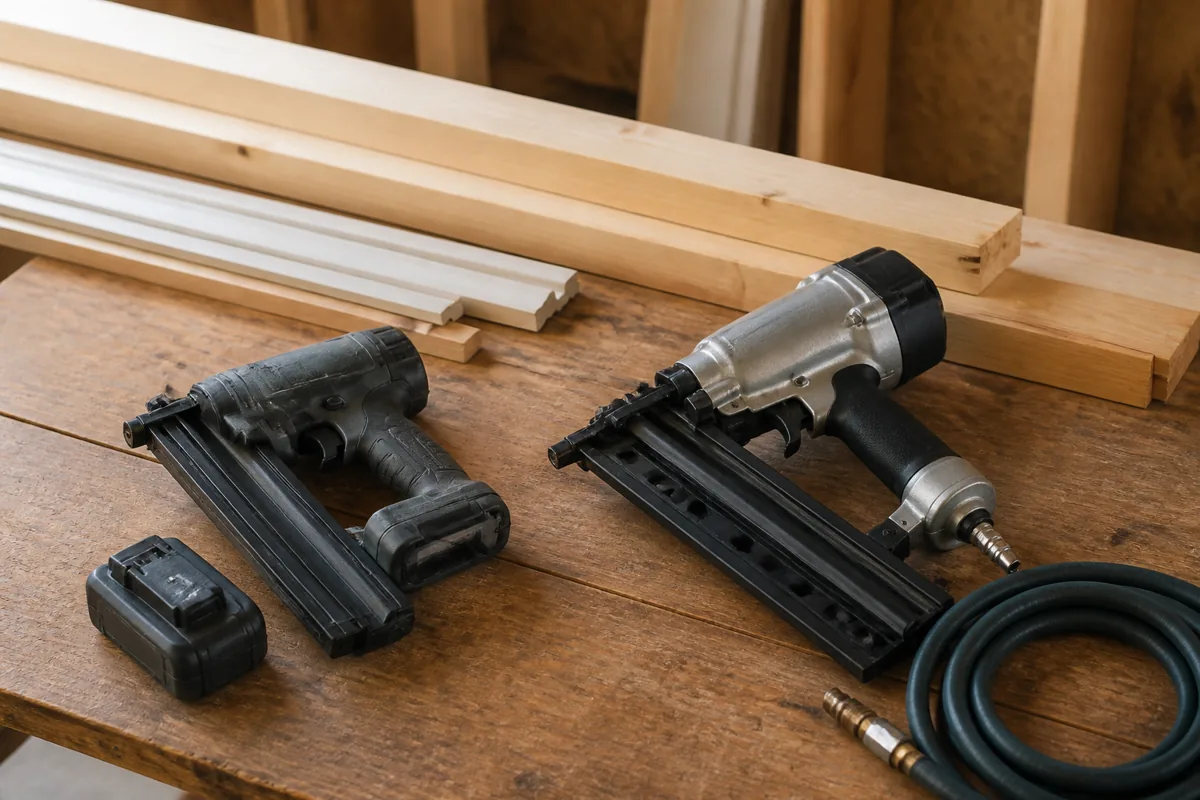
This is the first nailer to buy and for most people it is the only one they need. Eighteen gauge is the sweet spot: the brad is thin enough that the hole disappears under a dab of filler, and stout enough to hold baseboard, door casing, window stool, crown, and cabinet face frames. If you already own DeWalt XR, Milwaukee M18 FUEL, Makita LXT, or Ryobi ONE+ batteries, buy the bare tool on that platform and stop thinking about it.
What separates the good ones from the frustrating ones is not power, it is behavior. Look for a tool-free depth adjustment dial you can turn with a gloved thumb, a tool-free jam release door at the nose, dry-fire lockout that stops you from denting workpieces on an empty magazine, and a selectable sequential/contact trigger. Battery-powered flywheel and gas-spring mechanisms both work; what matters more is whether there is a noticeable ramp-up delay before each shot. The better current designs fire close to instantly, which is the whole reason to leave the compressor in the garage.
Expect these flagship bare tools to sit in the mid-to-upper range for cordless finish tools, with kits including a battery and charger running meaningfully higher. Buy bare if you have batteries. That single decision is usually worth more savings than switching brands.
18ga Cordless Brad Nailer, Brushless, Bare Tool
Filter for your existing battery platform before you compare anything else. A brushless 18ga on the batteries already in your bag beats a slightly nicer nailer that forces you into a second charger and a second set of packs. Read reviews specifically for comments about jam frequency and nail-set depth in hardwood, not general enthusiasm.
2. The value-platform 18-gauge, if you are honest about volume
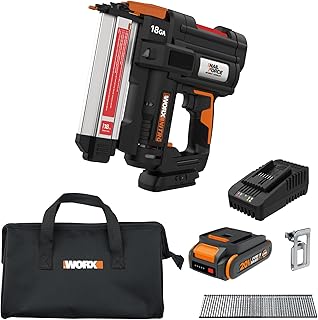
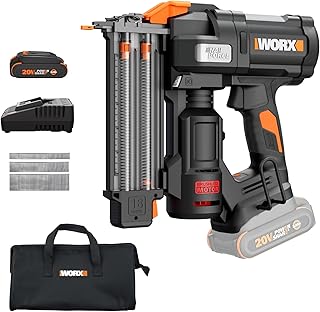
If you shoot a few hundred brads a year hanging shelving, patching baseboard after flooring, and building the occasional shop cabinet, the homeowner-tier cordless brad nailers are genuinely fine. Ryobi ONE+ and the Craftsman V20 line both fill this slot, and the compromise is real but tolerable: slightly slower cycle time, a bulkier nose that makes tight inside corners fussier, and depth adjustment that drifts a little as the battery drains.
The mistake is buying this tier and then using it like a production tool. Shooting five thousand brads through a value nailer during a whole-house trim job will surface every weakness at once, usually on the day you least want it. Match the tool to the volume.
- ✔ Lowest cost of entry if you already own the value platform
- ✔ Plenty of driving power for pine, poplar, and MDF trim
- ✔ Good enough depth control for painted work where filler hides everything
- ✔ Batteries are cheap enough to keep two charged on the bench
- ✘ Slower shot-to-shot pace shows up on long baseboard runs
- ✘ Nose profile is often too fat for tight returns and inside corners
- ✘ Depth consistency in oak and maple is less reliable
- ✘ Jam clearing is usually clumsier than on flagship designs
3. A 23-gauge pin nailer, but only as your second nailer
The 23-gauge pinner unlocks one specific job: fastening small, delicate, or highly visible pieces with a hole so small you can often skip filler entirely. Mitered returns on window sills, thin scribe molding against a wall, quarter-round on a stair, and holding glue-ups while they set. Pins hold almost nothing on their own, so the pinner is a clamp that leaves no mark, not a fastener.
Cordless 23ga options are thinner on the ground than 18ga, and the good ones are compact enough to work one-handed while your other hand holds the miter tight. If you find yourself splitting thin stock with brads, that is the signal you need this tool. Until then, it sits in the case.
4. A 16-gauge straight finish nailer, when trim gets thick
Sixteen gauge is the answer when 18ga brads simply do not hold: thick door jambs, stair skirt boards, heavy exterior trim, and one-by material going onto masonry strapping. The nail is thicker, the hole is bigger, and you will be filling it, but the holding power is in a different class. Cordless 16ga tools are heavier than their 18ga siblings and the extra bulk is noticeable overhead on crown.
Where people go wrong is buying 16ga first because it sounds more capable. It is more capable at a narrower set of jobs. If your work is interior painted trim in standard thicknesses, the 18ga does ninety percent of it with less filling afterward.
16ga Cordless Straight Finish Nailer
Only worth it once you have hit the limits of 18ga holding power. Check the stated maximum fastener length against the thickest trim you actually install, and look at weight with a battery attached, because that number is what your shoulder feels on a full day of jamb work.
What to skip
Skip the no-name cordless brad nailers with generic proprietary batteries. The tool may fire acceptably for a season, but replacement packs vanish from the market and you are left with a paperweight. There is no aftermarket rescue for an orphan battery format.
Skip combo kits that bundle a nailer with tools you already own just to hit a headline price. Bare tools plus your existing batteries almost always come out ahead.
Skip the 15-gauge angled finish nailer unless you are doing high-end hardwood trim and stair work where the angled magazine reaching into corners genuinely matters. Most home shops never need it.
Skip a compressor-and-hose setup as your primary trim solution if you work in finished, occupied houses. The noise, the hose dragging across new floors, and the setup time cancel out the lower tool price. Keep pneumatics for bench work in a shop where the compressor lives permanently.
And skip the assumption that more power solves misfires. Most proud or countersunk nails come from depth adjustment set once and never rechecked when you switch from MDF to oak. Test-fire into scrap every time the material changes.
How to choose the best cordless brad nailer for your work
Start with the battery platform you already own. That constraint eliminates most of the field and costs you almost nothing in capability, because the current crop of brushless 18ga nailers from the major platforms are closer to each other than marketing suggests.
Then check fastener range. A tool that tops out at 2 inches covers standard baseboard and casing; if you are shooting through thick drywall into studs with a shim gap behind, that upper limit matters. Check whether the magazine takes common straight 18ga brads sold everywhere, which they generally do, so you are not hunting for proprietary strips.
Then handle it if you can. Nose visibility, balance with a battery installed, and where the LED throws light are the things you notice on hour three, not in the spec sheet. If you are buying online, weight with battery and user comments about nose bulk are the closest proxies.
FAQ
Is a cordless brad nailer strong enough for baseboard? Yes, for standard painted baseboard and casing in softwood and MDF, an 18ga cordless brad nailer driving 1-1/4 to 2 inch brads is the normal tool for the job. Hit studs where you can, use construction adhesive on long runs, and set depth by test-firing into a scrap of the same material.
18 gauge or 16 gauge for a first nailer? Eighteen gauge. It covers the majority of interior trim, leaves a smaller hole that is easier to hide, and the tools are lighter and easier to work overhead. Add 16ga later if you start hanging thick jambs, stair skirts, or exterior trim.
Why does my cordless nailer leave nails sticking out? Usually depth adjustment, not power. Dial it deeper and retest on scrap. If it still leaves brads proud, check for a partial jam at the nose, confirm the battery is not nearly flat, and make sure you are pressing the nose fully flat against the work rather than at an angle.
Buy the 18-gauge brushless nailer on your existing battery platform, set the depth on scrap before you touch the trim, and add a 23ga pinner only when thin stock starts splitting. That sequence gets a trim kit working with the least money wasted.
Check prices on Amazon →