What's inside
As an Amazon Associate I earn from qualifying purchases. This post may contain affiliate links at no extra cost to you.
For a small remodeling contractor, the best cordless platform is rarely the one with the single best drill or impact driver. It is the system that keeps your crew working: batteries are easy to find, chargers do not create a bottleneck, replacement tools are available locally, and the platform has enough specialty tools to cover the next job.
Most contractors should commit to one primary battery ecosystem rather than mixing brands. Adapters are a poor substitute for a matched battery and tool. They add bulk, can interfere with battery protection, and may void warranties. A second system can make sense for a specific high-demand tool, but it should be an intentional exception.
As an Amazon Associate we earn from qualifying purchases at no extra cost to you.


What Matters Most in a Remodeling Battery Platform
Battery voltage is not a complete measure of performance. A 5.0Ah battery on an 18V or 20V Max platform stores roughly 90 watt-hours, while a 12.0Ah pack stores about 216 watt-hours. Actual runtime depends heavily on the load. A reciprocating saw cutting framing lumber can drain a pack several times faster than a drill driving cabinet screws.
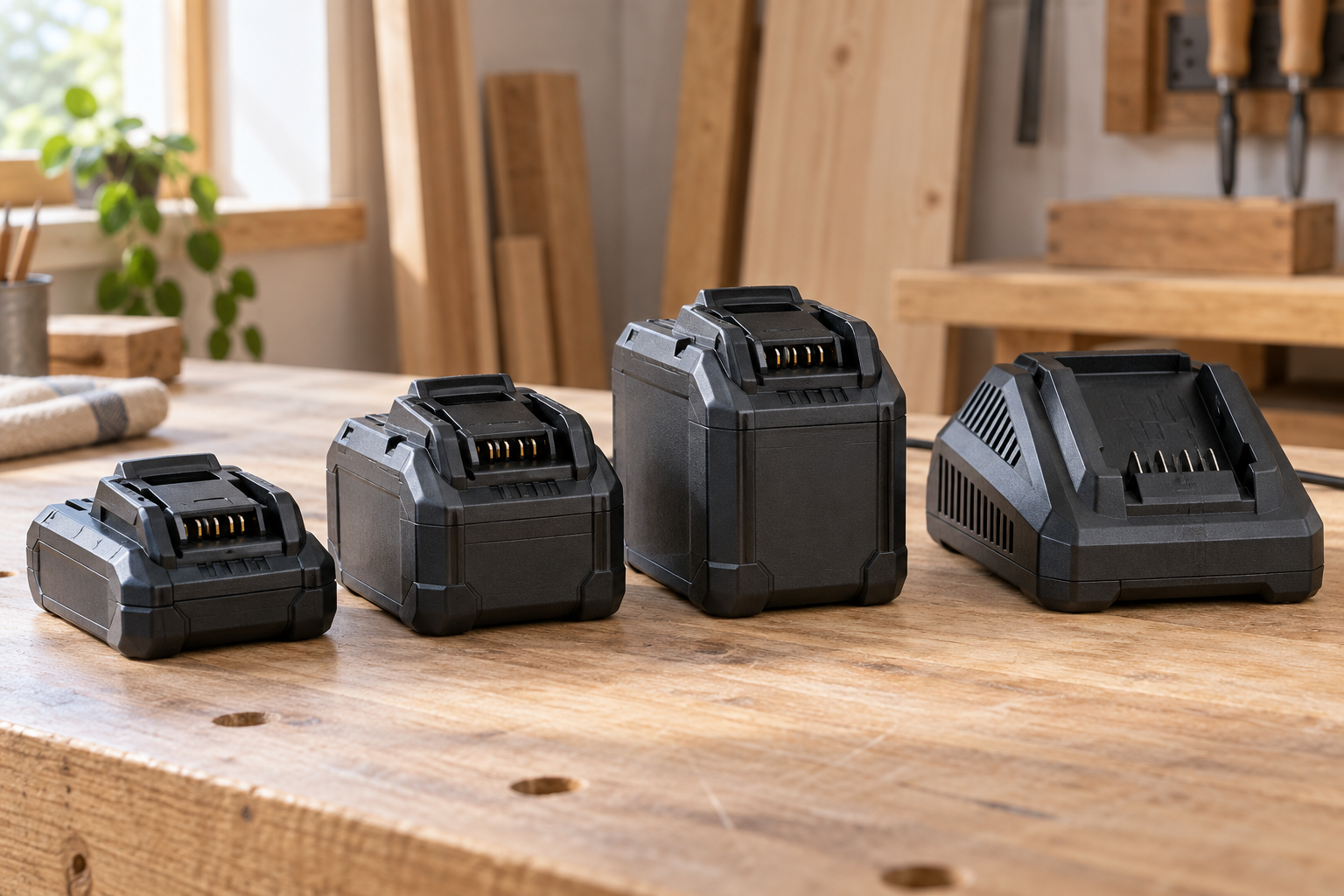
For everyday remodeling, a useful starting inventory is four to six batteries: at least two compact packs for drills and lights, two 4.0Ah-to-6.0Ah packs for saws and rotary hammers, and one or two larger packs if you regularly cut framing or run dust extraction. Two rapid chargers are more useful than one exceptionally fast charger when multiple people are working.
Battery age is a common failure point. Heat, leaving packs fully discharged, and storing them in a hot truck shorten service life. Keep batteries out of direct sun, remove them from chargers after they are full if the manufacturer recommends it, and do not use a pack that is swollen, cracked, or unusually hot.
Major Platforms Compared
| Platform | Best fit | Strengths | Trade-offs |
|---|---|---|---|
| Milwaukee M18 | Professional remodelers who need specialty tools | Very broad lineup, strong service support, excellent plumbing and electrical options | Tool and battery prices are often among the highest |
| DeWalt 20V Max | General remodeling and framing | Large selection, easy local availability, strong saw and fastening tools | Some compact tools feel less refined than competitors; battery naming can be confusing |
| Makita 18V LXT | Finish work and contractors who value ergonomics | Excellent balance, broad mature ecosystem, many smooth-running tools | High-output tools may require specific batteries; some specialty tools are less common locally |
| Ryobi 18V One+ | Light-duty contractors and cost-conscious owners | Low entry cost and an unusually large range of useful tools | Less suited to constant heavy production; service and durability vary by tool |
| Bosch 18V | Users who prioritize compact, controlled tools | Good ergonomics and strong professional-quality core tools | Smaller ecosystem and fewer convenient local purchases than the leaders |
Best Professional Choices
Milwaukee M18 is a strong choice when the work includes plumbing, electrical, HVAC, demolition, or installation tasks beyond ordinary carpentry. The ecosystem has a deep bench of lights, inspection tools, press tools, compact saws, rotary hammers, and fastening equipment. That breadth matters when a contractor grows from basic bathroom repairs into more specialized work. The downside is investment cost: a full setup with multiple larger batteries can cost hundreds of dollars more than an equivalent value-oriented system.
DeWalt 20V Max is often the safest all-around choice for a small remodeling crew. Drills, impacts, circular saws, oscillating tools, sanders, lights, fans, routers, and jobsite vacuums are easy to find. DeWalt also has strong support in framing and exterior work. It is a practical DeWalt 20V Max tool kit starting point if you need several core tools at once. Check the kit contents carefully: a package with two small batteries may look cheap but leave you buying a larger pack immediately.
Makita 18V LXT remains particularly appealing for finish carpenters, cabinet installers, and remodelers who carry tools all day. Many tools have good balance and predictable controls, which reduces fatigue during overhead work. LXT is mature and broad, but high-demand saws and rotary hammers perform best with the manufacturer’s larger high-output batteries. If you already own older Makita packs, verify compatibility before assuming every new tool delivers full performance.
When a Cheaper Platform Is Fine
Ryobi One+ is not automatically a homeowner-only system. For a contractor doing light punch-list work, rental-property repairs, shelving, trim, and occasional deck maintenance, it can be financially sensible. The battery platform has a large selection of useful tools, and the lower purchase price means you can put a drill, impact driver, light, inflator, fan, and small saw in every truck.
The compromise appears under continuous load. A contractor cutting sheet goods all day or drilling concrete every week will notice shorter runtime, slower recovery, and more heat in budget-oriented tools. For that work, spend more on a professional platform or keep a corded tool for stationary, high-load jobs. A cheaper system is also fine when a tool is used only twice a month; there is little value in paying for maximum durability that never gets used.
For the lowest practical entry cost, compare a Ryobi 18V One+ tool kit with individual professional tools. Avoid judging only by the number of tools in the box. A weak light, undersized battery, and slow charger can make a large kit less useful than a smaller kit with two 5.0Ah-class batteries.
A Buying and Charging Strategy That Works
Start with the tools used on nearly every job: a drill or hammer drill, impact driver, oscillating multi-tool, circular saw, work light, and vacuum or dust extractor. Buy batteries separately when kit batteries are too small for your saws. For most crews, 4.0Ah or 5.0Ah packs are the best balance. Compact 2.0Ah packs are comfortable for fastening, while 8.0Ah and larger packs reduce swapping but add noticeable weight.
Do not buy every specialty tool cordless. A corded SDS rotary hammer, track saw, or demolition saw may be the better financial choice if it stays near a power source and sees heavy use. Cordless earns its keep when setup time, ladders, occupied rooms, or outdoor work make a cord costly.
Keep one charger and one spare battery in each active truck, then maintain a central charging station with fire-resistant storage and labeled packs. Before choosing a platform, price a replacement battery, rapid charger, and your next three likely tools. That total ownership cost is a better decision than the sale price of the first drill.
If you frequently install cabinets or trim, prioritize a cordless oscillating multi-tool with a compact battery and variable speed. If you frame, build decks, or cut roofing materials, put the budget into larger batteries and a reliable circular or reciprocating saw instead. Match the platform to the work that pays the bills, not to the longest catalog.
Related guides
- Longest Lasting Lawn Mower Battery: AGM vs Lithium vs Flooded Lifespan and Cost per Season
- Duralast Gold Lawn Mower Battery Review: U1 Fit, CCA and When to Pay for AGM
- Greenworks Pro 80V 21-Inch Mower Review: Runtime Math, Push vs Self-Propelled and Yard Fit
- Bosch High Pressure Washer Gun Replacement: Fittings, Adapters and What Fits Your Model