What's inside
As an Amazon Associate I earn from qualifying purchases. This post may contain affiliate links at no extra cost to you.
What matters for fine curves in hardwood
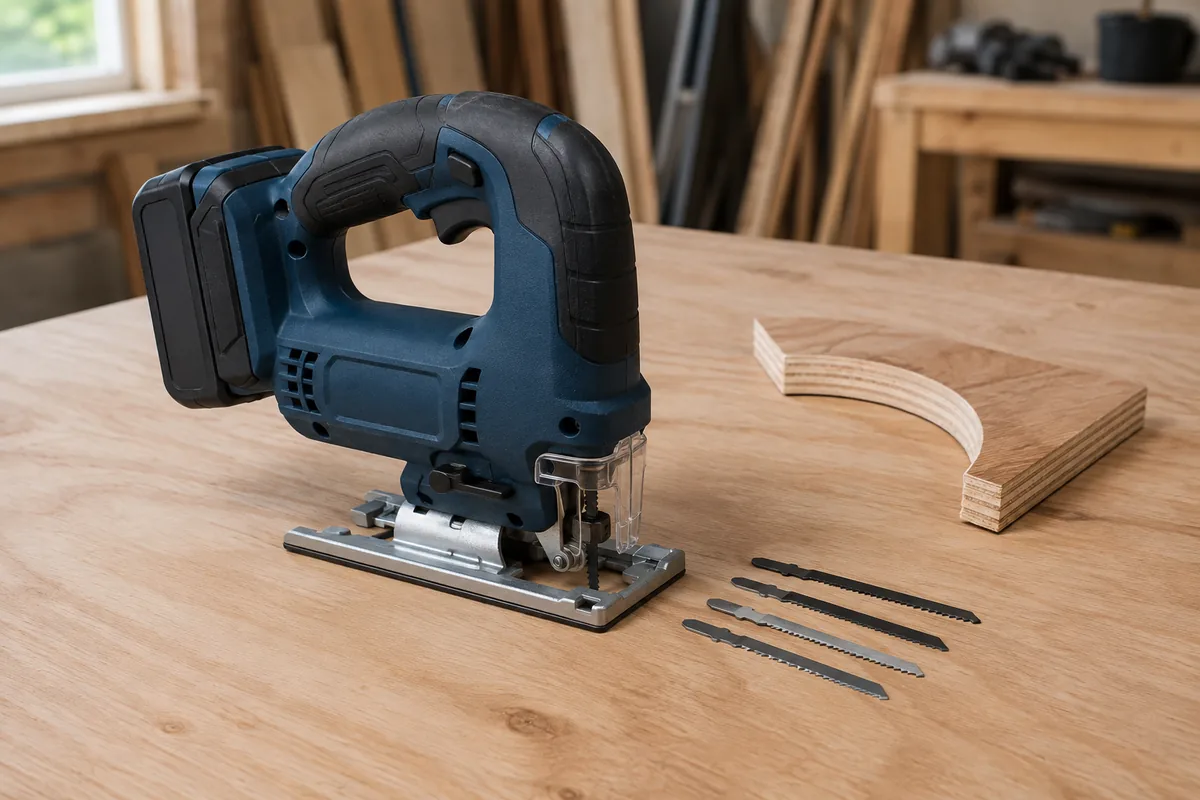
A cordless jigsaw can cut smooth curves in hardwood, but the saw is only part of the equation. Blade choice, a steady feed and keeping the blade square to the work matter more than a long list of features. For tight curves, a narrow scrolling blade turns more readily than a wide general-purpose blade. For clean edges, use a sharp blade intended for hardwood and cut slowly enough that the teeth clear chips without forcing the saw.
Look for variable speed, a stable shoe, tool-free blade changes and a usable dust blower or extraction port. A four-stage pendulum setting is common: orbital action speeds straight cuts but makes curves rougher. Set it to zero for tight curves and clean edges. A small amount of orbital action can help on broader curves when speed matters more than finish.
As an Amazon Associate we earn from qualifying purchases at no extra cost to you.



Barrel-grip and top-handle designs can both work. What counts is whether you can steer the saw comfortably while keeping its shoe flat on the stock. If possible, hold the tool before buying; a heavy battery at the rear can make a compact saw feel clumsy. Most current cordless jigsaws use a specific battery platform, so consider the batteries and charger you already own. Buying a bare tool is usually cheaper if you are already invested in that system.
How the main choices compare
| Choice | Best for | Trade-off |
|---|---|---|
| Compact 18V/20V saw | Occasional curves and trim work | May have less runtime or a smaller grip |
| Full-size cordless saw | Frequent hardwood cuts and longer sessions | More weight; battery balance can tire your wrist |
| Scrolling blade | Tight inside and outside curves | Slower cuts and easier to bend under side pressure |
| Wide, coarse blade | Fast, broad curves or rough cuts | Leaves a rougher edge and needs a larger turning radius |
For most buyers, a midrange 18V/20V cordless jigsaw with variable speed and orbital adjustment is the sensible choice. A premium saw is worth considering for regular shop use, but a cheaper model is fine for occasional projects if it holds the blade securely and cuts without excessive vibration. Browse cordless variable-speed jigsaws in the battery platform you already use; compare bare-tool and kit prices before deciding.
Choose a blade for the curve
For hardwood, use a sharp blade marked for hardwood or clean wood cutting. A narrow blade is easier to steer around a small radius, while a wider blade is more stable on gentle curves and resists twisting. Fine-tooth blades generally leave a cleaner edge but cut more slowly. Coarse teeth clear sawdust faster, though they can tear fibers and leave more sanding. Match the blade’s usable cutting depth to the stock; a blade that is too short may bind or cut poorly through thick material.
Blade direction matters. A standard up-cut blade pulls the work toward the shoe and often leaves splintering on the top face. If the visible face must stay clean, use a reverse-tooth blade if your saw accepts one, or place the show face down. Reverse-tooth blades can push the saw upward, so keep the shoe firmly against the work. A zero-clearance insert or masking tape can help with splintering, but neither makes a dull or unsuitable blade cut cleanly.
For a narrow scrolling blade set, check the shank type before ordering. Many modern saws use T-shank blades, but not every older or budget tool does. Do not assume that a blade fitting the clamp is suitable for the material or cut.
Make the cut without forcing it
Draw the curve clearly and clamp the board so the waste side can move freely without vibrating. Support the work close to the cut, but leave room for the shoe and blade. Set orbital action to zero for tight turns. Start the saw with the shoe flat, then feed forward at a steady pace. Let the teeth cut; pushing harder can deflect the blade, especially in thick hardwood.
For an inside cut, drill a starter hole large enough for the blade to fit, then turn the saw gradually onto the marked line. On a narrow curve, make relief cuts from the waste edge toward the curve. These small cuts let waste fall away rather than trapping the blade and twisting it. If the blade starts to wander, stop and back out only when it is safe; forcing it back onto the line can bend the blade or damage the edge.
Hardwood thickness changes the difficulty quickly. A jigsaw can handle a curved cut in a 3/4-inch board more easily than a thick slab, where blade deflection becomes more likely. Take extra care with stock around 1-1/2 inches thick or more: use a longer, sharp blade rated for the depth, cut more slowly and check the edge for square. If the curve needs a highly accurate vertical face, a bandsaw or a rough jigsaw cut followed by a template-guided router may be a better method.
Battery, care and buying checks
A larger battery usually extends runtime, but it also adds weight. For a few short cuts, a compact battery can make the saw easier to steer. For repeated cuts in hardwood, a higher-capacity pack reduces interruptions. Keep a spare charged if the tool is already part of your cordless system. Before buying into a new platform, compare the cost of the bare tool plus battery and charger with the price of a kit; the kit is often the better deal when you need everything.
Dust and heat can shorten blade life and make cuts wander. Clear sawdust from the line, pause if the motor or blade gets hot, and replace a blade that needs extra pressure or leaves a scorched edge. Check that the blade clamp locks fully and that the shoe stays tight. A bare-tool cordless jigsaw is the economical option when you already own compatible batteries; otherwise, include the charger and battery in the total cost. For fine curves, spend first on a saw that feels controllable and a small selection of correct blades, not on extra power you may rarely use.
Related guides
- Longest Lasting Lawn Mower Battery: AGM vs Lithium vs Flooded Lifespan and Cost per Season
- Duralast Gold Lawn Mower Battery Review: U1 Fit, CCA and When to Pay for AGM
- Greenworks Pro 80V 21-Inch Mower Review: Runtime Math, Push vs Self-Propelled and Yard Fit
- Bosch High Pressure Washer Gun Replacement: Fittings, Adapters and What Fits Your Model