What's inside
- Quick comparison of the picks
- Best overall: DeWalt DCD800
- Best value: DeWalt DCD777
- Best for pros: Milwaukee M18 FUEL compact drill (2903)
- Best for comfort: Makita XFD131
- Best budget platform: Ryobi ONE+ HP PBLDD01
- Best for light use: Skil PWR CORE 20 compact drill
- How to choose a compact drill
- Compact drill versus full-size drill
- Ownership realities
- Which one fits your situation
- Clutch settings and drilling technique
- Battery planning table
- Frequently Asked Questions
As an Amazon Associate I earn from qualifying purchases. This post may contain affiliate links at no extra cost to you.
The best 20-volt compact drill for most users is the DeWalt 20V MAX XR brushless compact drill/driver (DCD800), with the DCD777 as the cheaper alternative and the Milwaukee M18 FUEL compact (2903) as the pick for pros on that platform. Compact drills trade a little peak torque for light weight and a short head, which makes them better than full-size drills for cabinets, overhead screws and all-day use. Check clutch range, chuck quality and weight before you look at maximum torque.
“20 volt” here means the 18V-nominal class, so Milwaukee M18 and Makita 18V LXT are included alongside DeWalt 20V MAX. The six picks below are all current lines and the figures come from the manufacturers’ specification sheets.
As an Amazon Associate we earn from qualifying purchases at no extra cost to you.


Our Top Picks
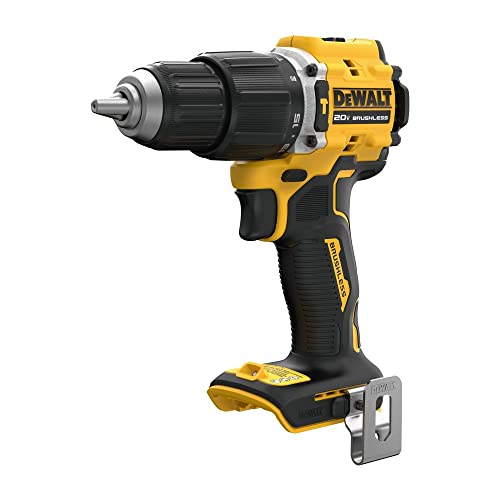
 Dewalt DCD794B 20V MAX ATOMIC COMPACT SERIES BrushlessOne Size6.61 x 3.32 x 8.39 inches2.51 poundsCheck on Amazon
 ATOMIC 20-Volt Lithium-Ion Cordless Compact 1/2 in. Drill/DriverOne Size7.97 x 2.49 x 7.97 Inches0 PoundsCheck on Amazon
Quick comparison of the picks
| Pick | Best for | Chuck | Key notes (per maker’s sheets) | Price range |
|---|---|---|---|---|
| DeWalt DCD800 20V MAX XR | Best overall | 1/2 in. | Brushless compact, compact head length, 2-speed | Mid to upper |
| DeWalt DCD777 20V MAX XR | Best value | 1/2 in. | Brushless compact drill/driver, 2-speed | Mid-range |
| Milwaukee M18 FUEL 2903 | Best for pros | 1/2 in. | Brushless, compact, metal chuck | Upper-mid |
| Makita XFD131 18V LXT | Best for comfort | 1/2 in. | Brushless, light, 2-speed | Mid-range |
| Ryobi ONE+ HP PBLDD01 | Best budget platform | 1/2 in. | Brushless, 18V ONE+, light | Budget |
| Skil PWR CORE 20 compact drill | Best for light use | 1/2 in. | 20V brushless, entry-level | Budget |
Best overall: DeWalt DCD800
The DCD800 is DeWalt’s current brushless compact drill/driver in the 20V MAX XR line. It has a 1/2-inch chuck, a two-speed gearbox, an LED work light and a short head length that fits between studs and in cabinets. DeWalt has focused on weight reduction and a comfortable grip, which pays off during ceiling and wall work.
The trade-off is maximum torque, which is lower than the full-size drill in the same line. It is the right drill for screws and holes up to about an inch, not for large auger bits.
Best value: DeWalt DCD777
The DCD777 is a slightly older brushless compact drill that remains widely sold as a value option. It uses a 1/2-inch chuck and a two-speed gearbox, and it shares the same battery platform as the DCD800. It is often sold in kits with two batteries, which lowers the cost per tool.
The trade-off is that it lacks some refinements of the newest model, such as the lighter body, but the performance difference in everyday work is small.
Best for pros: Milwaukee M18 FUEL compact drill (2903)
The M18 FUEL compact drill is built for job-site use. It has a brushless motor, a metal ratcheting chuck and electronics that protect against overload and overheating. It is a good pick if you use a drill every day and need a tool that survives drops and heavy use.
The trade-off is cost and the M18 platform commitment. Without existing batteries, the total cost is higher than DeWalt or Ryobi.
Best for comfort: Makita XFD131
The Makita XFD131 is an 18V LXT brushless drill-driver known for its balanced, light body and smooth trigger. The LXT platform has hundreds of tools, so it is easy to expand. It has a 1/2-inch chuck and a two-speed gearbox.
The trade-offs are a lower torque than some rivals and the many kit variants. Check that the kit includes the batteries you need.
Best budget platform: Ryobi ONE+ HP PBLDD01
The Ryobi HP brushless compact drill is among the least expensive brushless drills from a major brand. It is light and has a 1/2-inch chuck. The ONE+ battery system has a very wide range of tools, from drills to inflators, which makes it an economical choice for homeowners.
The trade-offs are a less robust chuck and gearbox compared with the pro brands, so it is best for home and occasional shop use.
Best for light use: Skil PWR CORE 20 compact drill
Skil’s PWR CORE 20 line offers a brushless compact drill at an entry price. It is suited for assembling furniture, hanging pictures and other light household tasks.
The trade-offs are a smaller tool range and fewer high-capacity battery options.
How to choose a compact drill
Torque and gearbox
For compact drills, 400 to 600 in-lbs is typical. Look for a two-speed gearbox: low speed for torque, high speed for small bits. Maximum torque matters less than the clutch range, which determines how well you can drive small screws without damage.
Head length and weight
The head length (from the back of the motor to the chuck tip) determines whether the drill fits in tight spaces. Compact drills are generally 6 to 7 inches long. Weight with a 2Ah battery is typically 2.5 to 3.5 pounds, which is much easier on the wrist than a full-size drill.
Chuck quality
A metal, single-sleeve 1/2-inch chuck grips bits more securely than a plastic one. Check that the chuck holds bits without slipping.
Battery size and runtime
Compact drills are typically sold with 1.3Ah to 2Ah batteries, which keep the weight down. A 2Ah 18V pack stores about 36 Wh. If a drill uses about 100 W for 40 percent of an hour while driving screws, it uses 40 Wh, so a 2Ah pack lasts approximately 55 minutes of working time. A 5Ah pack at 90 Wh would last over two hours, but adds weight. These are planning estimates.
Brushless motor
Brushless motors are more efficient, run cooler and last longer. All the picks above are brushless.
Compact drill versus full-size drill
| Factor | Compact drill | Full-size drill |
|---|---|---|
| Weight with battery | About 2.5 to 3.5 lb | About 4 to 5 lb |
| Head length | About 6 to 7 in. | About 7.5 to 9 in. |
| Peak torque | About 400 to 600 in-lbs | About 700 to 1,400 in-lbs |
| Best use | Screws, small and medium holes, overhead work | Large auger bits, lag screws, heavy drilling |
If you own a full-size drill already, a compact one is a good second drill. If you want only one, the compact is enough for most woodworking and home projects.
Ownership realities
- Chucks wear: use proper bits and tighten by hand and then by turning the drill into the chuck.
- Clutch settings: start at a low setting and increase until the screw sits flush.
- Battery care: avoid leaving batteries in a hot vehicle, and store them partly charged.
- Cleaning: wipe dust off vents to keep the motor cool.
Which one fits your situation
| Situation | Pick |
|---|---|
| DeWalt owner who wants the best compact | DCD800 |
| Same platform, lower price | DCD777 |
| Daily professional use on M18 | Milwaukee 2903 |
| Long sessions and comfort | Makita XFD131 |
| Homeowner on a budget | Ryobi PBLDD01 or Skil PWR CORE 20 |
Clutch settings and drilling technique
A compact drill’s clutch is its most valuable feature in woodworking, because it stops the chuck turning once the screw reaches a set torque. Most compact drills offer 15 to 21 clutch positions plus a drill mode. Here is how to use it well.
- Start low. Set the clutch to a low number and drive a test screw in scrap of the same wood.
- Raise one step at a time. Increase until the screw head sits flush with the surface without sinking in. Softwoods need a lower setting than hardwoods.
- Drill a pilot hole for hardwoods. A pilot slightly smaller than the screw’s core diameter prevents splitting and reduces the load on the motor.
- Use low gear for large bits. The low-speed range gives more torque for bits over 3/4 inch. Use high gear for small bits and fast driving.
- Back up thin stock. Clamp a scrap board behind the workpiece to reduce tear-out when the bit exits.
Battery planning table
Compact drills usually pair with light batteries. This table shows the energy stored in common 18V-class packs and an estimate of working time, assuming the drill draws about 100 W and works for roughly 40 percent of the time. These are planning estimates, not measured results.
| Battery | Energy | Estimated working time | Approximate weight of pack |
|---|---|---|---|
| 1.5Ah | 27 Wh | about 40 minutes | about 0.5 lb |
| 2Ah | 36 Wh | about 55 minutes | about 0.8 lb |
| 4Ah | 72 Wh | about 110 minutes | about 1.3 lb |
| 5Ah | 90 Wh | about 135 minutes | about 1.5 lb |
The weight difference between a 2Ah and a 5Ah pack is about three-quarters of a pound, which is noticeable on a compact drill. If you work overhead, favor the lighter pack and carry a spare. If you work at a bench, the larger pack is a better choice.
Frequently Asked Questions
Is a compact drill powerful enough for woodworking?
Yes, for most tasks. It handles pilot holes, screws and bits up to about an inch. For larger bits, use a full-size drill.
What does brushless mean?
A brushless motor uses electronics instead of carbon brushes to switch current. It runs cooler, uses less energy and has fewer parts to wear out.
Which battery size is best for a compact drill?
A 2Ah pack keeps the drill light, while a 4Ah or 5Ah pack gives longer runtime at the cost of weight.
Are 20V MAX and 18V drills the same?
They are the same nominal voltage class. The 20V MAX label counts the peak voltage. Performance depends on the motor and design.
Should I buy the drill alone or in a kit?
If you do not own batteries on that platform, buy a kit. Otherwise, a bare tool is more economical.