What's inside
- Quick comparison of the picks
- Best overall: DeWalt 20V MAX DCS570
- Best for framing: Milwaukee M18 FUEL 7-1/4 inch (2732-20)
- Best for plywood and trim: Makita 18V LXT 6-1/2 inch (XSH06Z)
- Best budget: Ryobi ONE+ HP 7-1/4 inch (PBLCS300B)
- Best compact: DeWalt 20V MAX DCS565
- Best light-duty: Black+Decker 20V MAX 5-1/2 inch
- How to choose a cordless circular saw
- Ownership realities
- Which one fits your situation
- Blade choice for each job
- Making straighter, cleaner cuts
- Cordless saw or corded saw?
- Frequently Asked Questions
As an Amazon Associate I earn from qualifying purchases. This post may contain affiliate links at no extra cost to you.
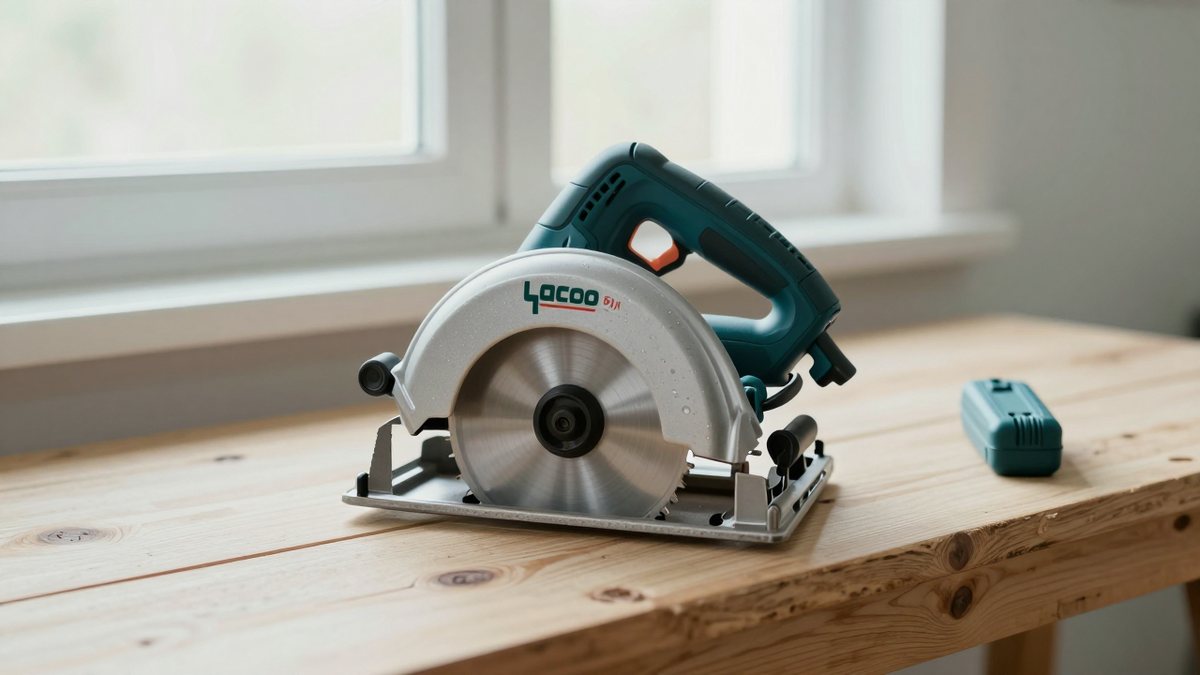
The best 20-volt circular saw for most woodworkers and builders is a brushless 7-1/4-inch model such as the DeWalt 20V MAX DCS570, with the Milwaukee M18 FUEL 7-1/4-inch as the choice for heavy framing and the Makita 18V LXT 6-1/2-inch as the lighter pick for plywood and trim. All three run in the same 18V-nominal battery class (DeWalt calls it 20V MAX), so the platform you already own matters more than the saw itself.
Cordless circular saws now cut framing lumber all day on a single large battery, but the differences show up in blade size, depth of cut, bevel capacity and how well the saw tracks a line. This guide covers six real, currently sold models, how to compare them and what to expect from ownership.
As an Amazon Associate we earn from qualifying purchases at no extra cost to you.


Our Top Picks
 DEWALT FLEXVOLT 60V MAX* Circular Saw with BrakeOne Size15.35 x 8.23 x 9.65 inches8.2 poundsCheck on Amazon

Quick comparison of the picks
| Pick | Best for | Blade | Key specs (per maker’s sheets) | Price range |
|---|---|---|---|---|
| DeWalt 20V MAX DCS570 | Best overall | 7-1/4 in. | Brushless, about 5,150 RPM, about 2-1/2 in. depth at 90 degrees | Mid to upper |
| Milwaukee M18 FUEL 7-1/4 in. (2732-20) | Best for framing | 7-1/4 in. | Brushless, about 5,000 RPM, about 2-1/2 in. depth | Premium |
| Makita 18V LXT 6-1/2 in. (XSH06Z) | Best for plywood and trim | 6-1/2 in. | Brushless, light body, about 2-1/4 in. depth | Mid to upper |
| Ryobi ONE+ HP 7-1/4 in. (PBLCS300B) | Best budget | 7-1/4 in. | Brushless, 18V ONE+ battery | Budget |
| DeWalt 20V MAX DCS565 | Best compact | 6-1/2 in. | Lightweight, for sheet goods | Mid-range |
| Black+Decker 20V MAX 5-1/2 in. | Best light-duty | 5-1/2 in. | Small, for thin boards and occasional use | Budget |
Depth of cut and RPM differ slightly between spec sheets and retailer listings, so verify against the maker’s page before ordering.
Best overall: DeWalt 20V MAX DCS570
The DCS570 is a brushless 7-1/4-inch saw with a published blade speed near 5,150 RPM and a depth of cut a little over 2-1/2 inches at 90 degrees, enough for a 2x lumber cut in one pass. It has a metal shoe, a bevel scale that is easy to read, a dust blower and an electric brake. The saw tracks a line well, and the sightline is open.
The trade-off is weight with a large battery on board, and the saw is a sidewinder: the blade is on the right, so right-handed users can see the line, but left-handers may prefer a worm-drive style or a left-blade model.
Best for framing: Milwaukee M18 FUEL 7-1/4 inch (2732-20)
Milwaukee’s M18 FUEL circular saw is the pick for demanding work. It has a brushless motor, an electronic overload response that holds speed in wet or dense lumber, and a rafter hook for hanging. The company’s published depth at 90 degrees is about 2-1/2 inches.
The trade-off is price, and the M18 battery lock-in. If you are not on M18, the DeWalt saw is a more economical way to get the same size.
Best for plywood and trim: Makita 18V LXT 6-1/2 inch (XSH06Z)
The smaller blade makes the Makita lighter and easier to control, which suits cutting sheet goods and building cabinets. It has a good cutting-line view and Makita’s electric brake, and the LXT platform includes woodworking tools such as track saws and planers.
The trade-off is cutting depth, since a 6-1/2-inch blade will not cut through a 2x with a bevel as easily, and a 2×4 at 45 degrees may not cut through in one pass.
Best budget: Ryobi ONE+ HP 7-1/4 inch (PBLCS300B)
This brushless Ryobi saw provides the full 7-1/4-inch blade size at a price well below the pro brands. If you already own ONE+ batteries, it is a cost-effective way to add a framing-capable saw.
The trade-offs are a lighter shoe and fit and finish below the premium saws. It suits weekend work, deck projects and renovation.
Best compact: DeWalt 20V MAX DCS565
The DCS565 is a 6-1/2-inch saw in the 20V MAX line. It is lighter than the 7-1/4-inch model and is useful for plywood, sheathing and trim. It works well in tight spaces and on ladders.
The trade-off is a shallower cut than a 7-1/4-inch saw.
Best light-duty: Black+Decker 20V MAX 5-1/2 inch
The Black+Decker is a small saw with a 5-1/2-inch blade that is easy for beginners to handle. It cuts thin boards, paneling and plywood. It suits occasional DIY use.
The trade-off is cutting depth and endurance, since it is not designed for framing lumber or all-day use.
How to choose a cordless circular saw
Blade size and depth of cut
A 7-1/4-inch blade cuts through nominal 2x lumber at 90 degrees (1-1/2 inches of depth needed) and, on most models, at 45 degrees (about 2-1/8 inches of blade depth needed, because the cut runs through the board at an angle). A 6-1/2-inch blade has slightly less depth, enough for 3/4-inch plywood and 2x at 90 degrees. Use the maker’s depth at 45 degrees to compare saws, since it is the number that determines whether you can bevel a 2x.
Brushless motor
Brushless motors are more efficient, which means more cuts per charge and less heat. All the premium saws above are brushless, and it is worth paying for.
Battery size and a runtime example
A circular saw cutting framing lumber draws around 600 to 1,000 W under load. A 5Ah 18V pack stores about 90 Wh. At 800 W, that is roughly 6.75 minutes of continuous cutting. A 2×4 cut takes about 2 seconds, so that is on the order of 200 cuts if the saw were only cutting, though real work includes idle time and heavier cuts, so reviewers estimate fewer. A 2Ah pack, at 36 Wh, would drop that to roughly 80 cuts. These are planning estimates.
Sidewinder versus worm drive
Sidewinder saws are lighter and the blade is right-sided; worm-drive saws are longer, heavier and have more torque. Most cordless saws are sidewinders, which suit finish work and most carpentry.
Safety features
Look for an electric brake, a lower guard that moves freely and a secure bevel lock.
Ownership realities
- Blades: the blade that comes with the saw is made for rough cuts. For plywood and finish cuts, buy a blade with 40 to 60 teeth.
- Base plate: check that the shoe is square to the blade with a combination square. Small errors compound over long cuts.
- Cleaning: clear sawdust from the lower guard and pivot to keep it from sticking.
- Support the work: use foam board or sacrificial boards under the work so the cut-off piece does not pinch the blade.
Which one fits your situation
| Situation | Pick |
|---|---|
| Best all-round saw on DeWalt 20V MAX | DCS570 |
| Daily framing, M18 owner | Milwaukee 2732-20 |
| Cabinet and plywood work | Makita XSH06Z |
| Weekend projects, tight budget | Ryobi PBLCS300B |
| Ladders and tight spaces | DCS565 |
| Beginner or occasional use | Black+Decker 5-1/2 in. |
Blade choice for each job
The blade changes the result more than the saw does. Match tooth count to the material, and use thin-kerf blades to reduce the load on a cordless saw.
| Job | Tooth count (7-1/4 in.) | Kerf | Result |
|---|---|---|---|
| Framing lumber, rough cuts | 24 | Thin kerf | Fast cuts, longer runtime, rough edge |
| General carpentry, plywood and boards | 36 to 40 | Thin kerf | Balanced speed and finish |
| Fine plywood, cabinet and shelf stock | 60 | Thin kerf | Slower cut, cleaner edge |
| Laminated panels and melamine | 60 to 80, alternating top bevel | Standard | Minimal chipping |
A thin-kerf blade removes less material, which means the motor does less work per cut and the battery lasts longer. The trade-off is that thin blades can flex if you force them, so let the saw do the work.
Making straighter, cleaner cuts
- Set the depth correctly. The blade should extend about 1/4 inch below the material. A deeper blade increases kickback risk and exposes more teeth.
- Use a guide. Clamp a straightedge or a speed square to the work. A guide produces cuts closer to a track saw than free-hand cutting does.
- Cut with the good face down. A circular saw’s teeth rise on the up-cut, so tear-out appears on the top face. Put the visible side facing down.
- Support both sides of the cut. If the offcut drops, it can pinch the blade. Leave the offcut supported until the end of the cut.
- Keep the cord of the cut clear. Cordless removes the cord, but clear sawdust from the sightline and keep your body to the side of the blade path.
Cordless saw or corded saw?
A brushless cordless saw matches a corded saw for everyday carpentry, and it is easier to carry onto a roof or into a crawl space. Corded saws still hold an advantage for continuous heavy ripping, because they never run out of power, and they cost less. If you already own a battery platform, a cordless saw is the logical addition. If you do not, consider the cost of the batteries before comparing prices.
Frequently Asked Questions
Can a cordless circular saw cut 2x lumber?
Yes. A 7-1/4-inch brushless saw cuts nominal 2x lumber at 90 degrees in a single pass, and most also cut at 45 degrees.
Is 6-1/2 inch or 7-1/4 inch better?
A 7-1/4-inch saw has more depth and is better for framing. A 6-1/2-inch saw is lighter and easier for sheet goods.
How many cuts can I make per battery?
Reviewers estimate roughly 100 or more cuts in 2×4 on a 5Ah pack, but this varies with wood moisture and blade condition.
Do I need a brushless circular saw?
For regular use, yes. Brushless saws run cooler, last longer on a charge and have less motor wear.
What blade gives the cleanest cut in plywood?
A blade with 40 to 60 teeth. For veneered plywood, score the line with a knife first to prevent chipping.