What's inside
As an Amazon Associate I earn from qualifying purchases. This post may contain affiliate links at no extra cost to you.
Concrete drilling creates two problems at once: fine silica dust and a surprisingly large amount of debris for a small hole. A cordless dust extractor can control the mess, but only if its airflow, filter cleaning, hose, and battery system match the drill. The best setup is not necessarily the extractor with the largest stated capacity. For occasional anchor holes, a compact 18V vacuum may be enough. For repeated rotary-hammer work, you need longer runtime, a proper filter-cleaning system, and a hose that does not collapse under suction.
As an Amazon Associate we earn from qualifying purchases at no extra cost to you.

What to look for in a cordless concrete extractor
For drilling, prioritize airflow and automatic filter cleaning over tank size. A practical target is roughly 50 to 80 cubic feet per minute (CFM) at the hose, though manufacturers do not always measure or publish figures consistently. Suction pressure matters when pulling dust through a narrow hole, but high suction alone does not prevent the filter from clogging.
A genuine HEPA filter is important when working indoors or around occupied spaces. It does not make concrete dust harmless if you dump the bin carelessly, but it reduces the fine dust that escapes the machine. Look for a sealed filter system and a bag option. Bags make disposal cleaner and preserve airflow; the trade-off is ongoing consumable cost.
Automatic filter cleaning is worth paying for if you drill more than a few holes at a time. Concrete dust quickly cakes onto a pleated filter. Without cleaning, suction can drop within minutes. Some compact extractors use a manual filter-cleaning button or a pulsed cleaning cycle; either is better than having no cleaning function, but automatic cleaning is more convenient during continuous drilling.
Best cordless platform options
Cordless HEPA dust extractors for concrete drilling are most useful when you already own the batteries. Buying into a second battery platform just for the vacuum can cost more than the extractor itself, especially once you add two high-capacity packs and a charger.
| Use case | Best extractor type | Battery expectation | Main compromise |
|---|---|---|---|
| Occasional anchor holes | Compact 18V or 20V wet/dry vacuum | One 5.0Ah battery can handle a short session | Limited filter cleaning and smaller bin |
| Several dozen holes | Dedicated HEPA extractor with auto-cleaning | Two high-output packs or a battery change | Heavier and more expensive |
| Large-diameter drilling | High-airflow extractor with large hose | High drain; expect rapid battery use | Noise, weight, and shorter runtime |
| Overhead drilling | Compact extractor or drill-mounted dust collector | Small pack reduces tool weight | Smaller capacity and more frequent emptying |
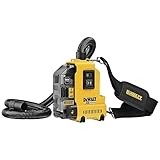
Milwaukee users should look at the Milwaukee M18 cordless dust extractor range. DeWalt, Makita, Bosch, and Hilti also offer cordless extractors or drilling dust-control systems tied to their own battery ecosystems. The sensible choice is usually the platform with the batteries you already have, provided the extractor is rated for fine dust and has the hose fittings you need.
Compact extractor or full-size vacuum?
A compact unit is easier to carry up a ladder and less tiring during overhead work. It also takes less space in a van. For six to twelve 3/8-inch anchor holes, that may be all you need. Use a clean 5.0Ah battery, keep the hose short, and empty the container before it fills past roughly two-thirds.
The downside is limited reserve. Small extractors often have smaller filters, lower airflow, and no effective automatic cleaning. Drilling twenty or thirty holes can turn the filter into a concrete plug. If you are drilling 1/2-inch or larger holes, especially into hard reinforced concrete, a full-size cordless extractor is the safer purchase.
Full-size machines generally offer a larger debris container, better sealing, longer hoses, and more robust filter systems. They are still not equivalent to a corded commercial extractor for all-day coring or heavy demolition. A pair of large batteries may last only 20 to 40 minutes of active high-suction work, depending on the motor and battery capacity. Plan on a second set if the job is continuous.
When a drill-mounted collector is better
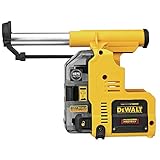
For simple holes, a drill-mounted dust collector can outperform a remote vacuum because it captures dust at the bit. These attachments usually connect to the rotary hammer, surround the bit with a rubber cup, and use a short hose to the extractor. They are particularly effective on walls and ceilings, where dust otherwise falls directly onto the operator.
They have limits. The rubber seal may not sit flat on rough concrete, and the collector can interfere with long bits, angled drilling, or drilling close to an edge. A cup that does not seal can lose most of its effectiveness. For occasional indoor anchor work, however, a rotary hammer dust collector attachment combined with your existing extractor is often cheaper than buying a specialized drilling vacuum.
How to get reliable dust capture
Use the extractor before starting the drill and leave it running for several seconds after withdrawing the bit. Keep the hose as straight and short as practical. A 1-1/4-inch hose can provide better airflow than a narrow general-purpose hose, but adapters and sharp bends reduce performance quickly.
Check the filter before each session. A partially loaded filter can make a cordless vacuum appear weak even with a full battery. Use the automatic cleaning cycle periodically rather than waiting for suction to disappear. Do not shake dusty filters indoors. If using a bag, install it correctly and do not continue after it collapses against the inlet.
For overhead work, secure the hose so it does not pull on the drill. For wall drilling, place the extractor close enough that the hose does not drag across the floor. Wear a properly fitted respirator when required by the material and local rules; extraction is a control measure, not a substitute for respiratory protection.
The practical buying decision
Buy the compact cordless extractor if you drill a handful of small anchor holes, already own its batteries, and value portability. Pay for automatic filter cleaning and a HEPA-rated sealed system if you regularly drill indoors or work through multiple battery charges. Choose a larger high-airflow machine for repeated large holes, but budget for extra batteries, replacement bags, and cleaning time.
The cheaper option is fine when the work is occasional and the dust can be captured at the bit. It is not fine when the filter repeatedly clogs, the hose loses its seal, or visible dust clouds appear around the hole. In that situation, upgrading the collector—or changing to a drill-mounted capture setup—will do more than simply buying a battery with a larger capacity.
FAQ
Compact extractor or full-size vacuum?
Related guides
- Longest Lasting Lawn Mower Battery: AGM vs Lithium vs Flooded Lifespan and Cost per Season
- Duralast Gold Lawn Mower Battery Review: U1 Fit, CCA and When to Pay for AGM
- Greenworks Pro 80V 21-Inch Mower Review: Runtime Math, Push vs Self-Propelled and Yard Fit
- Bosch High Pressure Washer Gun Replacement: Fittings, Adapters and What Fits Your Model