What's inside
As an Amazon Associate I earn from qualifying purchases. This post may contain affiliate links at no extra cost to you.
What matters on a roofing or exterior job
An impact driver is useful for driving approved structural screws, exterior trim fasteners and other screws with a compatible hex-shank bit. It is not a substitute for a roofing nailer, and it should not be used to drive screws where the plans or fastener manufacturer specify nails. For structural connections, match the fastener to the substrate and follow its installation instructions; more torque is not a reason to overdrive a screw.
Exterior work puts different demands on a tool than occasional indoor assembly. You may drive hundreds of fasteners in a day, work from a ladder or lift, and carry the tool through dust and weather. Prioritize manageable weight, a trigger that gives you control at low speed, and batteries that suit your platform. A compact tool is easier to use overhead and in tight corners, but a high-output model can be preferable for long screws in dense lumber. Neither will compensate for a worn bit or the wrong fastener.
As an Amazon Associate we earn from qualifying purchases at no extra cost to you.


Quick comparison
| Option | Best fit | Trade-off |
|---|---|---|
| Compact 18V/20V-class driver | Trim, siding details and overhead work | Less reserve for repeated long screws |
| Full-size brushless driver | Mixed exterior work and frequent screw driving | More bulk and often higher kit cost |
| High-output driver | Heavy daily use and demanding fasteners | Extra power can make small fasteners easier to overdrive |
| 12V-class driver | Light-duty work and a compact carry kit | Less suited to sustained heavy fastening |
Power, speed and control
Manufacturers publish torque figures, but test methods vary, so use them as a rough within-brand comparison rather than a reliable ranking across brands. For exterior construction, a brushless 18V/20V-class driver is a practical default if you already own batteries in that system. Brushless tools generally use battery energy efficiently and avoid brush replacement, but they cost more upfront. A brushed model can still be a sensible buy for occasional repairs.
Look for selectable speed or assist modes if you frequently switch between small trim screws and larger structural fasteners. A softer mode can reduce cam-out and damage to painted trim; it does not make an impact driver a precision torque wrench. Start slowly, keep the bit seated squarely, and stop as soon as the head reaches the intended position. Overdriving can crush wood fibers, damage a washer or finish, or weaken a connection. If the driver keeps stalling, check the bit, screw length and pilot-hole guidance before stepping up to a larger tool.
Battery platform and runtime
Battery compatibility is often more valuable than a small difference in advertised power. If you own a capable platform, buying a bare tool can save money and reduce the number of chargers on site. Check the exact battery family: similar brand names do not always mean batteries interchange, and a larger battery may add enough weight to make overhead work tiring.
For a full day of fastening, two batteries let one charge while the other is in use. A 2.0Ah pack is lighter and convenient for trim; a 4.0Ah-class pack can provide more working time, though pack size and performance vary by platform and tool. Keep spare batteries out of direct sun and do not charge a pack that is unusually hot after hard use; follow its manual for charging temperature and storage. A fast charger helps only if you have a second pack ready and access to power.
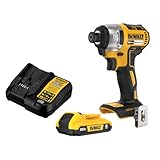
If you are building a new kit, compare the tool, battery and charger together rather than judging a bare-tool price alone. A starter set in a platform you may later use for a circular saw, light or oscillating tool can be a better value than the cheapest driver-only purchase. Consider a cordless impact driver kit with a battery and charger if you do not already own compatible packs.
Weather, dust and jobsite durability
“Weather resistant” does not mean waterproof. Keep the driver and batteries out of rain where possible, wipe off grit, and avoid leaving a cold tool in a warm, humid space where condensation can form. Roofing work also means dropped tools: a belt hook and a secure lanyard attachment point can matter more than a small advertised torque increase. Use a rated tether when working at height, and confirm that the tool’s attachment point is approved for that use.
Impact-rated bits are worth using because ordinary driver bits can chip or twist under repeated impact. Carry spares; a rounded bit tip is a common cause of stripped heads and wasted time. For long screws, use the bit type and length that keep the tool aligned with the screw head. If screws repeatedly break or snap their heads, stop and check the fastener specification, material, pilot-hole requirements and whether the driver is set too aggressively.
Which driver should you buy?
For most crews doing a mix of exterior trim, siding details and approved screw fastening, choose a brushless 18V/20V-class driver from a battery platform you already use. A compact version is a good choice when overhead reach and low weight matter most; a full-size model makes more sense when long screws and all-day use are routine. If you are a homeowner handling occasional repairs, a lower-cost brushed tool or a compact 12V model may be entirely adequate. Spending extra for peak output does little for a few short screws each season.
Compare complete kits from established ecosystems, checking included battery capacity, charger type, warranty terms and the tool’s speed controls. A brushless impact driver bare tool suits buyers who already have compatible batteries. For light-duty jobs where compact size matters more than maximum fastening pace, compare 12V impact driver kits. Choose based on the fasteners you actually drive, not a torque number alone.
FAQ
Which driver should you buy?
Related guides
- Longest Lasting Lawn Mower Battery: AGM vs Lithium vs Flooded Lifespan and Cost per Season
- Duralast Gold Lawn Mower Battery Review: U1 Fit, CCA and When to Pay for AGM
- Greenworks Pro 80V 21-Inch Mower Review: Runtime Math, Push vs Self-Propelled and Yard Fit
- Bosch High Pressure Washer Gun Replacement: Fittings, Adapters and What Fits Your Model